How Is Saudi Arabia Building an AI Superpower?
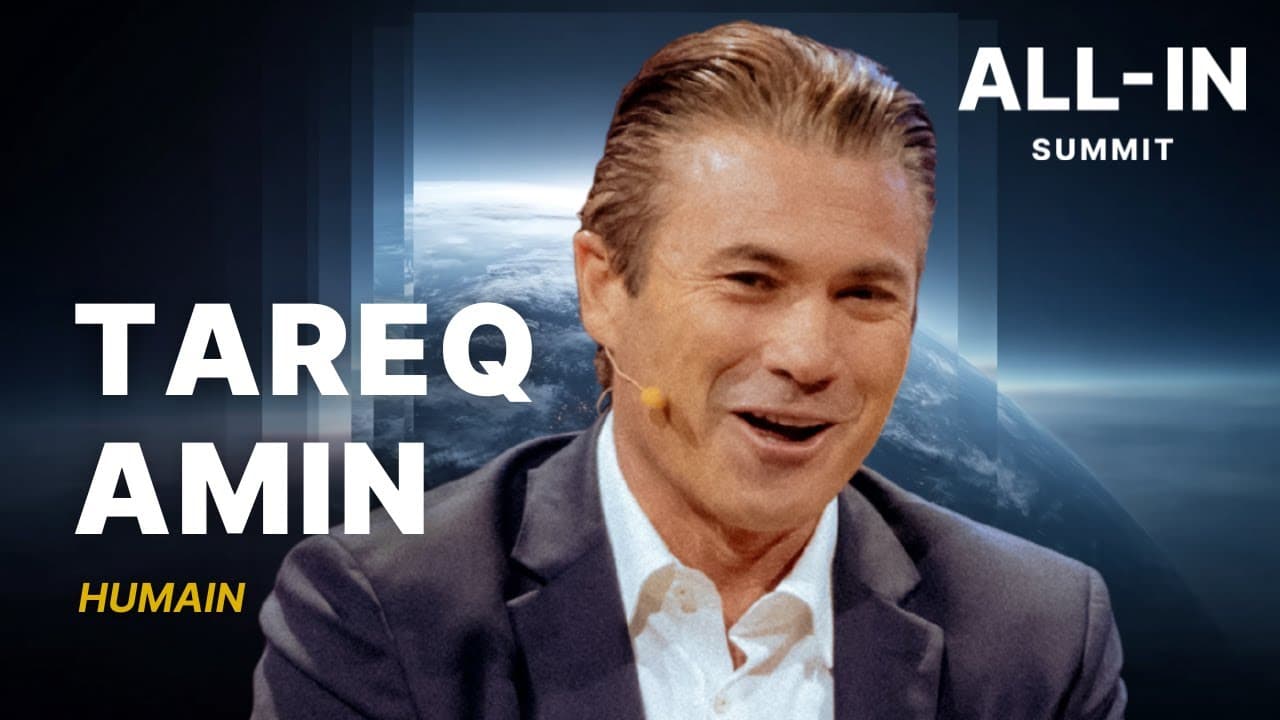
TL;DR
Saudi Arabia is building an AI ecosystem by consolidating fragmented public and private initiatives under Humain, a well-funded company spanning data centers, models, applications, and ventures. Its strategy combines domestic infrastructure, Arabic-first technology, enterprise applications, and partnerships with global providers to address local constraints while developing national talent and technical depth.
Transcript
I believe connectivity is a human right. I felt that this is a great opportunity to really build and enable a country like Saudi Arabia that has a incredible potential and capability to really build a digital champion and a digital hub for the region. This is the first time I landed in a place where I feel I'm home. Ladies and gentlemen, please wel... Read More
Key Insights
- • Saudi Arabia’s digital opportunity is supported by a young population that is eager for new technology, alongside a society and government embracing AI as a fundamental part of economic transformation and diversification.
- • Limited access to AI infrastructure was a major operational constraint, demonstrated when Aramco required nine months to complete purchasing, export-control, deployment, and installation processes for computing resources.
- • Humain is structured to consolidate fragmented public and private AI investments, projects, and initiatives under one company focused on the entire AI value chain.
- • Saudi Arabia’s infrastructure advantages include abundant land, abundant power, and strong connectivity, which Amin views as foundations for participating in global digital infrastructure and building a regional hub.
- • Humain’s business spans data centers, foundation models, applications, and planned ventures in the United States, supported by substantial funding, partnerships, talent, and access to capital.
- • Humain’s infrastructure strategy combines technology it develops itself with partnerships involving hyperscalers, including announced relationships with AWS and Google, rather than treating domestic development and global collaboration as mutually exclusive choices.
- • Humain Chat is an Arabic-first foundation model trained from scratch with proprietary Arabic data unavailable on the public internet, reflecting the importance of local language, culture, and potential biases in model development.
- • Humain One is designed as an AI operating system for enterprises, representing the company’s effort to create value above the model layer and reconsider how finance, legal, human resources, cybersecurity, and other functions use technology.
Install to Summarize YouTube Videos and Get Transcripts
Explore YouTube Video Summarizer or Get YouTube Transcript Extractor
Questions & Answers
Q: How is Saudi Arabia building its national AI ecosystem?
Saudi Arabia is consolidating fragmented AI investments, initiatives, and projects from public and private entities under Humain. The company is focused on the complete AI value chain, including data centers, models, applications, and ventures. Its strategy uses Saudi Arabia’s land, power, connectivity, capital, talent, and partnerships to expand infrastructure and support broader digital transformation.
Q: Why was Humain created in Saudi Arabia?
Humain was created after Tareq Amin identified a lack of accessible AI infrastructure and fragmented development efforts across the country. Even Aramco needed nine months to complete purchasing, export-control, deployment, and installation processes. Discussions with ministers and Mohammed bin Salman led to the idea of combining national AI investments and initiatives under one focused organization.
Q: What parts of the AI value chain does Humain cover?
Humain operates across data centers, foundation models, applications, and ventures that the company plans to establish in the United States. Tareq Amin describes it as a well-funded startup designed to address the entire AI value chain. Its resources include capital, people, technical talent, and partnerships intended to support infrastructure development and practical AI products.
Q: Why did Humain build its own foundation model?
Humain built a foundation model from scratch to test and strengthen the technical depth of its science team and to address language, culture, and bias more directly. The project also trained the organization to understand the complete technology stack. Amin emphasized that the goal was not to claim superiority over OpenAI or other model providers.
Q: How is Humain Chat different from English-first AI models?
Humain Chat was trained with Arabic as its first preference instead of beginning with English and adding Arabic later. It uses a proprietary Arabic dataset that Amin says cannot be found on the public internet. This approach reflects Saudi government and social contexts in which correspondence, transactions, and translations are conducted in Arabic.
Q: Does Humain compete with or partner with global cloud providers?
Humain does both, depending on the area. Amin expects the company to become a compelling alternative where global providers do not fully understand Middle Eastern needs, while still forming major partnerships. Some infrastructure will use Humain’s own technology, and some will be developed with hyperscalers, including announced partnerships with AWS and Google.
Q: What advantages does Saudi Arabia have in the AI infrastructure race?
Saudi Arabia has an abundance of land and power, strong connectivity, substantial capital, and a young population eager for technological advancement. Amin argues that these conditions create an opportunity to participate in global digital infrastructure. He also sees government commitment, social transformation, partnerships, and talent development as important components of the country’s AI ambitions.
Q: What is Humain One intended to do for enterprises?
Humain One is intended to function as an AI operating system for the enterprise. Amin presents it as an alternative to running large organizations through numerous legacy systems and hundreds of separate tools for finance, legal, human resources, cybersecurity, and related functions. The platform represents Humain’s focus on building valuable enterprise applications above foundation models.
Summary & Key Takeaways
-
Saudi Arabia’s AI opportunity rests on a young population, strong interest in technological advancement, and a national transformation in which digital systems and AI are fundamental. Tareq Amin argues that the country can become a regional digital hub by combining its land, power, connectivity, capital, people, and institutional commitment.
-
Humain emerged after Amin identified a serious shortage of accessible AI infrastructure. Even Aramco faced a nine-month process involving purchasing, export controls, deployment, and installation. Following discussions with government ministers and Mohammed bin Salman, fragmented AI investments and projects were consolidated within one company covering the complete AI value chain.
-
Humain’s approach combines proprietary development with external partnerships. It built an Arabic-first foundation model using proprietary Arabic data, launched Humain Chat, and developed internal experience across the technology stack. The company also works with hyperscalers and model providers while preparing Humain One, an AI operating system intended for enterprise use.
Read in Other Languages (beta)
Share This Summary 📚
Summarize YouTube Videos and Get Video Transcripts with 1-Click
Try YouTube Summary with ChatGPT & Claude or YouTube Transcript Generator
Explore More Summaries from All-In Podcast 📚






Summarize YouTube Videos and Get Video Transcripts with 1-Click
Try YouTube Summary with ChatGPT & Claude or YouTube Transcript Generator