Can AI Agents Build a Browser from Scratch?
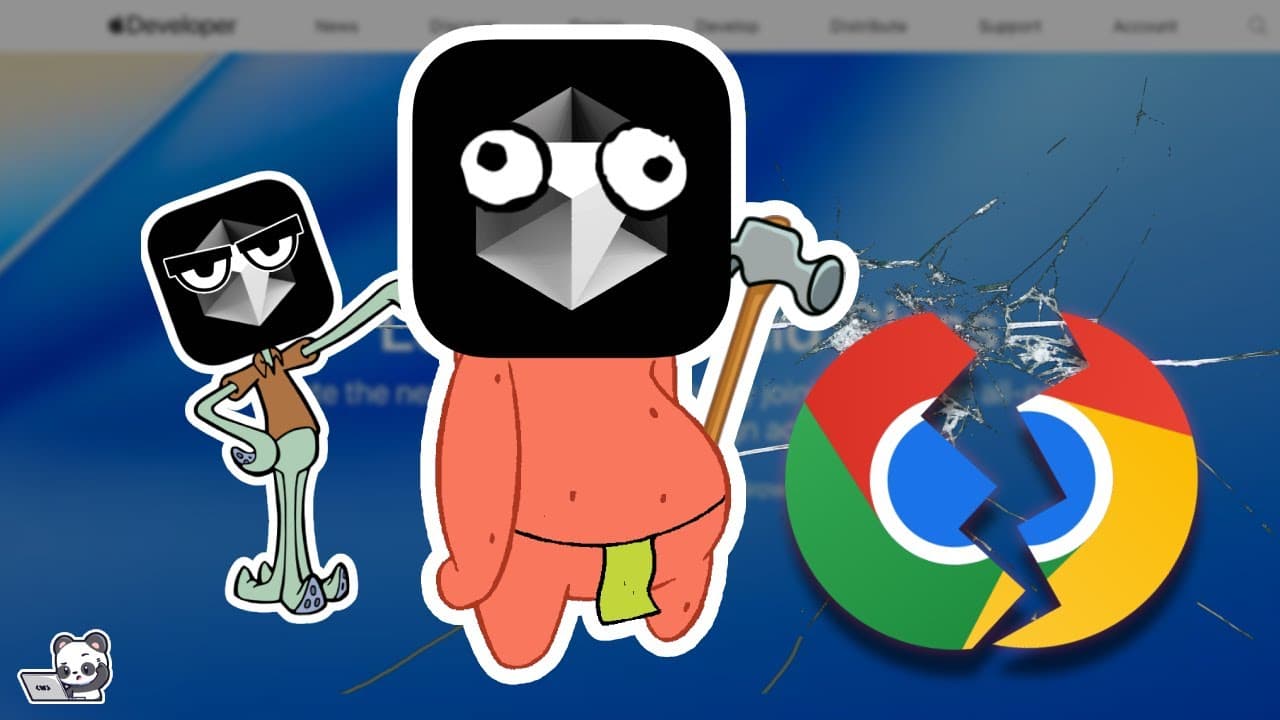
TL;DR
AI agents attempted to build a browser from scratch in a week, but faced coordination and implementation challenges. Despite producing a million lines of code, the resulting project was non-functional and heavily reliant on existing libraries. The experiment highlights AI's limitations without human oversight and the importance of guided development.
Transcript
Well, it's another day and another message from our AI overlords telling us that software engineers will lose their jobs 6 to 12 months from now. >> Thank you. Thank you. Thank you. >> Well, the cursor team was done with just talking and they were going to put that $2.3 billion of VC funding and prove that you no longer need these pesky engineers. ... Read More
Key Insights
- AI agents were tasked with building a browser from scratch, but faced significant coordination issues.
- Initial attempts used a flat structure, leading to inefficiencies and lack of progress.
- The team restructured the agents into planners and workers, mimicking corporate hierarchies.
- Despite writing a million lines of code, the browser was non-functional and couldn't compile.
- The project relied heavily on existing libraries, contradicting claims of building from scratch.
- Experts criticized the browser's code as poorly designed and not adhering to web standards.
- AI agents lacked the ability to make complex decisions without human guidance.
- The experiment served more as a marketing stunt than a genuine development breakthrough.
Install to Summarize YouTube Videos and Get Transcripts
Explore YouTube Video Summarizer or Get YouTube Transcript Extractor
Questions & Answers
Q: How did AI agents attempt to build a browser?
AI agents were tasked with building a browser from scratch in a week. Initially, they operated in a flat structure, leading to coordination issues and inefficiencies. The structure was later changed to a planner-worker model, where planners assigned tasks to workers. Despite these efforts, the resulting browser was non-functional and heavily reliant on existing libraries.
Q: What challenges did AI agents face in the experiment?
The AI agents faced significant coordination challenges, such as holding locks on files for too long and failing to release them, leading to inefficiencies. The initial flat structure resulted in agents avoiding complex tasks. Even after restructuring, the project produced a non-functional browser that couldn't compile and relied on existing libraries.
Q: Did the AI agents create a browser from scratch?
No, the AI agents did not create a browser from scratch. Investigations revealed that the project heavily relied on existing open-source libraries for key components like HTML and CSS parsers. Despite claims of building from scratch, the resulting browser was non-functional and failed to meet web standards.
Q: What was the outcome of the AI browser experiment?
The outcome of the AI browser experiment was a non-functional browser that couldn't compile. Despite writing a million lines of code, the project faced significant criticism for relying on existing libraries and producing poorly designed code. The experiment highlighted the limitations of AI development without human oversight and guidance.
Q: How did experts react to the AI browser project?
Experts criticized the AI browser project for its poor design and failure to adhere to web standards. They described the code as a tangle of spaghetti and noted that it did not resemble a real-world web engine. The project was seen as a marketing stunt rather than a genuine technological breakthrough.
Q: What structure did the AI agents use in the experiment?
Initially, the AI agents operated in a flat structure, leading to coordination issues. The structure was later changed to a planner-worker model, where planners assigned tasks to workers. This new structure mimicked corporate hierarchies, with planners acting as product owners and workers focusing on individual tasks.
Q: How did the experiment highlight AI's limitations?
The experiment highlighted AI's limitations by demonstrating the agents' inability to coordinate effectively and produce functional results without human guidance. The reliance on existing libraries and failure to meet web standards underscored the importance of human oversight in guiding AI development to achieve meaningful outcomes.
Q: Was the AI browser experiment successful?
The AI browser experiment was not successful in terms of producing a functional browser. The project faced significant criticism for relying on existing libraries and failing to adhere to web standards. The experiment served more as a marketing effort to justify the company's valuation rather than a genuine development breakthrough.
Summary & Key Takeaways
-
AI agents attempted to create a browser from scratch, but the project faced coordination and implementation challenges. The initial flat structure led to inefficiencies, prompting a shift to a planner-worker model. Despite writing a million lines of code, the resulting browser was non-functional and heavily relied on existing libraries, raising doubts about the experiment's success.
-
The cursor team claimed the AI agents implemented key browser components from scratch, but investigations revealed reliance on existing open-source libraries. Experts criticized the project for not adhering to web standards and described the code as a poorly designed tangle. The experiment highlighted the limitations of AI development without human oversight.
-
The experiment by the cursor team showcased AI's potential and limitations in software development. While AI can be a powerful tool, the project underscored the necessity of human guidance and expertise to achieve functional and standards-compliant results. Ultimately, the experiment appeared more as a marketing effort than a genuine technological breakthrough.
Read in Other Languages (beta)
Share This Summary 📚
Summarize YouTube Videos and Get Video Transcripts with 1-Click
Try YouTube Summary with ChatGPT & Claude or YouTube Transcript Generator