When Will the House Vote to End the Shutdown?
TL;DR
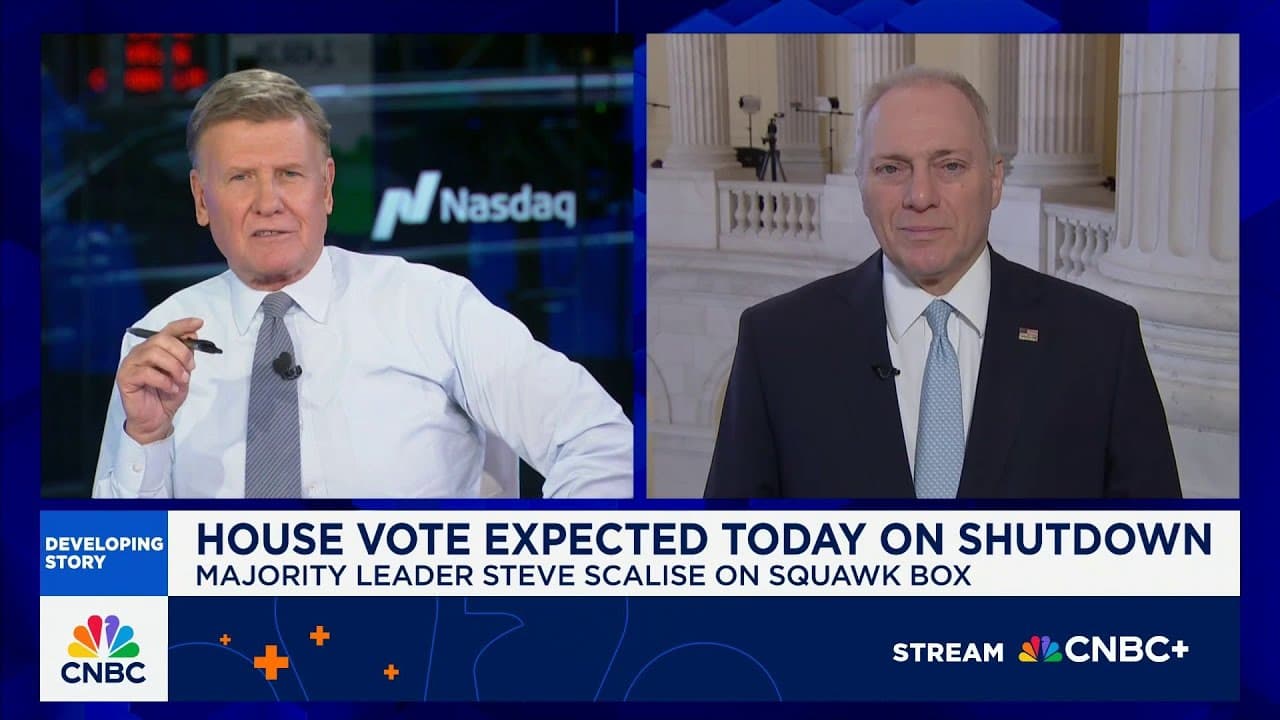
The House was expected to vote around 7 p.m. ET on legislation to fund the government and end the shutdown, following debate beginning around 4 or 5 p.m. Majority Leader Steve Scalise said Republicans would need support from a few Democrats, then planned to resume work on health costs, government funding protections, and other policy priorities.
Transcript
believes AI is happening. They're just not sure if it's going to Good morning. Thank you. >> Good to be back. Thanks for having me. I've seen it a few times where they asked Speaker. >> Johnson about it. And I don't know, people run with, you know, if it bleeds, it leads. And I guess he didn't answer. Oh, yeah. It's a done deal. It's definitely goi... Read More
Key Insights
- The House vote was expected around 7 p.m. ET after the funding process and debate began around 4 or 5 p.m., according to Scalise. He described the measure as the immediate path to funding the government and ending a shutdown that had lasted more than a month.
- The House majority was narrow enough that Republican leaders expected to seek support from a few Democrats. Scalise said eight Democrats had already supported the measure in the Senate and suggested that the House could attract several Democratic votes despite opposition from Democratic leadership.
- The shutdown affected SNAP recipients, low-income families, military personnel, air traffic controllers, and other federal workers, according to the discussion. Scalise emphasized that employees still faced household bills and said some air traffic controllers had taken additional work to make ends meet while salaries were disrupted.
- The Rules Committee remained in session until 1:30 a.m., according to Scalise. He said Democrats offered amendments affecting a $50 billion rural hospital fund, and he questioned why that fund had become part of the dispute surrounding legislation intended to reopen the government.
- The disputed Obamacare subsidies were created during COVID and designed to be temporary, according to Scalise. The interview acknowledged that their expiration could adversely affect at least 2 million people, while Scalise argued that the broader priority should be reducing insurance premiums rather than continuing payments to insurance companies.
- Obamacare premiums were described by Scalise as 80% higher than ten years earlier. He argued that the program had raised costs, limited choices, and weakened the doctor-patient relationship, while the interviewer pressed him on whether Republicans had offered a sufficiently clear replacement or comprehensive fix.
- Republican health proposals cited by Scalise included pharmacy benefit manager reform, cost-sharing reductions, health savings accounts, and association health plans. He said a cost-sharing reduction provision was scored by the Congressional Budget Office as capable of lowering family insurance premiums by 13%.
- Shutdown prevention proposals included bills associated with Senator Ron Johnson, Representative Jen Kiggans, and Representative Mark Alford. Scalise said these measures sought to protect troops, air traffic controllers, and other federal employees or prevent Americans from being used as leverage during future government funding disputes.
Install to Summarize YouTube Videos and Get Transcripts
Explore YouTube Video Summarizer or Get YouTube Transcript Extractor
Questions & Answers
Q: When was the House expected to vote to end the government shutdown?
The House was expected to hold its final vote around 7 p.m. ET that day. Steve Scalise said the legislative process would probably begin around 4 or 5 p.m., followed by debate before the vote. He expressed confidence that the House would act that day, while acknowledging that leaders still needed to assemble enough votes because of the narrow majority.
Q: Did House Republicans have enough votes to pass the funding bill?
Scalise said obtaining the votes would require work because Democratic leadership remained opposed and the House margin was narrow. He expected Republicans to seek support from a few Democrats and believed they would receive it. He also noted that eight Democrats had supported the measure in the Senate and suggested that several House Democrats might do the same.
Q: Who was affected by the government shutdown according to Steve Scalise?
Scalise identified SNAP recipients, low-income families, military personnel, air traffic controllers, and other federal employees as people harmed by the shutdown. He emphasized that household bills continued even when government salaries were disrupted. He also said air traffic controllers faced highly stressful work and, in some cases, needed additional employment, such as driving an Uber shift, to cover expenses.
Q: Why was the $50 billion rural hospital fund discussed during the funding debate?
Scalise said Democrats brought amendments in the Rules Committee that would affect the $50 billion rural hospital fund. According to him, the committee remained in session until 1:30 a.m. He questioned how reducing or removing that funding would help families or resolve the government funding dispute, using the proposal to criticize Democratic strategy during the shutdown negotiations.
Q: What did the interview say about expiring Obamacare subsidies?
The discussion described the subsidies as COVID-era health benefits paid to insurance companies and designed by Democrats to be temporary. The interviewer said at least 2 million people could be adversely affected by their expiration. Scalise argued that the policy debate should focus on lowering underlying insurance premiums rather than continuing to direct hundreds of billions of taxpayer dollars to insurers.
Q: What health care proposals did Steve Scalise say Republicans supported?
Scalise cited pharmacy benefit manager reform to lower prescription drug prices, cost-sharing reductions, health savings accounts, and association health plans. He said these proposals were intended to reduce premiums and give families more insurance choices. He specifically claimed that a cost-sharing reduction provision was scored by the Congressional Budget Office as lowering family health insurance premiums by 13%.
Q: How did Steve Scalise respond to criticism that Republicans lack an Obamacare alternative?
Scalise rejected the claim that Republicans had offered no solutions. He pointed to previous votes and proposals involving pharmacy benefit manager reform, cost-sharing reductions, health savings accounts, and association health plans. He argued that these approaches could lower premiums and expand consumer options, while accusing Democrats of opposing them and preferring to direct people into Obamacare without additional choices.
Q: What proposals could protect workers during future government shutdowns?
Scalise mentioned a bill from Senator Ron Johnson and similar House proposals associated with Representatives Jen Kiggans and Mark Alford. He said these measures were intended to pay troops or protect military personnel, air traffic controllers, and other federal employees when lawmakers disagreed over government funding. He expressed hope that members would reconsider such protections after witnessing the shutdown's effects.
Summary & Key Takeaways
-
House Majority Leader Steve Scalise said the House would begin considering the government funding legislation around 4 or 5 p.m., with the final vote expected near 7 p.m. ET. He expressed confidence that the shutdown could end that day, although the narrow House margin meant securing sufficient support would require continued work.
-
Scalise blamed Democratic leaders for prolonging the shutdown and highlighted its effects on SNAP recipients, low-income families, military personnel, air traffic controllers, and other federal workers. He said eight Senate Democrats supported the funding measure and predicted that a few House Democrats could join Republicans to provide the votes needed for passage.
-
The discussion shifted to health policy, including expiring COVID-era Obamacare subsidies, rural hospital funding, prescription drug costs, cost-sharing reductions, health savings accounts, and association health plans. Scalise argued that Republicans had proposed ways to reduce premiums and expand choices, while also supporting legislation intended to protect workers during future funding disputes.
Read in Other Languages (beta)
Share This Summary 📚
Summarize YouTube Videos and Get Video Transcripts with 1-Click
Try YouTube Summary with ChatGPT & Claude or YouTube Transcript Generator
Explore More Summaries from CNBC Television 📚





Summarize YouTube Videos and Get Video Transcripts with 1-Click
Try YouTube Summary with ChatGPT & Claude or YouTube Transcript Generator