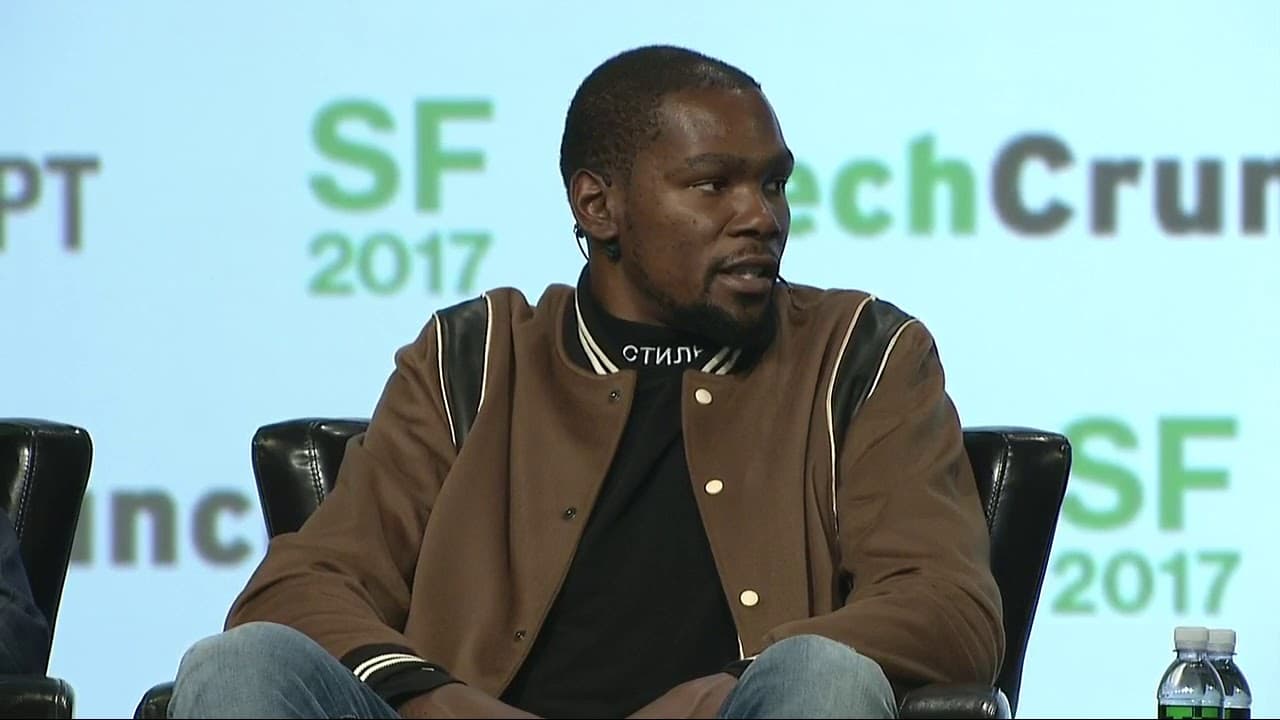
TechCrunch Disrupt SF: Kevin Durant & Rich Kleiman Fireside Chat
TL;DR
Kevin Durant and Rich Kleiman evaluate startups by focusing on understandable concepts, capable executive teams, personal relevance, and their own judgment. They began with angel investments, expanded into Series A deals as their experience and analytical support grew, and limit exposure by investing only a small percentage of their net worth while reserving capacity for later rounds.
Transcript
ready yeah what we're gonna do is we're gonna take a selfie on stage that you guys are all in it cuz I figured then you all have your picture with Katie so uh alright I'm gonna tiptoe alright okay so to start there's a little bit of news yesterday I don't know if you're aware yeah and you know the thing is you have never been afraid to clap back ri... Read More
Key Insights
- Durant's approach to social media is based on direct engagement with basketball fans. He says he does not regret responding to people, but acknowledges that he went too far when he invoked his former coach and former organization during an online debate.
- Athlete interest in technology investing is driven by a desire to participate in changes extending beyond basketball. Durant describes technology as a major part of the current world and views startup involvement as a way for athletes to affect lives through a different arena.
- The Durant Company is not described as a conventional outside-capital fund. Kleiman says they allocated part of their own finances to early-stage private investments, while using Durant's basketball earnings and endorsement income as the broader financial foundation supporting those opportunities.
- Their initial angel-investing strategy emphasized a startup's concept and executive team. Kleiman says they recognized what they did not know, avoided presenting themselves as Silicon Valley experts, and initially relied less on extensive financial analysis than on evaluating ideas and founders.
- Their investment range expanded after they gained experience and absorbed information from people in the technology community. Moving into Series A deals also required a supporting team that could conduct due diligence, analyze financial information, and assess whether an opportunity was suitable.
- Their final decisions rely on personal relevance and informed judgment. Durant and Kleiman favor companies whose products they could use or whose executives create a strong connection, and they recognize that an investment can also place Durant's name behind the business.
- Their startup exposure is deliberately limited to a small percentage of net worth. Angel investments range from $50,000 to $250,000, Series A investments range from $250,000 to about $2 million, and capital may be reserved for later Series B or Series C participation.
- Their screening process depends on clarity as well as potential. Kleiman tries to explain each company to Durant in one sentence, and a concept usually fails the first test if that explanation does not immediately create interest or cannot be understood by an ordinary consumer.
Install to Summarize YouTube Videos and Get Transcripts
Explore YouTube Video Summarizer or Get YouTube Transcript Extractor
Questions & Answers
Q: How does Kevin Durant evaluate startup investments?
Kevin Durant evaluates opportunities with Rich Kleiman by asking whether the concept is compelling, whether the executive team inspires confidence, and whether the product has personal relevance. They consider whether they could use it in their own lives or whether it addresses something Durant cared about growing up. Supporting analysts and legal advisers conduct diligence, but Durant and Kleiman make the final decision using informed instinct and mutual trust.
Q: What is the Durant Company's startup investment strategy?
The Durant Company allocates a portion of Durant and Kleiman's finances to private, early-stage opportunities rather than operating as a conventional fund for outside investors. It began by emphasizing angel investments and later expanded into Series A rounds. The strategy focuses on understandable ideas, strong teams, practical usefulness, and close connections with executives, while retaining the ability to support selected businesses in later rounds.
Q: How much does Kevin Durant invest in startup rounds?
Kleiman states that their angel investments generally range from $50,000 to $250,000. Their Series A commitments range from $250,000 to about $2 million. Across a year, they allocate only a small percentage of their net worth to these deals because they recognize the risk of startup investing. They may also preserve capital to participate in Series B or Series C funding when appropriate.
Q: Why did Kevin Durant and Rich Kleiman start with angel investing?
They began with angel investing because their strongest early capabilities were identifying a good concept and recognizing a capable executive team. Kleiman says they understood that they were not Silicon Valley experts and treated awareness of their limitations as a strength. At that stage, their decisions depended less on detailed financial analytics and more on the quality of the idea, the founders, and their own judgment.
Q: Who performs due diligence for Kevin Durant's investments?
A supporting group helps analyze opportunities, including a financial analyst, legal support, friends, and colleagues from the technology community. Kleiman says this infrastructure helps with due diligence and analytics, particularly as their activity extends into Series A investments. However, advisers do not replace the principals' judgment. Durant and Kleiman retain responsibility for deciding whether a company deserves their money and Durant's public association.
Q: How do Kevin Durant and Rich Kleiman divide investment responsibilities?
Rich Kleiman generally brings new opportunities to Durant, summarizes what Durant needs to know, and keeps him aware of developments while Durant concentrates on playing basketball. Durant considers whether the business connects with his interests, experiences, or desired impact. They discuss each opportunity, frequently reach agreement, and rely on mutual trust, with Kleiman respecting Durant's instincts and Durant trusting Kleiman's assessment.
Q: Why must Rich Kleiman explain a startup in one sentence?
Kleiman uses a one-sentence explanation as an initial screening test. If he cannot describe the company quickly enough to make Durant's eyes open up and prompt interest in meeting its executive team, the opportunity is usually rejected. His reasoning is that ordinary consumers are also unlikely to understand a company easily when its core concept cannot be communicated clearly in a single sentence.
Q: What did Kevin Durant say about engaging fans on Twitter?
Durant says Twitter is a useful way to engage basketball fans and that he does not intend to stop interacting with them. He does not regret responding to people generally, but he regrets bringing his former coach and former organization into an online exchange, calling that behavior childish and idiotic. He says he apologized and planned to scale back temporarily so he could focus on basketball.
Summary
In this video, Kevin Durant and his business partner, Rich Kleiman, discuss various topics including Durant's use of social media, their investment strategies, their relationship, and their involvement in the tech world.
Questions & Answers
Q: How does Durant respond to accusations that he creates fake social media accounts to defend himself?
Durant admits to having another Instagram account for his friends and family, but denies using it to clap back at anyone. He does, however, use Twitter to engage with fans and admits to going too far in some instances. He regrets using his former coach's name and apologizes for it, but he still wants to connect with his fans.
Q: What is the motivation behind pro athletes investing in startups and becoming tech investors?
The tech world has had a huge impact on society, and pro athletes want to be a part of that change. They see the potential to impact people's lives in a different way outside of basketball.
Q: What is the Durant company's investment strategy and the size of their fund?
The Durant company is not exactly a fund, but more of an allocation of finances towards early-stage private equity investments. Initially, they focused on angel investing, considering concepts and executive teams rather than financial analytics. As they gained experience, they expanded to series A investments with a team in place for due diligence and analytics. They invest a small percentage of their net worth each year and continue to build with companies that require additional funding.
Q: How do Durant and Kleiman decide on new investment opportunities?
Kleiman is responsible for bringing new deals to the table and consulting with Durant on various matters. They trust each other's instincts and come to agreements on investments. They emphasize the importance of their teamwork in making investment decisions.
Q: How did Durant and Kleiman develop their relationship and become business partners?
They met through a mutual friend when Durant was 18 and Kleiman was 30. Despite their age difference, they kept in touch and built a unique friendship. When Kleiman transitioned into sports, he reached out to Durant with the opportunity to work together. Their friendship, trust, and understanding of each other allowed them to hit the ground running and build a successful partnership.
Q: Why did Durant choose to distribute his content through YouTube?
Durant wanted to have control over his own story and showcase who he is and what he loves to do. He met with YouTube and found it to be the perfect platform to streamline the content he wants to put out. They started the YouTube page called 35 Media and have since started expanding into building a media company.
Q: Has Durant's move to Silicon Valley influenced his interest in investing?
Moving to Silicon Valley has exposed Durant to the tech world and has elevated his interest and involvement in it. He wants to continue being a part of this community and contribute positively.
Q: How do Durant and Kleiman approach potential investment opportunities?
They don't pitch themselves to companies. They believe that if investors at the stage they are investing in don't see the benefit in partnering with them, then it's not worth pursuing. They want the opportunity to feel natural and mutually beneficial between both parties.
Q: Do Durant and Kleiman have a policy for investing in female founders or people of color?
They don't have a specific policy in place, but they are open to investing in companies by people of all backgrounds. They mention being introduced to some impressive women in the tech world and express interest in getting involved with more female-led companies.
Q: Will Durant prefer AI-powered refs in basketball?
Durant prefers human judgment from referees over AI-powered refs. He believes that the current referees do a great job, and he benefits from their calls. He jokes that if there were AI refs, they might catch him more often, as they would call every touch foul.
Summary & Key Takeaways
-
Durant says he uses Twitter to engage basketball fans and does not regret responding to them, but he regrets mentioning his former coach and organization. He calls that conduct childish, says he apologized, and plans to reduce his online activity temporarily while continuing to connect with fans and focus on basketball.
-
The Durant Company had made around 30 investments across technology, hospitality, and other areas, including Postmates, Acorns, Rubrik, and The Players' Tribune. Kleiman describes the activity as investing their own capital rather than operating a conventional fund, with decisions centered on concepts, teams, usefulness, personal connection, and informed instinct.
-
Their investing process developed gradually from angel rounds into Series A opportunities. Angel checks range from $50,000 to $250,000, while Series A investments range from $250,000 to about $2 million. Analysts, legal support, friends, and colleagues assist with diligence, but Durant and Kleiman make the final investment decisions together.
Read in Other Languages (beta)
Share This Summary 📚
Summarize YouTube Videos and Get Video Transcripts with 1-Click
Try YouTube Summary with ChatGPT & Claude or YouTube Transcript Generator