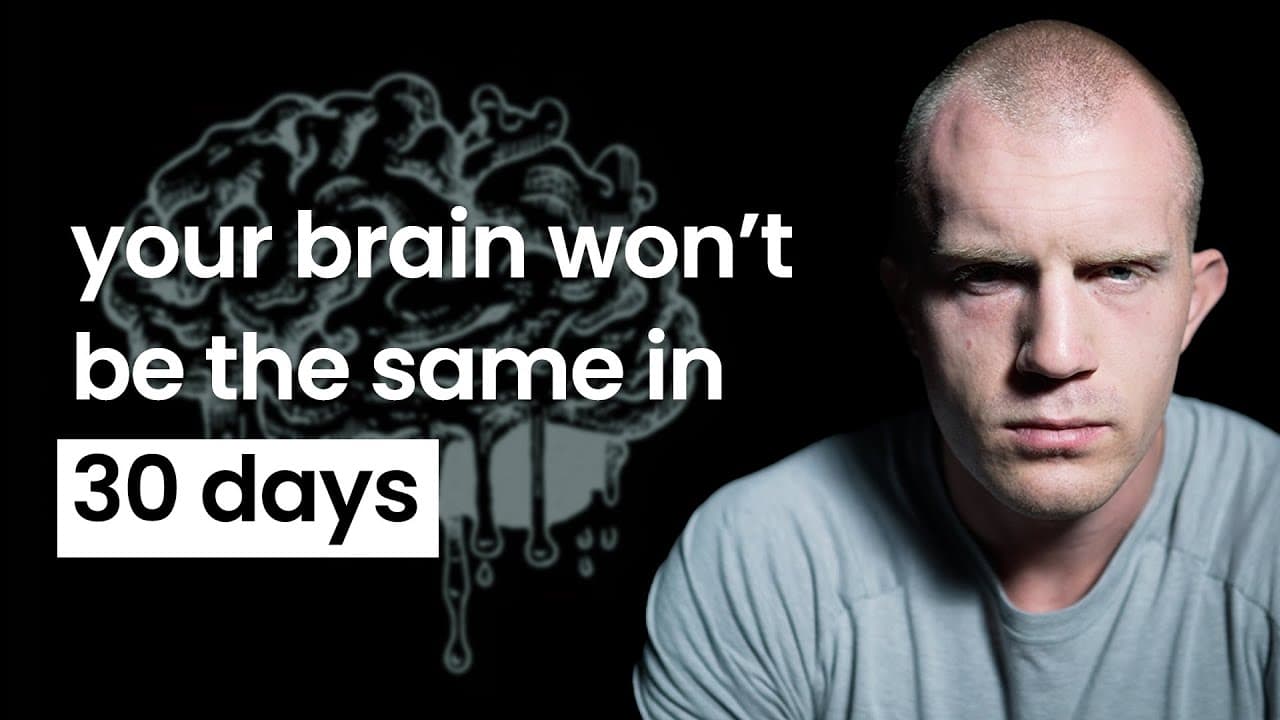
How to Do a 30-Day Dopamine Detox to Reset Your Life
TL;DR
A 30-day dopamine detox resets your baseline for stimulation by removing four categories of quick pleasure and replacing them with deliberate habits. The protocol begins with pain and gain stories, followed by monk mode, 10,000 daily steps, gym sessions, an elimination diet, a new project, and 10 minutes of nightly reflection. It is designed as a periodic calibration tool for restoring agency, clarity, and enjoyment of simple pleasures. Read on for the exact steps and reasoning.
Transcript
This is for those times where life starts to lose its wonder and zest. When you feel more tired than you do, calm when you may not realize you're using coffee as a security blanket. When you start to notice dark circles under your eyes, when you look back to a time where life felt seamless and almost magical. Because there's a harsh reality of livi... Read More
Key Insights
- The brain operates on a salience network, meaning whatever provides the most dopamine becomes the most important thing to it. Once your phone sets that bar, everything less stimulating than gambling, porn, or partying gets automatically labeled boring.
- Flow states require a specific skill-to-challenge ratio, according to Mihaly Csikszentmihalyi. If the challenge is too high for your skill level you get anxious, and if it is too low you get bored: you would not fight a level 100 character at level one.
- Boredom is the gateway to novelty because it sets the scene for three flow triggers: deep embodiment (being present with discomfort), novelty (boredom forces you to seek new, healthier stimulation), and unpredictability (not knowing what will emerge from the void).
- Hedonic adaptation works like a psychological thermostat that always returns to a set point, creating the hedonic treadmill where each experience becomes the new normal. Deprivation reverses this, so simple pleasures become enjoyable again, what Buddhists call beginner's mind.
- The conscious brain can only process around 50 bits of information per second, so daily social media bingeing leaves you walking around mentally obese without noticing, because that overload has become your homeostasis.
- All lasting behavior change is identity change, which is why the protocol starts with writing two visceral, emotional, and specific stories: one for where your life ends up if the pain continues, and one for who you become if you change.
- Monk mode for 30 days means eliminating four risk categories: binge tech (social media, streaming, gaming, news), unnatural sexual stimulation (porn, dating apps), consumables (alcohol, drugs, junk food, sweetness), and thrill seeking (gambling, shopping sprees, extreme sports).
- The goal of a detox is not to become an ascetic or a monk but to develop sovereignty and agency: the capacity to notice where your life is heading, generate goals aligned with the future you want, and act without permission from anyone else.
Install to Summarize YouTube Videos and Get Transcripts
Explore YouTube Video Summarizer or Get YouTube Transcript Extractor
Questions & Answers
Q: How do you do a 30-day dopamine detox to reset your life?
Start by writing two visceral, specific stories: where your life will lead if the pain continues and who you will become if you change. Then spend 30 days eliminating four risk categories while walking 10,000 steps daily, going to the gym, following an elimination diet, building a new project, and reflecting for 10 minutes each night.
Q: What should you eliminate during the 30-day monk mode?
Eliminate binge tech, including social media, streaming, gaming, and news, along with simulated sexual stimulation such as pornography and dating apps. Also remove consumables such as alcohol, drugs, junk food, and sweetness, plus thrill seeking such as gambling, shopping sprees, and extreme sports.
Q: Why does a dopamine detox work?
The protocol gives three reasons: boredom creates space for novelty, deprivation resets the baseline for stimulation, and mental space supports sense making and clarity. As the hedonic treadmill reverses, simple pleasures can become enjoyable again.
Q: Why is boredom important during a dopamine detox?
Boredom forces you to sit with discomfort and confront parts of yourself you normally avoid. It can reveal authentic desires beneath external conditioning while creating three flow triggers: deep embodiment, novelty, and unpredictability.
Q: How does overstimulation interfere with flow and enjoyment?
Overstimulation raises the threshold for what the brain considers interesting, causing less stimulating activities to feel boring. Flow requires a suitable skill-to-challenge ratio: excessive challenge produces anxiety, while insufficient challenge produces boredom.
Q: What are pain and gain stories, and why are they the first step?
The pain story describes where your life ends up if the current pain continues, while the gain story describes who you become if you change. They should be visceral, emotional, and specific because the protocol frames lasting behavior change as identity change.
Q: How often should you do the 30-day dopamine detox?
The protocol recommends doing it at least once a year for 30 days. It can also serve as a calibration tool every 6 to 12 months rather than becoming a permanent ascetic lifestyle.
Q: What is the ultimate goal of the dopamine detox?
The goal is sovereignty and agency, not becoming a monk or permanently rejecting pleasure. It is meant to help you notice where your life is heading, choose goals aligned with your desired future, and act consciously instead of reacting compulsively.
Summary & Key Takeaways
-
Modern life carries risk from binge tech, simulated sexual stimulation, consumables, and thrill seeking. Rather than moralizing about any of it, the argument is practical: technology creates problems, so humans need tools to mitigate them. Unless you plan to live in the woods, you need something implemented in your life to buffer the consequences of convenient, quick pleasures.
-
Three mechanisms explain why dopamine detoxes work. Boredom acts as a gateway to novelty and to Jungian shadow work, confronting the uncomfortable parts of yourself you avoid. Deprived dopamine receptors upregulate, reversing the hedonic treadmill. And the resulting space allows sense making, processing suppressed problems until a burst of clarity arrives.
-
The protocol runs 30 days. Step one is writing pain and gain stories, aided by a free AI prompt in the description that is programmed to dig deep. Step two is monk mode, cutting the four risk categories. The chapters then cover walking 10,000 steps daily, the gym, an elimination diet, building a new project, and reflecting 10 minutes each night.
Read in Other Languages (beta)
Share This Summary 📚
Summarize YouTube Videos and Get Video Transcripts with 1-Click
Try YouTube Summary with ChatGPT & Claude or YouTube Transcript Generator
Explore More Summaries from Dan Koe 📚

Summarize YouTube Videos and Get Video Transcripts with 1-Click
Try YouTube Summary with ChatGPT & Claude or YouTube Transcript Generator