How Roy Lee Built a $500k/Month AI SaaS in 2 Months
TL;DR
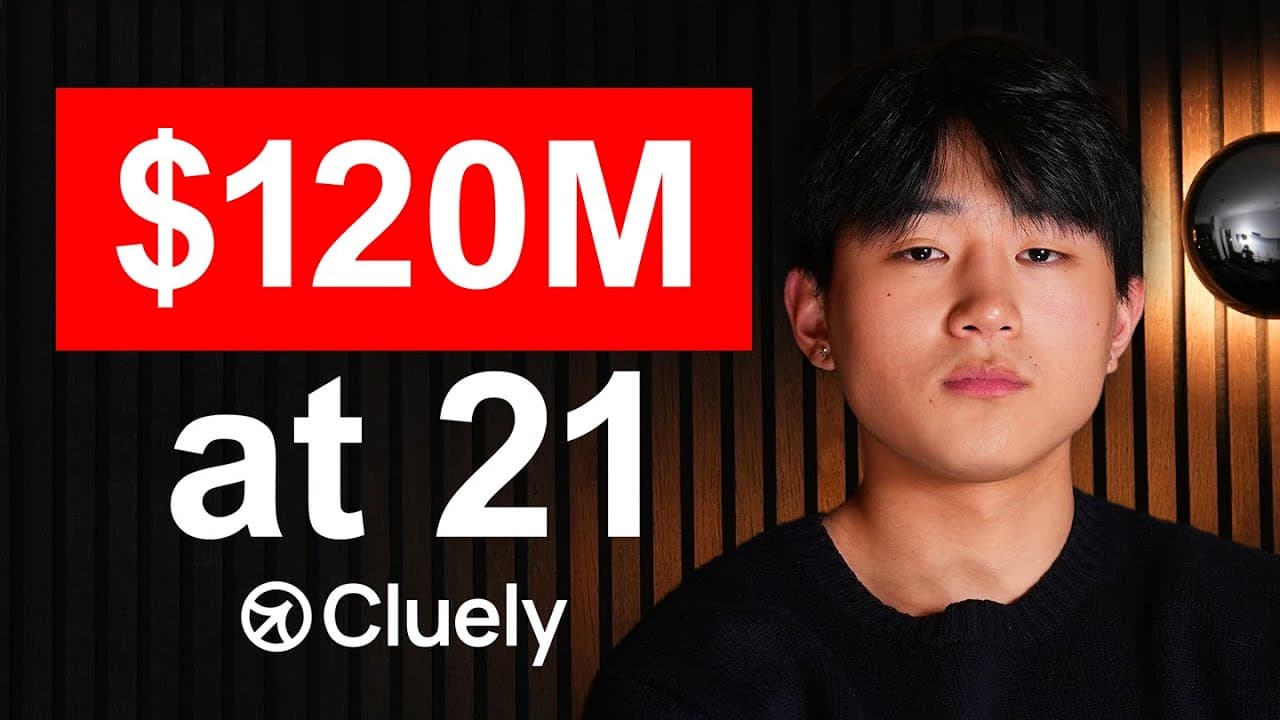
Roy Lee, a 21-year-old entrepreneur, built Cluey, an AI SaaS that generates $500k monthly revenue within two months of its launch. Cluey is an AI assistant that provides live assistance during meetings and sales calls by observing and listening to the user's environment. Roy's journey from being suspended from Harvard to founding Cluey highlights his resilience and innovative marketing strategies.
Transcript
how much is Cle making right now yeah we're about to do 6 mil ARR we're growing pretty [ __ ] quick how old are you i'm 21 21 now when is Cle la la la la la la la la la la la la la la la la la la la launch cle la la la la la la la la la la la la la la la la la la la launch April 20th so like less than 2 months ago and you had 500k MR yeah ye... Read More
Key Insights
- Cluey is an AI assistant that observes and listens to provide live assistance during meetings and sales calls.
- Roy Lee, at 21, built Cluey, achieving $500k in monthly revenue within two months of its launch.
- Roy was initially admitted to Harvard, but his acceptance was rescinded, leading him to focus on building a startup.
- The idea for Cluey stemmed from a previous project, Interview Coder, which went viral for helping users cheat on technical interviews.
- Roy emphasizes the importance of taking big risks and leveraging viral marketing to capture attention.
- Cluey employs a unique marketing strategy focused on generating mind share through controversial and engaging content.
- Roy's approach to marketing includes creating a 'Cluey universe' with cinematic launch videos and leveraging social media platforms.
- The success of Cluey is attributed to its innovative use of AI and a bold, unconventional marketing approach.
Install to Summarize YouTube Videos and Get Transcripts
Explore YouTube Video Summarizer or Get YouTube Transcript Extractor
Questions & Answers
Q: How does Cluey assist users during meetings?
Cluey is an AI assistant that observes what users see and hears what they hear, providing live assistance during meetings, sales calls, and interviews. It offers real-time help without requiring users to prompt it, making it a seamless tool for various professional scenarios. Cluey works invisibly during screen sharing, allowing users to leverage AI without others knowing.
Q: What was the inspiration behind Cluey?
The inspiration for Cluey came from Interview Coder, a tool Roy Lee developed to help users cheat on technical interviews. Despite the controversy, the project went viral, leading Roy to realize the potential of AI tools in providing live assistance across different scenarios. This realization, combined with his desire to build a successful company, led to the creation of Cluey.
Q: How did Roy Lee's background influence Cluey's development?
Roy Lee's background includes being admitted to Harvard and later having his acceptance rescinded, which became a pivotal moment in his life. This setback motivated him to prove himself by building a successful company. His experience with Interview Coder, which went viral, taught him the power of leveraging controversy and viral marketing, directly influencing the development and marketing strategy of Cluey.
Q: What are the key marketing strategies used for Cluey?
Cluey's marketing strategy focuses on capturing mind share through controversial and engaging content. Roy Lee employs a 'Cluey universe' concept, creating cinematic launch videos and leveraging social media platforms to maintain public interest. The strategy emphasizes creating viral moments that keep Cluey in the public eye, driving both interest and growth.
Q: How does Cluey differentiate itself from other AI tools?
Cluey differentiates itself by providing real-time assistance without requiring user prompts, making it a seamless tool for meetings and sales calls. It operates invisibly during screen sharing, allowing users to leverage AI without others knowing. This unique functionality, combined with innovative marketing strategies, sets Cluey apart from other AI tools in the market.
Q: What challenges did Roy Lee face in building Cluey?
Roy Lee faced several challenges, including having his Harvard acceptance rescinded and navigating the controversy surrounding Interview Coder. These experiences taught him resilience and the importance of taking significant risks. Building Cluey involved leveraging viral marketing strategies and creating a unique product that could stand out in a competitive AI market.
Q: What role does viral marketing play in Cluey's success?
Viral marketing plays a crucial role in Cluey's success by capturing public attention and maintaining interest through engaging content. Roy Lee's strategy involves creating controversial and cinematic launch videos, leveraging social media platforms, and building a 'Cluey universe' to ensure the brand remains in the public eye. This approach has been instrumental in driving Cluey's rapid growth.
Q: How does Cluey plan to maintain its growth trajectory?
Cluey plans to maintain its growth trajectory by continuing to innovate in product development and marketing. The company aims to leverage the latest AI advancements to enhance its tool's capabilities while maintaining a strong presence in the public eye through strategic marketing initiatives. By focusing on capturing mind share and providing real value, Cluey seeks to sustain its momentum and expand its reach.
Summary & Key Takeaways
-
Roy Lee, a 21-year-old entrepreneur, founded Cluey, an AI assistant that provides live assistance during meetings and sales calls by observing and listening to the user's environment. Within two months of its launch, Cluey achieved $500k in monthly revenue, showcasing the power of innovative product development and marketing strategies.
-
Cluey's origin traces back to Interview Coder, a project that gained notoriety for allowing users to cheat on technical interviews. Roy's journey from Harvard's rescinded acceptance to Cluey's success highlights his resilience and willingness to take significant risks for substantial rewards.
-
Roy's marketing strategy for Cluey focuses on capturing mind share through controversial and engaging content. By creating a 'Cluey universe' and leveraging social media platforms, Roy aims to maintain Cluey's presence in the public eye, ensuring its continued growth and success.
Read in Other Languages (beta)
Share This Summary 📚
Summarize YouTube Videos and Get Video Transcripts with 1-Click
Try YouTube Summary with ChatGPT & Claude or YouTube Transcript Generator
Explore More Summaries from Brett Malinowski 📚






Summarize YouTube Videos and Get Video Transcripts with 1-Click
Try YouTube Summary with ChatGPT & Claude or YouTube Transcript Generator