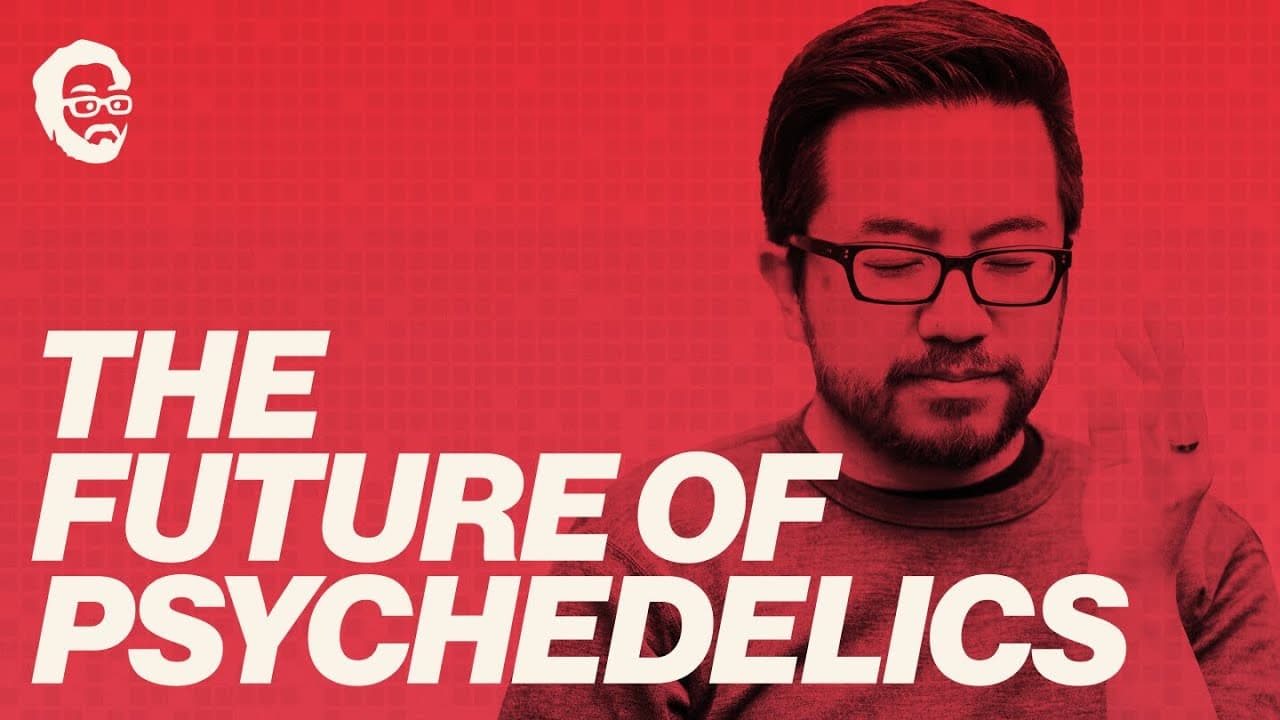
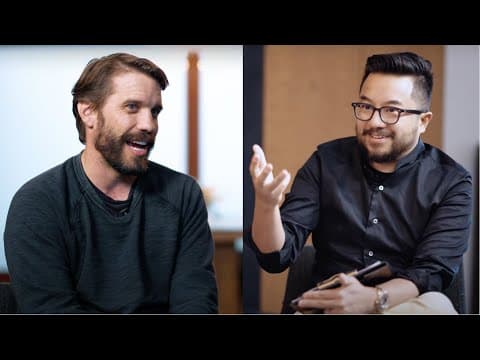
How Psychedelics will Change Society for the Better | with Dillan DiNardo of Mindstate Design Labs
TL;DR
Psychedelics could change society for the better by moving from counterculture use into controlled clinical care for difficult mental health conditions. The discussion highlights late-stage trial results in which three MDMA treatments helped 67% of participating patients improve enough to no longer qualify for a PTSD diagnosis. Read on to understand the proposed brain mechanism, the history of stigma, and why medical safeguards matter.
Transcript
psychedelic therapies are ready to change society for the better the big difference today is we're not talking about Grateful Dead concerts or The Counter Culture we're seeing this powerful technology deployed in clinical settings with repeatable clinical data showing extreme efficacy against some of the most difficult mental health challenges Soci... Read More
Key Insights
- Clinical context changes the debate: Psychedelics are no longer framed only through recreational use or counterculture imagery. The discussion centers on legal clinical deployment, repeatable data, and treatment of severe mental health problems. That shift matters because it evaluates these compounds as medical tools within structured care rather than as symbols of a disruptive social movement.
- The core misconception is instability: The most prominent misconception is that psychedelics simply make people crazy. The discussion acknowledges that adverse outcomes sometimes occur, rather than denying the risk. It then argues that many more cases show the opposite possibility, with psychedelics helping people become more psychologically well when used for therapeutic purposes.
- Mindstate Design Labs’ role: Mindstate Design Labs is described as a funded YC company working at the forefront of legal clinical uses for psychedelic technology. Dillan DiNardo, its founder, focuses on an area long shaped by misunderstanding. The company’s work is positioned around identifying and developing powerful approaches to treating mental health conditions.
- Severe PTSD anchors the evidence: The MDMA example concerns treatment-resistant PTSD rather than mild or temporary distress. Participants had often experienced PTSD for decades and had already tried every treatment imaginable. Their history makes the reported response especially significant because the improvement followed only three MDMA treatments after many prior approaches had failed.
- The diagnostic threshold matters: The reported MDMA outcome is not described merely as patients feeling somewhat better. After three treatments, 67% improved enough that they no longer qualified for the PTSD diagnosis. This provides a specific clinical threshold for the stated benefit and explains why the efficacy signals from late-stage trials are characterized as incredible.
- MDMA began inside therapy: Although MDMA is commonly known as ecstasy and associated with recreation, the discussion says it was a therapy drug before escaping onto the recreational scene. This history complicates the assumption that clinical use is a recent attempt to medicalize a recreational substance. Nonprofit groups have worked for decades to move it through clinical development.
- Connectivity enables unfamiliar perspectives: Psilocybin is said to reduce communication within particular brain regions while increasing communication across regions that do not normally interact. The significance lies in the resulting change in consciousness. New communication patterns may create a different mental position from which patients can reconsider established emotions, thoughts, memories, problems, and relationships.
- Altered states affect many domains: The psychedelic state described here is not limited to mood. It may fundamentally change emotions, cognition, self-perception, time perception, memory, and the way a person relates to themselves and the world. This breadth helps explain why the experience is presented as potentially powerful for patients whose difficulties involve deeply established patterns.
- Stigma followed social disruption: Psychedelics became vilified after leaving research environments and becoming entangled with the counterculture. Timothy Leary and other researchers promoted broad social transformation rather than maintaining a narrow therapeutic focus. Their rhetoric about changing society and undermining institutions helped turn psychedelics into a cultural flash point and contributed to moral panic.
- The 1960s were one chapter: The familiar story of LSD, Timothy Leary, and counterculture is described as only a small part of a much longer history. Indigenous cultures had reportedly used psychedelics for tens of thousands of years in medical, religious, and other structured settings. Western societies encountered these continuing practices again through globalization during the 19th and 20th centuries.
- Integration systems distinguish safer use: Indigenous cultures are credited with processes, institutions, and safeguards surrounding psychedelic medicines. Western society in the 1960s lacked comparable ways to integrate intense experiences into ordinary life. The discussion therefore treats social structure and guided use as essential variables, not peripheral details, when evaluating whether psychedelics can benefit or disrupt society.
- Medicine supplies missing structure: The current medical paradigm introduces doctors, therapists, medical institutions, controlled settings, and safeguards. These elements directly address the integration failures attributed to the 1960s. The argument is that psychedelic benefits become more usable when the experience is contained within reliable clinical systems that support patients before, during, and around treatment.
Install to Summarize YouTube Videos and Get Transcripts
Explore YouTube Video Summarizer or Get YouTube Transcript Extractor
Questions & Answers
Q: How will psychedelics change society for the better?
Psychedelics could benefit society by becoming controlled clinical treatments for difficult mental health conditions such as PTSD and depression. Their value is tied to altered brain connectivity that may give patients a new perspective on their emotions, memories, relationships, and problems. The cited MDMA trial result showed that three treatments helped 67% of patients improve enough to no longer qualify for a PTSD diagnosis. Medical institutions, clinicians, therapists, controlled settings, and safeguards are presented as the framework needed to integrate these treatments responsibly.
Q: What evidence supports MDMA therapy for treatment-resistant PTSD?
The discussion cites late-stage clinical trials involving MDMA for treatment-resistant PTSD. Many patients had lived with PTSD for decades and had already tried every treatment imaginable. After three MDMA treatments, 67% improved so substantially that they no longer met the diagnostic threshold for PTSD. This result is used to show why psychedelic compounds are generating strong interest as treatments for severe and persistent mental health challenges.
Q: How does psilocybin change communication in the brain?
Under psilocybin, some brain regions are described as talking less to themselves and more to regions with which they do not normally communicate. This produces a changed pattern of connectivity rather than simply increasing ordinary activity. The new pattern leads to an altered state of consciousness affecting mood, cognition, memory, time perception, and self-perception. That altered state may help patients view personal difficulties and relationships from a new position.
Q: Why can an altered state be therapeutically useful?
The altered state can change how a patient experiences emotions, thoughts, memory, identity, time, and the surrounding world. These changes may interrupt familiar patterns and create a new perspective on problems that previously felt fixed. Patients can gain a different place from which to examine themselves, underlying causes, and relationships. The discussion identifies this perspective shift as a central reason psychedelics may be effective in therapy.
Q: What is the biggest misconception about psychedelics?
The biggest misconception presented is that psychedelics are simply drugs that make people crazy. The discussion concedes that this outcome can happen sometimes, so the compounds are not portrayed as risk-free. It argues, however, that many more cases show psychedelics helping people become psychologically well. Clinical evidence and controlled therapeutic use challenge the older image shaped by recreational use and cultural panic.
Q: Why were psychedelics vilified during the 1960s?
Psychedelics escaped research laboratories and became closely associated with Timothy Leary, LSD, and the counterculture. Some researchers promoted the drugs as tools for transforming society and undermining established institutions. Their use became socially disruptive, producing a full-scale moral panic and turning the substances into a cultural flash point. Research was ultimately doomed even though psychedelics had previously shown potential as medical tools.
Q: How did indigenous psychedelic use differ from 1960s counterculture use?
Indigenous cultures are described as using psychedelics for tens of thousands of years in medical, religious, and other structured settings. They had systems, processes, and safeguards that helped integrate the medicines into community life. Western society in the 1960s lacked comparable institutions and methods for managing their use. That absence contributed to abuse, disruption, and a squandered opportunity to apply the technology for helping people.
Q: How are psychedelics being reintegrated into society more safely?
Psychedelics are now being advanced through a medical paradigm rather than through an unrestricted counterculture movement. This approach includes medical institutions, doctors, therapists, controlled settings, and safeguards. These structures provide ways to manage the experience and connect it to therapeutic goals. The framework matters because the earlier failure was attributed partly to society having no reliable institutions or processes for integrating psychedelic use into daily life.
Summary & Key Takeaways
-
Reframing psychedelic therapies: The discussion opens by contrasting today’s clinical use of psychedelics with their association with Grateful Dead concerts and the counterculture. Repeatable clinical data are presented as evidence of strong efficacy signals against difficult mental health challenges, including PTSD and depression. Dillan DiNardo, founder of Mindstate Design Labs, describes psychedelics as misunderstood medical technology whose legal clinical applications could offer some of the most powerful treatments currently available for mental health.
-
Evidence from MDMA treatment: MDMA, commonly known as ecstasy, is presented as a therapy drug that entered therapeutic use before reaching the recreational scene. Nonprofit organizations then spent decades advancing it through the clinical process for treatment-resistant PTSD. The cited result involves patients who had often lived with PTSD for decades and tried every imaginable treatment. After only three MDMA treatments, 67% improved so significantly that they no longer qualified for a PTSD diagnosis.
-
Changing communication in the brain: Psilocybin illustrates the proposed mechanism behind psychedelic effects. Under psilocybin, individual brain regions communicate less with themselves while beginning to communicate with areas they do not normally engage. This altered connectivity produces an altered state of consciousness that can affect mood, emotion, cognition, memory, time perception, and the sense of self. The state may offer patients a new perspective from which to examine themselves, their problems, causes, and relationships.
-
Understanding the cultural backlash: The conversation traces psychedelic stigma to the 1960s, Timothy Leary, and research involving psilocybin and LSD. Psychedelics moved beyond laboratories, became associated with the counterculture, and proved disruptive to society. Researchers publicly claimed that the substances could transform society and undermine its institutions, making them a cultural flash point. The resulting moral panic doomed research and obscured a much longer history of medical and religious psychedelic use among indigenous cultures.
-
Rebuilding safeguards through medicine: The central historical problem was not simply the substances, but society’s lack of institutions and processes for integrating them into daily life. Indigenous cultures are described as having systems, safeguards, and structured settings for their use, while 1960s Western society did not. The newer approach follows a medical paradigm involving institutions, doctors, therapists, controlled environments, and safeguards. This framework is presented as the route for integrating psychedelics into society in a healthier and more effective way.
Read in Other Languages (beta)
Share This Summary 📚
Summarize YouTube Videos and Get Video Transcripts with 1-Click
Try YouTube Summary with ChatGPT & Claude or YouTube Transcript Generator
Explore More Summaries from Garry Tan 📚




Summarize YouTube Videos and Get Video Transcripts with 1-Click
Try YouTube Summary with ChatGPT & Claude or YouTube Transcript Generator