What Is Chlorobutanol and How Is It Made?
TL;DR
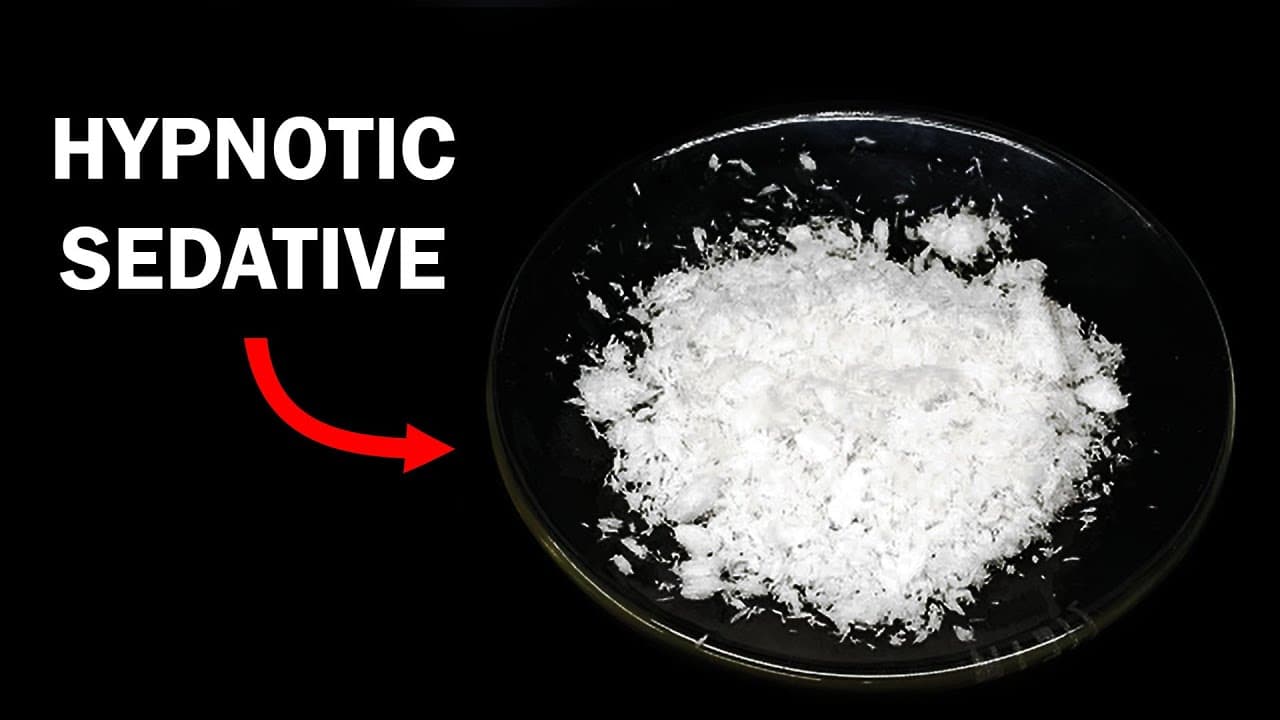
Chlorobutanol is an antimicrobial compound commonly used as a preservative in eyedrops and mouthwashes. It can be synthesized from acetone, chloroform, and potassium hydroxide through a base-catalyzed reaction. Though effective against bacteria and fungi, its use has declined due to stability issues and potential liver toxicity.
Transcript
Chlorobutanol has some strong antimicrobial properties, and it can kill both bacteria as well as fungus. It's most commonly found as a preservative in eyedrops, or as the active ingredient in some mouthwashes. However over the years, its use has become more and more limited, because it's not super stable at room temperature and degrades over long-t... Read More
Key Insights
- 😒 Chlorobutanol has strong antimicrobial properties against bacteria and fungi, but its use has decreased due to stability and toxicity issues.
- 💪 Its strong sedative effect and potential liver toxicity make it less desirable as a drug.
- 🔬 Chlorobutanol can be synthesized using readily available chemicals and basic laboratory equipment.
- ⚾ The synthesis involves a base-catalyzed reaction between acetone and chloroform, with the addition of potassium or sodium hydroxide.
- ❓ The synthesized chlorobutanol can be purified through filtration and recrystallization techniques.
- 🌸 The yield of chlorobutanol in the synthesis process was low, potentially due to loss in the vacuum desiccator.
- 🧫 Chlorobutanol's antimicrobial properties were demonstrated through a simple agar petri dish test.
Install to Summarize YouTube Videos and Get Transcripts
Explore YouTube Video Summarizer or Get YouTube Transcript Extractor
Questions & Answers
Q: What are the main uses of chlorobutanol?
Chlorobutanol is commonly used as a preservative in eyedrops and as an active ingredient in mouthwashes.
Q: Why is the use of chlorobutanol limited?
Chlorobutanol is not stable at room temperature and can degrade over time. It is also toxic to the liver and can have other side effects, leading to its decreased use.
Q: How does chlorobutanol work as an antimicrobial agent?
Chlorobutanol destabilizes and ruptures the cell membranes of bacteria and fungi, leading to their death. However, it can also damage animal cells, including human cells.
Q: Can chlorobutanol be synthesized easily?
Yes, chlorobutanol can be synthesized using acetone, chloroform, and potassium or sodium hydroxide. The chloroform can be made at home using a previous video as a guide.
Summary & Key Takeaways
-
Chlorobutanol is an antimicrobial compound used as a preservative in eyedrops and an active ingredient in mouthwashes.
-
Its use has become limited due to stability issues at room temperature and potential liver toxicity and other side effects.
-
Chlorobutanol can be synthesized using acetone, chloroform, and potassium or sodium hydroxide.
Read in Other Languages (beta)
Share This Summary 📚
Summarize YouTube Videos and Get Video Transcripts with 1-Click
Try YouTube Summary with ChatGPT & Claude or YouTube Transcript Generator
Explore More Summaries from NileRed 📚

Summarize YouTube Videos and Get Video Transcripts with 1-Click
Try YouTube Summary with ChatGPT & Claude or YouTube Transcript Generator