What Is Civilizational Optioneering?
TL;DR
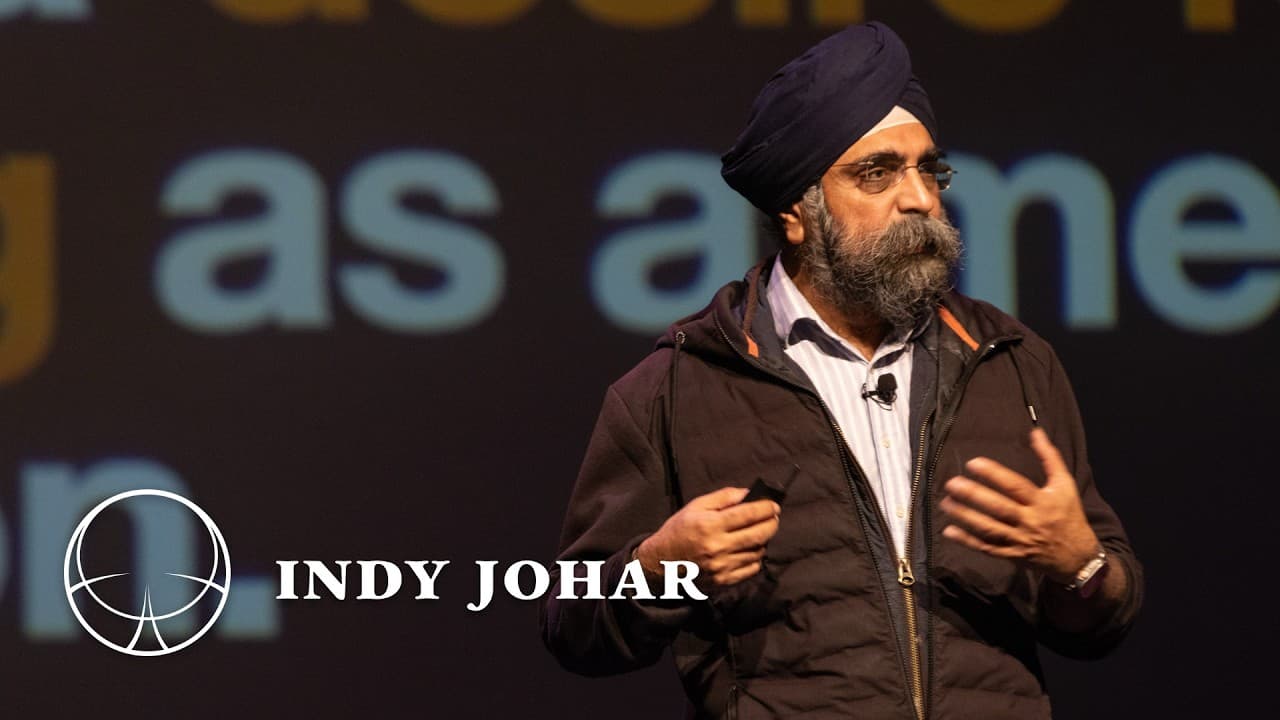
Indy Johar discusses the urgent need for systemic change in how we address global challenges like climate change, ecological breakdown, and geopolitical instability. He emphasizes the importance of expanding our options for future resilience by reimagining our foundational economies and embracing a planetary perspective. This involves new forms of collaboration, technology, and governance to ensure a sustainable future for all.
Transcript
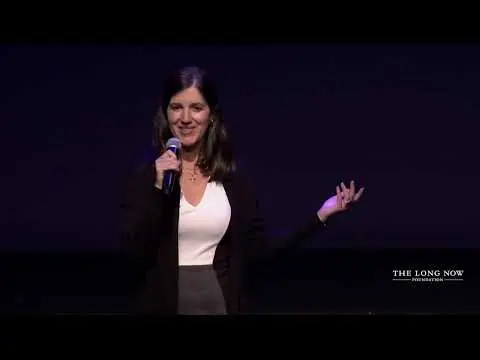
[music] [applause] Hi everyone. It is wonderful to be with you. I'm so excited to be hosting Indie for his talk tonight. Indie is a true provocator of better institutional and infrastructural futures. Indie is co-founder of Dark Matter Labs and it's described as a living lab for building options for the next economies. So we're thrilled to have Ind... Read More
Key Insights
- Systemic degenerative volatility is driven by climate breakdown and ecological instability.
- Volatility, not just end states, poses significant destabilizing risks.
- A new form of general-purpose technology is creating existential competition.
- Preserving and expanding planetary self-awareness is crucial.
- Reimagining foundational economies is necessary for resilience.
- Coordination technologies are needed for many-to-many collaboration.
- Learning should be the foundation of future organizing.
- Optionality is key to managing uncertainty and expanding future choices.
Install to Summarize YouTube Videos and Get Transcripts
Explore YouTube Video Summarizer or Get YouTube Transcript Extractor
Questions & Answers
Q: What is civilizational optioneering?
Civilizational optioneering refers to the process of expanding our choices and options for future resilience in the face of global challenges like climate change and ecological breakdown. It involves reimagining foundational economies, embracing new technologies, and fostering collaboration to create a sustainable and self-aware planetary future.
Q: Why is volatility more destabilizing than end states?
Volatility is more destabilizing than end states because it creates unpredictable and rapid changes that can lead to systemic shocks, such as price inequality and social unrest. These shocks can destabilize societies before reaching any new stabilization point, making it crucial to address the volatility itself rather than just focusing on long-term outcomes.
Q: How does Johar propose to preserve planetary self-awareness?
Johar proposes preserving planetary self-awareness by recognizing the interconnectedness of human, machine, and ecological systems as part of a self-aware planet. He suggests that this requires expanding our options through new forms of collaboration, technology, and governance that prioritize resilience, antifragility, and the capacity to adapt to complex challenges.
Q: What role do coordination technologies play in Johar's vision?
Coordination technologies play a crucial role in Johar's vision by enabling many-to-many collaboration and innovation. These technologies facilitate the organization of multiple agents working towards shared goals, such as cooling cities or stabilizing ecological systems, allowing for more effective and scalable solutions to complex global challenges.
Q: Why is learning central to future organizing?
Learning is central to future organizing because it allows individuals and organizations to adapt to and operate within complex environments. By prioritizing learning, entities can continuously expand their understanding, innovate, and respond to emerging challenges, making them more resilient and capable of navigating uncertainty.
Q: What is the significance of optionality in managing future risks?
Optionality is significant in managing future risks because it provides the flexibility to adapt to unforeseen challenges and uncertainties. By expanding the range of available options, societies can better respond to risks, ensuring more robust and resilient systems that can withstand shocks and continue to thrive.
Q: How does Johar view the relationship between humans and machines?
Johar views the relationship between humans and machines as part of a larger system contributing to planetary self-awareness. He argues that machines are as natural as humans and ecological systems, and that all these elements should be integrated to enhance the planet's capacity for self-awareness and resilience.
Q: What is the proposed new form of organizing value in the 21st century?
The proposed new form of organizing value in the 21st century involves moving away from traditional startups to a model rooted in learning and unbounded organizing. This approach emphasizes collaboration, adaptability, and the integration of diverse perspectives to address complex challenges and expand future options for resilience and sustainability.
Summary & Key Takeaways
-
Indy Johar highlights the need for a long-term perspective in addressing systemic global challenges. He argues that climate and ecological breakdowns, along with geopolitical tensions, are creating a volatile environment that threatens our future. To counter this, he proposes expanding our options through reimagined foundational economies and new forms of collaboration and governance.
-
Johar emphasizes the importance of preserving planetary self-awareness, which he sees as a rare and valuable state. He suggests that our current economic and social models are insufficient for this task and calls for a shift towards learning-based organizing and coordination technologies that enable many-to-many collaboration.
-
The talk concludes with a call to action for innovative thinking and organizing to expand our future options. By embracing a planetary perspective and recognizing our systemic entanglements, we can work towards a sustainable future that offers resilience and antifragility against the uncertainties of the 21st century.
Read in Other Languages (beta)
Share This Summary 📚
Summarize YouTube Videos and Get Video Transcripts with 1-Click
Try YouTube Summary with ChatGPT & Claude or YouTube Transcript Generator
Explore More Summaries from The Long Now Foundation 📚

Summarize YouTube Videos and Get Video Transcripts with 1-Click
Try YouTube Summary with ChatGPT & Claude or YouTube Transcript Generator