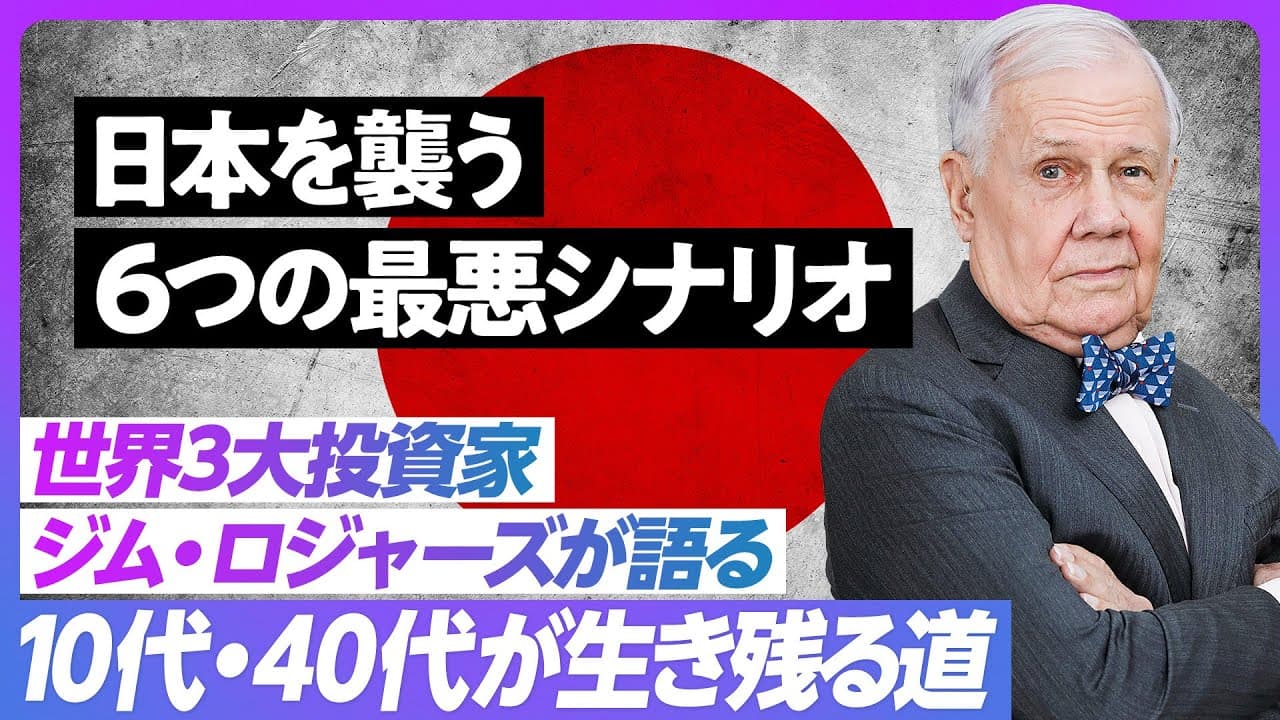
【ジム・ロジャーズ 最新経済予測】6つの最悪シナリオが日本を襲う/米国経済に楽観的になれない/10代がやるべきこと、40代が準備すべきプランB
TL;DR
Jim Rogers discusses Japan's economic future, highlighting six potential crises.
Transcript
foreign I would like to shock Japan it's one of my favorite countries in the world as I said and I don't want it to be ruined Japan has very serious problems ahead of it unless unless something changes and I love Japan I mean where will we get our sushi in 50 years I hope somebody's shocked I hope somebody wakes up and worries and makes changes bas... Read More
Key Insights
- Jim Rogers expresses concern for Japan's future, citing six worst-case scenarios including debt, low birth rates, and inflation.
- He emphasizes the need for Japan to stop excessive spending, halt money printing, and address demographic challenges.
- Rogers suggests that young Japanese should prepare for potential economic instability by learning foreign languages and acquiring protective skills.
- He advises Japanese investors to diversify their assets internationally, focusing on countries they know and love.
- Rogers believes the U.S. is facing significant challenges due to its massive debt and ongoing military engagements.
- He speculates that China might replace the U.S. as the leading global power, given historical patterns of shifting dominance.
- Rogers warns that Japan should avoid getting involved in conflicts between the U.S. and China, advocating for neutrality.
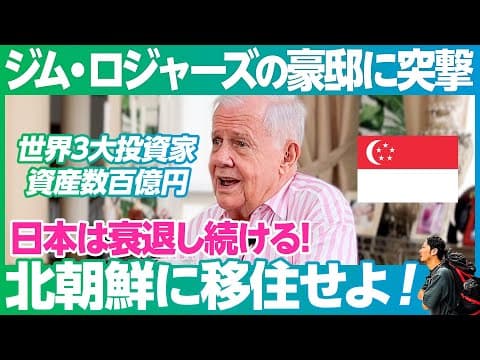
- He highlights the potential of investing in North Korea, citing its disciplined labor and proximity to China, despite current restrictions.
Install to Summarize YouTube Videos and Get Transcripts
Explore YouTube Video Summarizer or Get YouTube Transcript Extractor
Questions & Answers
Q: What are the six worst-case scenarios mentioned for Japan's economy?
Jim Rogers outlines six worst-case scenarios for Japan's economy: abandonment of the Japanese Yen, large debt impacting the economy, rising interest rates causing damage, inflation, low food self-sufficiency, and an aging society. These factors, if not addressed, could lead to severe economic challenges for Japan in the future.
Q: What solutions does Jim Rogers propose for Japan's economic issues?
Jim Rogers suggests that Japan should halt excessive spending, stop printing unlimited money, and address its demographic challenges by encouraging higher birth rates or allowing more immigration. He believes these measures are essential to prevent Japan from facing severe economic difficulties in the coming decades.
Q: Why does Jim Rogers believe young Japanese should learn foreign languages?
Jim Rogers advises young Japanese to learn foreign languages as a precaution against potential economic instability in Japan. He believes that knowing another language could be vital if they need to leave Japan due to economic collapse or social unrest, ensuring they have opportunities and security abroad.
Q: What is Jim Rogers' view on Japan's involvement in U.S.-China tensions?
Jim Rogers advises Japan to remain neutral and avoid involvement in U.S.-China tensions. He warns that wars have historically been detrimental to nations and suggests that Japan should focus on maintaining peace and stability rather than getting entangled in conflicts that could harm its interests.
Q: How does Jim Rogers view the future of the U.S. economy?
Jim Rogers is concerned about the U.S. economy due to its massive debt, which he describes as the largest in history. He warns that the U.S. is making mistakes similar to those of past empires, which could lead to significant economic problems in the future, affecting the next generation of Americans.
Q: What investment advice does Jim Rogers offer to Japanese investors?
Jim Rogers advises Japanese investors to diversify their investments internationally, focusing on countries they know and love. He emphasizes the importance of investing in areas where they have knowledge and interest, rather than following trends or external advice, to ensure successful and informed investment decisions.
Q: Why does Jim Rogers believe China might replace the U.S. as a global superpower?
Jim Rogers suggests that China could replace the U.S. as a global superpower due to historical patterns where dominant nations are eventually overtaken by rising powers. He notes China's economic growth, resources, and strategic positioning as factors that could contribute to its rise, despite its lack of Western-style democracy.
Q: What are Jim Rogers' thoughts on investing in North Korea?
Jim Rogers sees potential in investing in North Korea due to its disciplined and educated labor force, proximity to China, and untapped resources. However, he acknowledges current restrictions and political issues that prevent such investments, but historically, investing in similar emerging markets has proven lucrative.
Summary & Key Takeaways
-
Jim Rogers discusses Japan's economic challenges, highlighting six potential crises including rising debt, demographic decline, and inflation. He urges Japan to change its policies to avoid future economic ruin and suggests young Japanese prepare for instability by learning foreign languages.
-
Rogers advises Japanese investors to diversify their assets internationally, focusing on countries they know and love. He also warns of the U.S.'s growing debt and military engagements, suggesting that China might replace the U.S. as the leading global power.
-
Rogers cautions Japan against involvement in U.S.-China conflicts, advocating for neutrality. He also sees potential in investing in North Korea due to its resources and labor, though current restrictions prevent such investments.
Read in Other Languages (beta)
Share This Summary 📚
Summarize YouTube Videos and Get Video Transcripts with 1-Click
Try YouTube Summary with ChatGPT & Claude or YouTube Transcript Generator
Explore More Summaries from PIVOT 公式チャンネル 📚


Summarize YouTube Videos and Get Video Transcripts with 1-Click
Try YouTube Summary with ChatGPT & Claude or YouTube Transcript Generator