How to Make a Billion-Dollar Business Decision
TL;DR
Judge whether an opportunity deserves your attention by size: at $100M, only a billion-dollar path is worth years of commitment. Avoid irreversible bets that risk your reputation, a large share of your net worth, or years you cannot recover. When you do commit, go all in and eliminate the option of turning back.
Transcript
And so right now I have $2 billion paths. Well, what's the worst case scenario if you do it? Anything that damages your reputation is irreversible cuz you only get one reputation. You literally can't bankrupt yourself out. [ __ ] it. One of the hardest decisions in entrepreneurship is deciding which path to follow, especially when you have two or m... Read More
Key Insights
- A useful filter for opportunities is a 10x rule: at a $100M level, an opportunity should be worth a billion or more before it justifies dedicating years of attention, because bigger success brings bigger and better options.
- There are two billion-dollar paths on the table, both very different and relatively irreversible. One has more potential upside but more risk, and the other is more certain but offers lower upside.
- Irreversibility comes from several sources: betting a large percentage of your net worth or capital, risking your reputation, or spending time you can never get back, each carrying real opportunity cost.
- Reputation is irreversible because you only get one, and you cannot bankrupt your way out of a bad one. You should never take reputational risk where the only outcome is downside.
- Sean Servata's rule is to never bet the empire for a pot of gold: betting what you have and need for something you do not have and do not need is never a good bet.
- High-return, low-risk bets exist and are worth seeking. Tony Robbins told a story of a billionaire storing nickels because their metal is worth more than face value, planning to melt them for 40% once the coin is removed.
- Half measures fail. Hormozi once gave three hours of value at a trainer conference then rushed the pitch in 15 minutes, producing his biggest flop with about two sales, proving you should either sell or give value, not blend them.
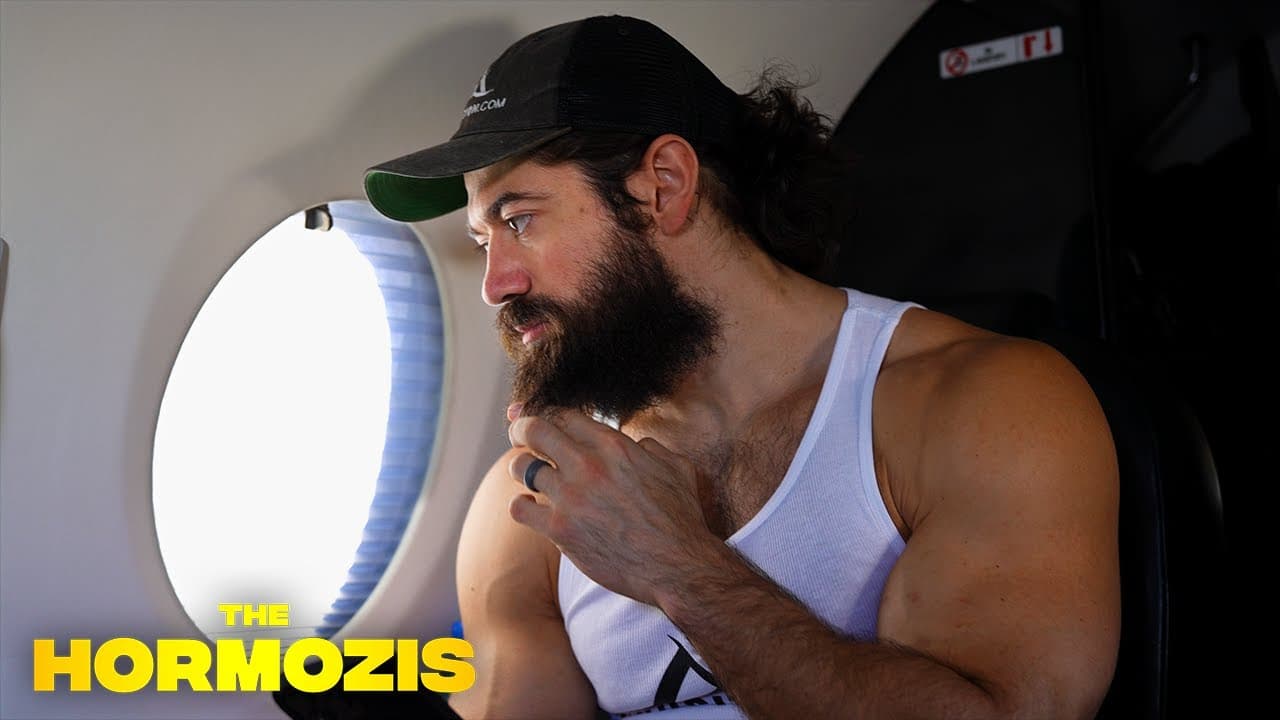
- Changing your environment helps big decisions. Hormozi's favorite place to think is on a plane, where distractions are few and looking down at the earth gives him literal perspective for good decisions.
Install to Summarize YouTube Videos and Get Transcripts
Explore YouTube Video Summarizer or Get YouTube Transcript Extractor
Questions & Answers
Q: How do you decide whether an opportunity is worth your time?
Use a 10x litmus test tied to your current level. At around $100M, an opportunity needs to be worth a billion or more before it justifies dedicating years to it. The reasoning is that the better and bigger you get, the bigger and better your opportunities become, so the hardest part of growth is that good options multiply. A simple size threshold helps you quickly determine how big an opportunity must be to earn your attention.
Q: What makes a business decision irreversible?
Several things make a decision irreversible. Betting a certain percentage of your net worth or capital is one, and Hormozi says he dislikes making those kinds of bets. Damaging your reputation is another, because you only get one reputation and cannot bankrupt your way out of a bad one. Time is a third factor, since every moment carries the opportunity cost of a higher return you could have earned elsewhere and can never get back.
Q: Why should you avoid reputational risk?
You should never take reputational risk where there is only downside, because reputation is irreversible. You only get one reputation, and unlike money you literally cannot bankrupt yourself out of a bad one. Hormozi distinguishes this from supporting a cause that might anger some people while attracting others, which is a trade-off rather than a pure risk. A trade-off moves you toward a different group, whereas reputational risk with only downside offers no compensating upside.
Q: What is Sean Servata's rule about betting?
Sean Servata's rule is to never bet the empire for a pot of gold. As Hormozi quotes him, you bet what you have and need for something you do not have and do not need, and that is never a good bet. The principle guards against risking everything you have already built for an uncertain gain you neither require nor depend on, especially when the potential loss is large relative to your existing position.
Q: What does the Tony Robbins nickel story illustrate?
The nickel story illustrates finding high-return, low-risk bets where you cannot really lose. Tony Robbins told of a billionaire who knew the metal in a nickel is worth more than the coin's face value. He stored nickels as an investment, planning that the day the currency is changed or the coin removed because it makes no sense, he could melt them and earn about 40% on his money. The lesson is to seek investments that are high return and low risk.
Q: Why do half measures fail in sales presentations?
Half measures fail because they mix value and selling without committing to either. Hormozi once spoke at a personal trainer conference, gave over three hours of strong value, then rushed a normally 90-minute pitch into about 15 minutes, even mumbling the price. He faced huge resistance and made only about two sales, his biggest flop ever. The takeaway is that you either sell or you do not, and being in between just gives you an excuse to feel like progress without truly committing.
Q: How do you fully commit to a big decision?
The best way to go all in is to eliminate the possibility of going back on the decision. Many people spend most of their lives half in and half out, which Hormozi considers not being in at all, since it only creates an illusion of progress. Books about going pro, going all in, and burning the boats share the idea that sometimes you must make a bet and be willing to be wrong, because making no bet guarantees you will be wrong.
Q: How does Hormozi approach speaking to an audience more expert than him?
At a real estate brokerage event, Hormozi noted everyone there knows more about selling houses than he does, proven by the fact that they have all sold more houses than he has. Rather than compete on their expertise, which he calls a terrible position, he plans to say how he would win if he were starting from scratch. If selling houses means winning, that framework will still apply, letting him add value without pretending to out-teach experts.
Summary & Key Takeaways
-
One of the hardest parts of entrepreneurship is choosing between two or more good paths. Facing a multi-year commitment, the approach is to spend nearly every waking hour gathering data, and to change environments, with planes being a favorite distraction-free place to gain perspective and make good decisions.
-
A 10x litmus test decides what deserves attention: at a $100M level, only a billion-dollar or larger opportunity qualifies. Two billion-dollar paths exist, both irreversible, one with higher upside and risk, the other more certain with lower upside. Irreversibility stems from net-worth exposure, reputation, and unrecoverable time.
-
Commitment means going all in and removing the option to turn back, since being half in is not being in at all. Making no bet guarantees being wrong. At a real estate brokerage event, rather than teach selling houses to people who sell more, the plan is to show how one would win from scratch.
Read in Other Languages (beta)
Share This Summary 📚
Summarize YouTube Videos and Get Video Transcripts with 1-Click
Try YouTube Summary with ChatGPT & Claude or YouTube Transcript Generator
Explore More Summaries from Alex Hormozi 📚



Summarize YouTube Videos and Get Video Transcripts with 1-Click
Try YouTube Summary with ChatGPT & Claude or YouTube Transcript Generator