Architect Breaks Down Details of Wes Anderson's “The Grand Budapest Hotel" | Architectural Digest
TL;DR
The Grand Budapest Hotel’s architecture creates a deliberately unreal mountaintop retreat through a model-like exterior, French château features, Secessionist decoration, and a grand multi-story lobby. Architect Michael Wyetzner highlights practical and symbolic details, from the 1600s mansard roof and portal-like funicular arch to the lobby’s circular desk, stone base, and ornate skylight. Read on to see how each feature shapes the hotel’s fantasy and grandeur.
Transcript
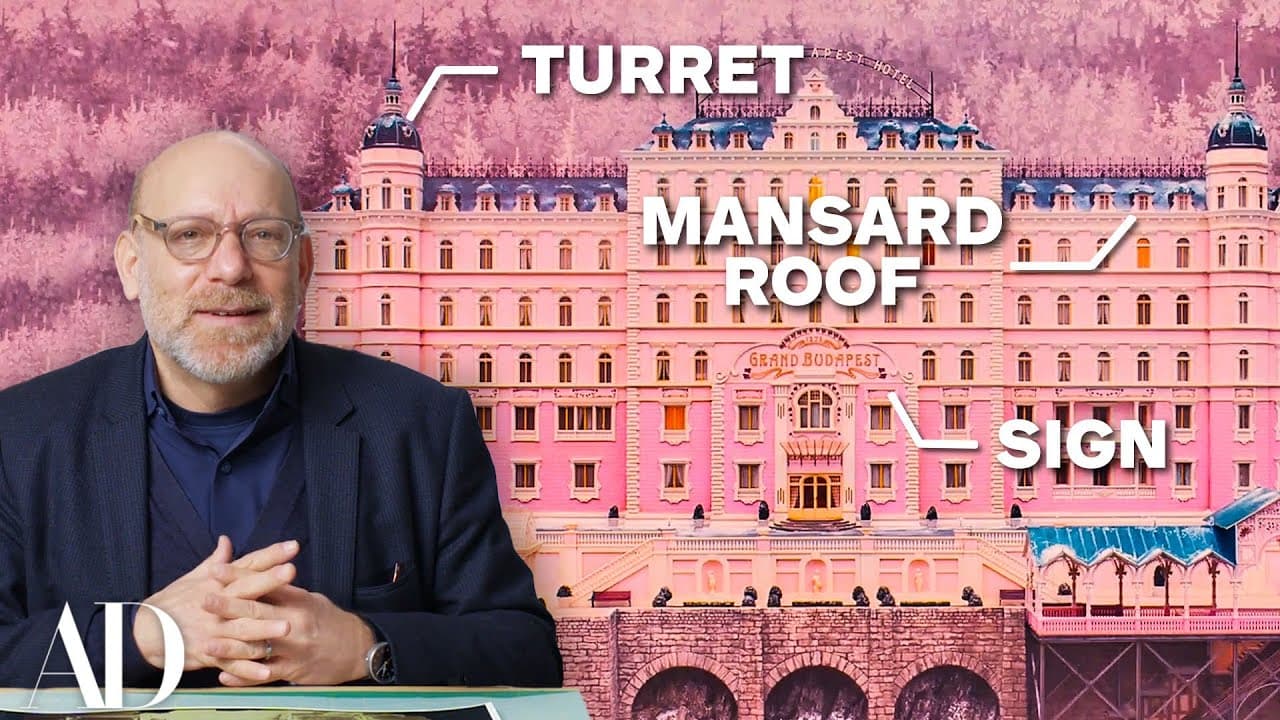
hi i'm michael weitzner and i've been an architect for 35 years and today i'm breaking down some of the hidden architectural details from the film the grand budapest hotel let's take a look at the exterior of the hotel a picturesque elaborate and once widely celebrated establishment so here's what jumps out at me first off it's obviously a model it... Read More
Key Insights
- 🥇 The film's architectural details reflect a fantasy-like setting, emphasizing that it is not a real place.
- 🍟 The French chateau elements add elegance and grandeur to the hotel's design.
- 🎨 The use of decorative motifs and designs from the secessionist movement creates a sense of artistry and rebellion against conservative art movements.
- 😥 The multi-story entrance lobby showcases grandeur, with a circular desk as the focal point.
- 🙂 The skylight in the lobby floods the space with natural light and showcases ornate glass mullion patterns.
- ⌛ The transition from decorative stone to industrialized steel in the lobby reflects the changing architectural trends of the time.
- 🎨 The colorful and symmetrical design of the stairwell challenges traditional architectural norms.
- 👨🔬 The bathhouse design features simple arches on brick piers, reminiscent of Romanesque architecture.
- 👻 The dining hall transitions from an elegant setting to a drab Soviet-influenced design in the 1960s, depicting the hotel's decline.
Install to Summarize YouTube Videos and Get Transcripts
Explore YouTube Video Summarizer or Get YouTube Transcript Extractor
Questions & Answers
Q: What hidden architectural details appear in The Grand Budapest Hotel?
Architect Michael Wyetzner identifies French château features, including two turrets, domes, curved dormers, and a mansard roof. He also highlights the rusticated base, Art Nouveau entrance canopy, Secessionist ornament, grand funicular arch, and multi-story lobby.
Q: Why does the hotel’s exterior look like a model?
Wyetzner says the exterior is obviously a model and interprets that choice as the director signaling that the setting is a fantasy rather than a real place. Its French château form appears to grow directly out of the mountain.
Q: What is the purpose of the mansard roof?
Mansard roofs were developed in Paris in the 1600s by an architect named Mansard. Their angled form allowed builders to skirt the zoning laws of the time and create an inhabitable extra floor at the top.
Q: Why does the hotel resemble a European sanatorium?
The mountain setting and resort-like design recall European sanatoriums that operated through the 1930s. Wealthy guests sometimes stayed for a month or more to recover from tuberculosis or other ailments, recharge, and use health-club and spa facilities.
Q: What does the funicular entrance arch symbolize?
Wyetzner explains that arches function as portals carrying people from one place into another. Here, the grand arch marks the transition into the separate world of the mountaintop retreat.
Q: How does the hotel entrance reflect Secessionist design?
Gold decoration on a white background, ornate columns, arched windows, and leaf-, flower-, stem-, and stalk-like patterns recall the Secessionist movement. That movement broke from conservative 19th-century European academies and sought to unify architecture, painting, and decorative arts.
Q: Why does the close view of the hotel entrance differ from the exterior shot?
Wyetzner notes that the entrance does not match the earlier long shot: it has only one small door, and the hotel name appears directly above it instead of high on the building. The closer design also emphasizes ornate columns, globe-like fixtures, arched windows, and a curved window.
Q: What makes the hotel lobby feel grand?
The multi-story lobby centers on a circular desk beneath a grand chandelier, while stone at the lowest level gives way to lighter plaster toward the skylight. The skylight floods the atrium with light, and its small panes form ornate mullion patterns above thick arches and decorative columns.
Summary & Key Takeaways
-
The exterior of the hotel features a fake, fantasy-like design with French chateau elements, including turrets, domes, and a mansard roof. The base gives the impression of growing out of the mountain.
-
The entrance to the funicular portrays a grand arch, symbolizing the transition into another world.
-
The hotel entrance showcases ornate columns, arched windows, and decorative elements inspired by the secessionist design movement.
Read in Other Languages (beta)
Share This Summary 📚
Summarize YouTube Videos and Get Video Transcripts with 1-Click
Try YouTube Summary with ChatGPT & Claude or YouTube Transcript Generator
Explore More Summaries from Architectural Digest 📚
Summarize YouTube Videos and Get Video Transcripts with 1-Click
Try YouTube Summary with ChatGPT & Claude or YouTube Transcript Generator