What Fueled Stalin's Dangerous Mindset?
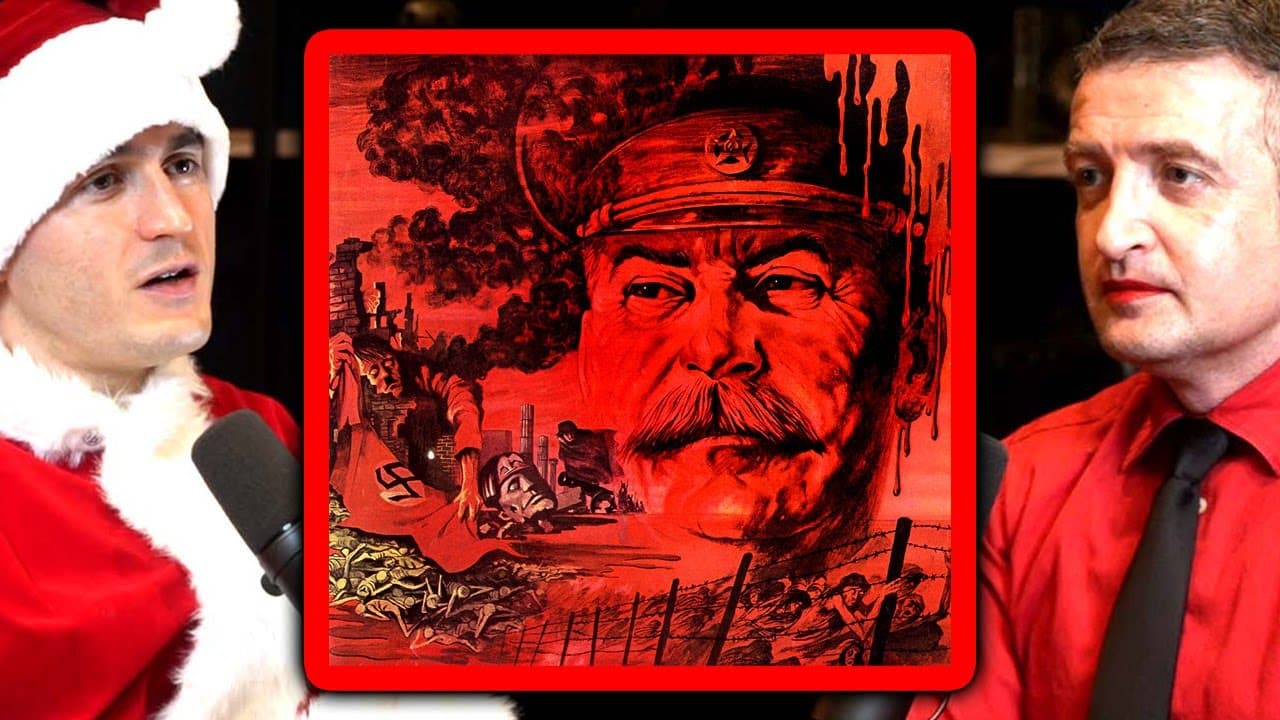
TL;DR
Stalin's dangerous mindset stemmed from an environment that excessively glorified him, reinforcing his belief in the effectiveness of his brutal policies. His ultimate ambition was to create a homogeneous Soviet society by breaking the spirits of diverse populations through fear and compliance. This mindset led him to dismiss failures and ruthlessly pursue power.
Transcript
what do you think was going to Stalin's mind in the 20s and the 30s like did he directly like allow himself to acknowledge the reality of the suffering he was causing like what does it take to be that human I I'm almost interested to extract lessons from that for leaders of today like how hard is it is it that Stalin is evil or can you just delude ... Read More
Key Insights
- 👏 Stalin's mindset was influenced by the constant praise and glorification he received from those around him.
- 👯 He believed in the necessity of breaking people's spirits to achieve homogeneity and compliance within the Soviet Union.
- 🎮 Stalin's ego and desire for control likely played a role in his refusal to acknowledge failures and his inclination to double down on policies.
- 🎙️ More videos with Michael Malice:
Install to Summarize YouTube Videos and Get Transcripts
Explore YouTube Video Summarizer or Get YouTube Transcript Extractor
Questions & Answers
Q: Did Stalin believe the suffering he caused was justified or did he delude himself?
Stalin was surrounded by a culture that glorified him and constantly reassured him of his greatness. This likely led to a delusion where he genuinely believed he was doing what was best for the country.
Q: Was collectivization a failure?
While collectivization may have initially been seen as a means to enact communism, it eventually became a tool for breaking the Ukrainian spirit and creating a compliant population. Its success was measured by the elimination of dissent.
Q: How did Stalin view himself compared to Lenin?
Stalin recognized that he didn't live up to Lenin's level as a philosopher or thinker. This likely played into his psychology and may have contributed to his need for control and the crushing of any dissent.
Q: Is ruthlessness and hardness valued in Russian culture?
Yes, to a certain extent. Russian culture values toughness and stoicism, with a pride in not being easily manipulated by others' suffering. This attitude is still present in Russian society today.
Summary & Key Takeaways
-
Stalin's belief in his own greatness was fueled by a culture that constantly praised him and justified his policies.
-
He surrounded himself with people who reinforced his ego and never questioned his decisions.
-
Stalin's goal was to standardize and homogenize the diverse Soviet Union, which required breaking people's spirits and forcing compliance.
Read in Other Languages (beta)
Share This Summary 📚
Summarize YouTube Videos and Get Video Transcripts with 1-Click
Try YouTube Summary with ChatGPT & Claude or YouTube Transcript Generator
Explore More Summaries from Lex Clips 📚




Summarize YouTube Videos and Get Video Transcripts with 1-Click
Try YouTube Summary with ChatGPT & Claude or YouTube Transcript Generator