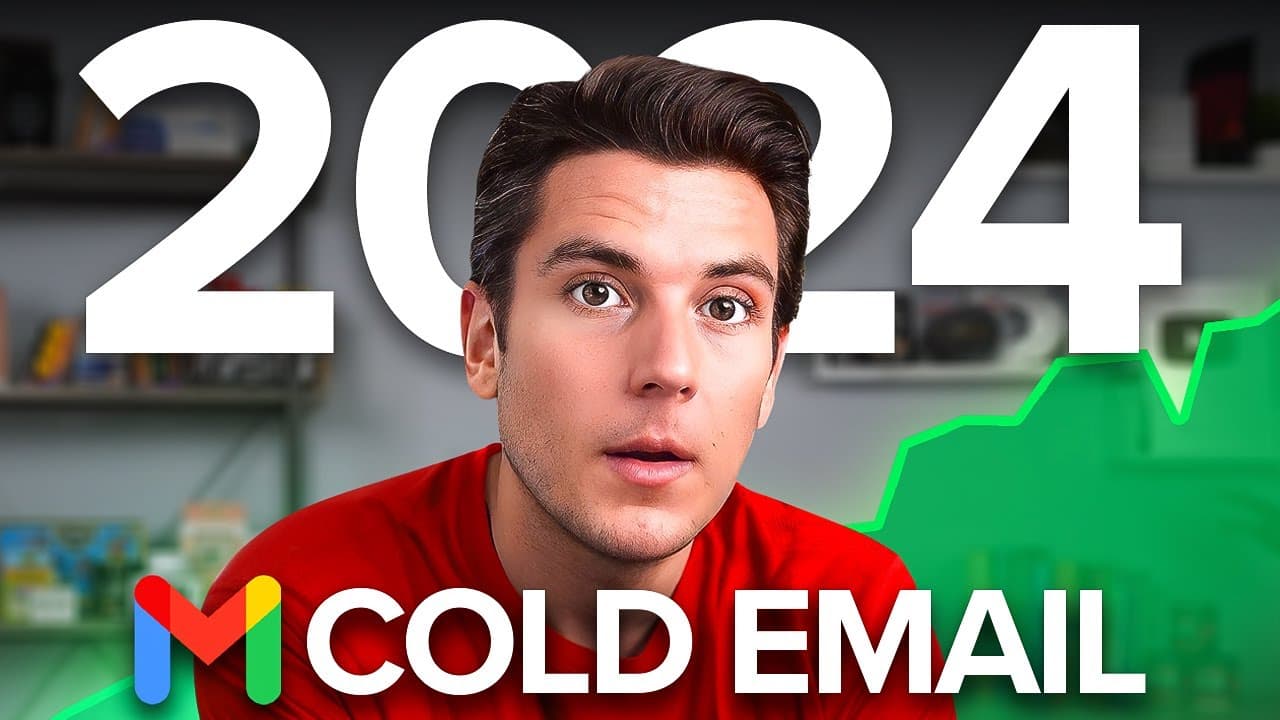
How Should You Run Cold Email Campaigns in 2024 and Beyond?
TL;DR
Run cold email campaigns by targeting verified business contacts, spreading outreach across multiple domains and accounts, warming new accounts for about two weeks, and sending relevant messages that address each prospect’s business problems. The recommended setup connects three email accounts per domain and rotates sending instead of relying on one inbox. Read on for the complete setup, message structure, and follow-up approach.
Transcript
today we'll be going over how to run cold emails going into 2024 and Beyond recently there has been a ton of changes on Google in their cold email policy that has had people screaming like the death of cold email this new setup is a must to implement for 2024 if you want to continue to book hundreds of sales calls every single month so let's start ... Read More
Key Insights
- Accurate prospect data is the foundation of cold email because indiscriminate lists can contain irrelevant or personal addresses. Filtering for business role, location, industry, company details, management level, and keywords helps identify people who are more likely to match the offer.
- Google's announced requirements focus on bulk senders delivering over 5,000 messages to Gmail accounts each day. The transcript distinguishes personal Gmail recipients from Google Workspace business addresses and argues that carefully targeted B2B outreach should prioritize verified company email accounts.
- Email verification is a protective step that checks whether a selected address is active before outreach begins. The demonstrated lead-finding workflow verifies contacts when they are added to a campaign, reducing the likelihood that messages bounce and damage the sending domain's reputation.
- Domain diversification is a way to distribute cold email activity across several sending identities. The recommended setup buys variations of the primary company domain, creates multiple addresses for each domain, and avoids relying on a personal inbox or one newly created account.
- Account warm-up is a gradual exchange of messages through newly connected email accounts. The transcript recommends enabling warm-up for about two weeks before regular campaigns so that fresh accounts can begin developing a pattern of legitimate sending activity.
- Sending pools are groups of warmed email accounts placed into campaign rotation. Using several accounts prevents one blocked or spam-affected inbox from stopping all outreach, protecting continuity for lead generation, appointment booking, and potential revenue opportunities.
- Message relevance is created by connecting personalization, pain, and business impact. The suggested structure opens with a compliment, identifies a problem specific to the prospect's industry, describes its consequences, and then introduces an offer using language the recipient understands.
- Trust is built by offering value before pushing for an appointment. The initial email can offer a guide or another useful resource, while later messages follow up on that value, restate the desired outcome, and finish with a light final message that invites a clear response.
Install to Summarize YouTube Videos and Get Transcripts
Explore YouTube Video Summarizer or Get YouTube Transcript Extractor
Questions & Answers
Q: How should you run cold email campaigns in 2024 and beyond?
Start with relevant business contacts, verify their addresses, and distribute outreach across multiple warmed domains and email accounts. Then send personalized messages that identify a prospect’s problem, explain its consequences, present a specific offer, and provide value before requesting a call.
Q: How should a cold email prospect list be built?
Build the list from relevant business data instead of collecting unqualified or personal addresses. The demonstrated lead finder filters prospects by job title, location, industry, employee information, company keywords, management level, and other business characteristics.
Q: What do Google’s bulk email requirements mean for cold outreach?
The transcript says the requirements concern bulk senders delivering over 5,000 messages to Gmail accounts every day. These senders must meet a spam-rate threshold, support one-click unsubscribe, process unsubscribe requests within 2 days, and strongly authenticate their messages; the speaker distinguishes these Gmail accounts from Google Workspace business addresses.
Q: Why should cold email addresses be verified before sending?
Verification checks that a selected email address is active before outreach begins. This reduces bounced messages that could damage the sending domain’s reputation, and the demonstrated lead finder automatically verifies a contact when it is added to a campaign.
Q: How should domains and accounts be organized for cold email?
The recommended setup uses multiple variations of the company’s primary domain and connects three email accounts to each domain. Distributing messages among those accounts avoids placing the entire campaign’s activity and risk on one personal inbox or newly created sender.
Q: How does cold email account warm-up work?
Warm-up gradually sends messages back and forth through fresh email accounts to establish trustworthy sending activity. The transcript recommends warming the connected accounts for about two weeks before using them for regular campaigns.
Q: Why should cold email campaigns rotate across multiple sending accounts?
Rotation distributes campaign activity instead of making outreach depend on a single inbox. If one account lands in spam, disconnects, or stops working, the other warmed accounts can continue supporting lead generation and appointment booking.
Q: How should an effective cold email be structured?
Open with the recipient’s name and a personalized compliment, then identify a problem relevant to the prospect’s industry and explain its business or personal consequences. Present the offer in language the prospect understands, name the delivery mechanism and expected result, include a guarantee, and offer a useful resource before requesting a sales conversation.
Summary & Key Takeaways
-
Cold email remains viable when outreach targets relevant business contacts instead of sending indiscriminately to personal Gmail accounts. A lead finder can filter prospects by role, location, industry, company characteristics, keywords, and management level. Verifying each selected address before sending reduces bounced messages and helps protect the reputation of the sending domain.
-
The recommended sending setup uses several related domains, multiple email accounts on each domain, and a warm-up period before campaigns begin. Warm-up gradually exchanges messages through new accounts to establish sending activity. Rotating campaigns across warmed accounts spreads the workload and prevents the entire outreach operation from depending on a single account.
-
Effective messages demonstrate knowledge of the recipient's business through a personalized opening, a relevant pain point, and the consequences of leaving that problem unresolved. The offer should use the prospect's language, name a distinctive delivery mechanism, state the expected result, and include a guarantee. A useful resource can establish trust before requesting an appointment.
Read in Other Languages (beta)
Share This Summary 📚
Summarize YouTube Videos and Get Video Transcripts with 1-Click
Try YouTube Summary with ChatGPT & Claude or YouTube Transcript Generator
Explore More Summaries from Instantly 📚
Summarize YouTube Videos and Get Video Transcripts with 1-Click
Try YouTube Summary with ChatGPT & Claude or YouTube Transcript Generator