NVIDIA’s Tech: Impossible Water Simulation!
TL;DR
New techniques improve large-scale water simulations in real time.
Transcript
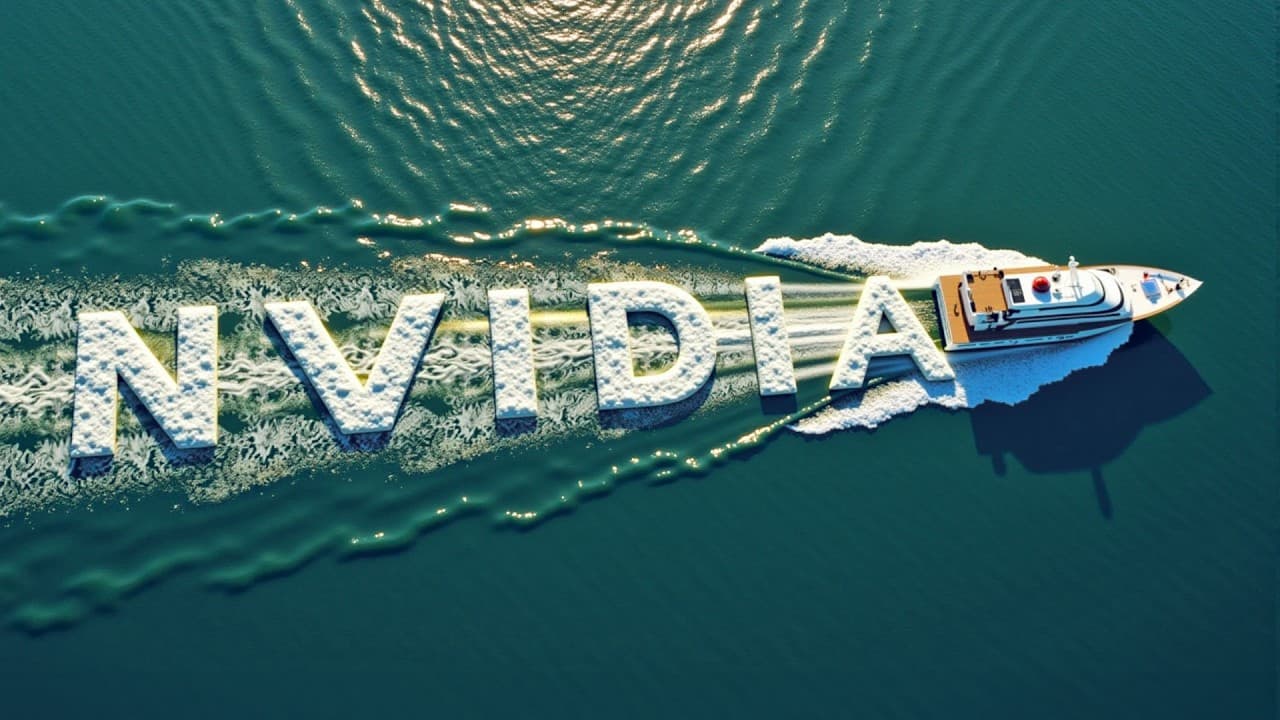
This amazing paper is a collaboration between NVIDIA and IST Austria on how to simulate water, but not just any piece of water, like many many previous techniques. No-no, these are large-scale simulations with boats, dispersive reflections, waves sloshing onto the beach, and oh my, a tiny bit of flooding as well. And you are going to hear... Read More
Key Insights
- 💦 The collaboration between NVIDIA and IST Austria showcases advancements in fluid dynamics, particularly for large-scale water simulations.
- 👻 Combining two simulation methods allows for accurate modeling of complex interactions, like waves, boat wakes, and flooding.
- 💦 The technique addresses numerical inaccuracies which previously caused water to disappear during animations, a significant improvement.
- 👻 Real-time processing allows for immediate visual feedback, significantly enhancing the development process in creative industries.
- ❓ Increased detail in simulations marks a leap forward in achieving photorealistic water animations for entertainment and educational use.
- ⏮️ Improved splashing dynamics result in more engaging visual representations, overcoming limitations of previous methods.
- 🫗 The simulation of surface tension dynamics introduces exciting possibilities for understanding liquid behavior in varied environments.
Install to Summarize YouTube Videos and Get Transcripts
Explore YouTube Video Summarizer or Get YouTube Transcript Extractor
Questions & Answers
Q: What are the main innovations introduced in the new water simulation techniques?
The paper introduces a novel technique that combines two existing methods for better simulation results. This approach not only achieves more accurate representations of water surfaces but also resolves issues related to water disappearance over time and enhances overall detail. The integration of these methods has resulted in a real-time simulation, which permits more dynamic and engaging visualizations applicable in various fields like gaming and film.
Q: Why have traditional methods struggled with accurate water simulations?
Traditional water simulation methods often specialize in specific aspects, such as either achieving realistic waves or accurately depicting boat wakes. However, they typically fail to perform both correctly due to their inherent limitations. This has resulted in visual artifacts, such as water bouncing back from shores unrealistically or creating inaccurate wake patterns. The need for a more holistic approach led researchers to explore the combination of multiple techniques.
Q: How does the new technique maintain the stability of water during simulations?
The new method addresses numerical inaccuracies that can lead to water disappearing in simulations. By fusing two different simulation theories, the technique enhances stability and produces consistent water behavior throughout the simulation duration. This is a significant improvement that addresses one of the long-standing challenges faced in fluid dynamics and makes the simulations more reliable and realistic.
Q: Can you explain the significance of the "perfectly willing particles" mentioned in the video?
"Perfectly willing particles" refers to the improved representation of droplets in the new simulation technique. Unlike earlier methods where particles sometimes failed to separate or exhibited unwanted stickiness, this new approach allows particles to behave more naturally, ensuring that splashes are more realistic. This enhancement leads to better representations of dynamic fluid interactions, ultimately resulting in more visually compelling animations.
Q: What are the implications of achieving real-time simulation capabilities?
Real-time simulation capabilities are revolutionary for various industries, allowing for immediate visual feedback in applications like video games, virtual reality, and film production. This advancement not only saves time in rendering but also facilitates on-the-fly adjustments during development, offering creators the ability to iterate quickly and refine their work based on real-time results.
Q: How does the new method perform with thin structures in water simulations?
Previous fluid simulation techniques often struggled when simulating thin structures, leading to artifacts such as clogged slits during dam breaks. The new approach effectively overcomes this challenge, ensuring that liquids interact correctly with thin geometries, enhancing the realism of the resulting animations and providing a more accurate depiction of fluid behavior in complex environments.
Summary & Key Takeaways
-
A collaboration between NVIDIA and IST Austria presents advanced water simulation techniques that combine multiple methods for accurate large-scale simulations, including realistic boat wakes and flooding scenarios.
-
The new approach resolves past issues of water disappearing over time and enhances simulation detail, all while operating in real time, making it an essential advancement in computational fluid dynamics.
-
Comparisons with past techniques highlight improvements in splash dynamics and surface tension simulations, showcasing the potential for more realistic animations in various applications.
Read in Other Languages (beta)
Share This Summary 📚
Summarize YouTube Videos and Get Video Transcripts with 1-Click
Try YouTube Summary with ChatGPT & Claude or YouTube Transcript Generator
Explore More Summaries from Two Minute Papers 📚





Summarize YouTube Videos and Get Video Transcripts with 1-Click
Try YouTube Summary with ChatGPT & Claude or YouTube Transcript Generator