How to Build a Successful Hardware Startup
TL;DR
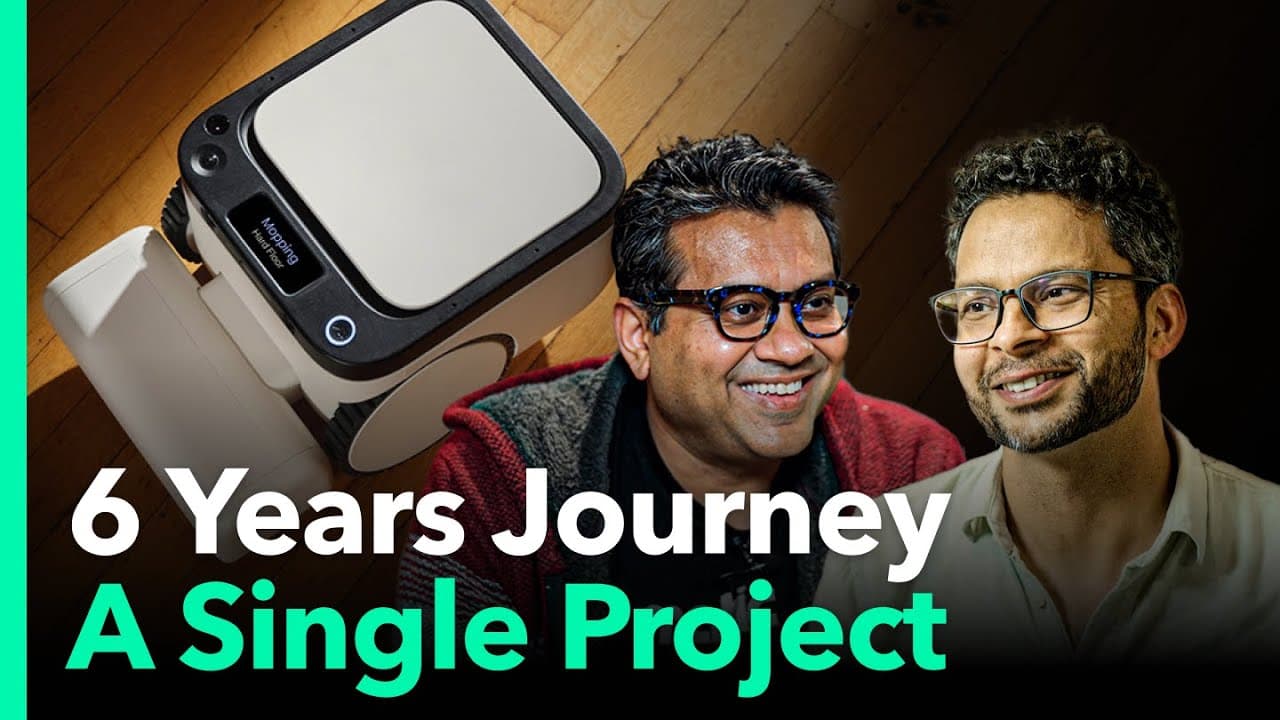
Building a hardware startup requires patience and resilience. Matic's founders invested $1.5 million and six years in developing a fully autonomous floor-cleaning robot. Their journey highlights the importance of solving real-world problems and the challenges of integrating hardware and software to create innovative products.
Transcript
the hardware startup is definitely not for the weak harded it takes time uh so if you look at the NASDAQ or stock market and look at the top technology valued company I think out of like top five four are Hardware startups so yes Hardware startups are hard but if you can build something amazing they you can really build in extremely valuable I'm n ... Read More
Key Insights
- Hardware startups are challenging but can lead to highly valuable companies.
- Matic's founders left Google to address unsolved societal problems with robotics.
- Their first product is a floor-cleaning robot using advanced vision and autonomy.
- Matic raised $30 million from notable investors like the Collison brothers.
- They emphasize solving real problems, not just creating cool technology.
- The initial prototype was built using existing vacuum parts and software algorithms.
- Hardware requires addressing market risks and ensuring customer demand.
- Their mission is to save time and energy through autonomous robots.
Install to Summarize YouTube Videos and Get Transcripts
Explore YouTube Video Summarizer or Get YouTube Transcript Extractor
Questions & Answers
Q: How did Matic's founders fund their startup?
Matic's founders initially invested $1.5 million of their own money during the bootstrap stage of their startup. They believed in their vision of creating a fully autonomous floor-cleaning robot and were committed to solving real-world problems. Their dedication eventually led to raising $30 million from notable investors, including the Collison brothers and Jack Dorsey.
Q: What problem does Matic's floor-cleaning robot solve?
Matic's floor-cleaning robot addresses the inefficiencies of existing robotic vacuum cleaners, particularly in terms of navigation and cleaning efficacy. By using advanced vision technology, the robot can autonomously navigate and adjust its cleaning methods based on the type of surface, ensuring a more effective and human-like cleaning process.
Q: Why did Matic's founders choose to focus on hardware?
Matic's founders chose to focus on hardware because they identified a significant opportunity to solve real-world problems that couldn't be addressed with software alone. They believed that creating a fully autonomous robot required integrating both hardware and software, and they were passionate about addressing unsolved societal issues through robotics.
Q: What challenges did Matic face in developing their product?
Matic faced several challenges in developing their product, including the complexity of integrating hardware and software, the need for extensive prototyping, and the importance of solving real-world problems. They also had to address market risks and ensure there was sufficient customer demand for their innovative floor-cleaning robot.
Q: How does Matic's robot differ from existing robotic vacuums?
Matic's robot differs from existing robotic vacuums by using advanced vision technology to navigate and clean autonomously. Unlike other robots that may struggle with navigation and cleaning efficacy, Matic's robot can recognize different surfaces and adjust its cleaning methods accordingly, offering a more human-like and effective cleaning experience.
Q: What is Matic's mission with their autonomous robots?
Matic's mission is to save time and energy for users through the development of truly autonomous robots. They aim to create innovative products that can efficiently handle tasks like floor cleaning, allowing people to focus on other activities. Their vision involves leveraging robotics, machine learning, and computer vision to automate various aspects of daily life.
Q: What role did 3D printing play in Matic's development?
3D printing played a crucial role in Matic's development by enabling rapid prototyping and iteration of their product designs. The availability of 3D printers allowed them to quickly test and refine their ideas, significantly reducing the time and cost associated with building and modifying hardware components during the early stages of their startup.
Q: How did the founders' background influence Matic's development?
The founders' background in computer vision and their experience at companies like Google and Like.com significantly influenced Matic's development. Their expertise in vision technology and understanding of both hardware and software integration helped them create a more advanced and autonomous floor-cleaning robot. Their previous experiences also taught them the importance of solving real-world problems and building products with a clear market demand.
Summary & Key Takeaways
-
Matic's founders invested their own $1.5 million over six years to develop a fully autonomous floor-cleaning robot. They emphasize the importance of solving real-world problems and integrating hardware and software effectively. Their journey demonstrates the challenges and potential rewards of building a hardware startup in Silicon Valley.
-
The founders of Matic left Google to pursue their passion for robotics, aiming to address unsolved societal problems. They raised $30 million from investors like the Collison brothers and Jack Dorsey. Their first product, a floor-cleaning robot, uses advanced vision technology to enhance autonomy and efficiency.
-
Building a successful hardware startup involves understanding market risks and ensuring customer demand. Matic's founders highlight the need for patience and resilience, as well as a focus on creating products that solve genuine problems. Their mission is to save time and energy through truly autonomous robots.
Read in Other Languages (beta)
Share This Summary 📚
Summarize YouTube Videos and Get Video Transcripts with 1-Click
Try YouTube Summary with ChatGPT & Claude or YouTube Transcript Generator
Explore More Summaries from EO 📚


Summarize YouTube Videos and Get Video Transcripts with 1-Click
Try YouTube Summary with ChatGPT & Claude or YouTube Transcript Generator