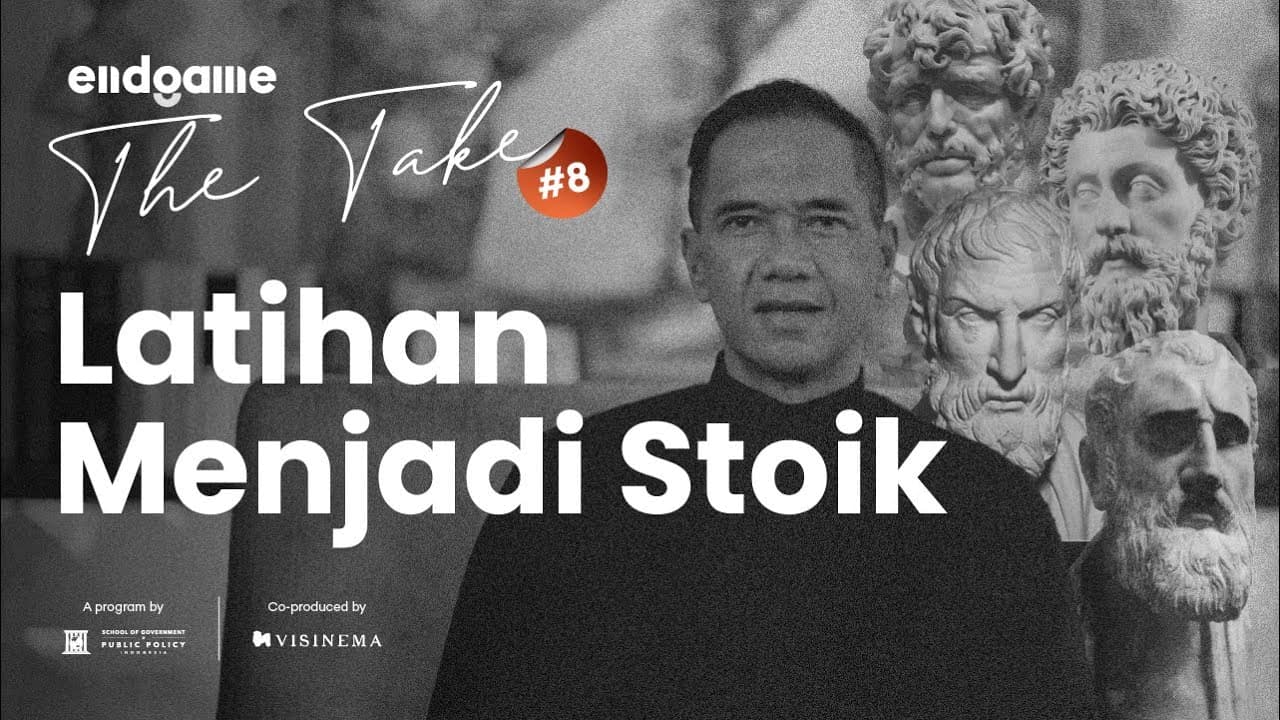
Stoikisme: Obat Resah Manusia Modern | Endgame The Take #8
TL;DR
Stoikisme membantu manusia modern menghadapi keresahan dengan membedakan hal yang dapat dikendalikan dan yang tidak. Endgame The Take #8 menguraikan praktik seperti menerima bahwa segala sesuatu bersifat sementara, merencanakan kemungkinan terburuk, mengambil jeda dan napas dalam saat stres, menggunakan humor, serta merefleksikan kegiatan harian. Baca selanjutnya untuk memahami langkah-langkah praktis menjadi lebih tabah, bijak, dan siap menghadapi perubahan.
Transcript
Hello friends, I am often asked on social media: "I want to contribute to a cooler Indonesia in 2045. Where should I start?" Maybe one of my suggestions is to study public policy. Well, understanding the policy analysis allows us to actualize solutions for various problems, especially the structural ones. Not only in government but also in the... Read More
Key Insights
- Public policy education is crucial for addressing structural problems and is beneficial in various sectors, including government, business, and non-profits.
- Stoicism, originating from ancient Greece and Rome, provides a framework for living a fulfilled and happy life by focusing on what is within our control.
- Understanding the impermanence of things helps individuals accept life's challenges and reduces anxiety about temporary setbacks.
- Planning for the worst-case scenarios prepares individuals for unexpected challenges, promoting resilience and adaptability.
- Virtue and moral capacity are central to Stoicism, emphasizing positive thinking and living in harmony with natural laws.
- Rest and mindfulness practices, such as deep breathing, are essential for managing stress and maintaining a stoic mindset.
- Empathy, or 'otherize,' involves deeply understanding others' experiences, enhancing emotional intelligence and mental preparedness.
- Surrounding oneself with wise and stoic individuals can foster personal growth and resilience, while humor acts as a powerful tool for handling adversity.
Install to Summarize YouTube Videos and Get Transcripts
Explore YouTube Video Summarizer or Get YouTube Transcript Extractor
Questions & Answers
Q: Bagaimana Stoikisme dapat menjadi obat keresahan manusia modern?
Stoikisme mengajarkan bahwa sebagian hal berada dalam kendali kita, sedangkan sebagian lainnya tidak. Memahami batas kendali membantu kita menerima kejadian, sementara kesadaran bahwa segala sesuatu bersifat sementara membuat kita lebih siap menghadapi perubahan.
Q: Apa langkah pertama untuk menjadi lebih stoik?
Langkah pertama adalah memeriksa kesan atau pandangan kita terhadap kehidupan. Dalam proses itu, kita perlu membedakan apa yang dapat dikendalikan dari apa yang tidak dapat dikendalikan agar lebih mampu menerima apa yang terjadi.
Q: Mengapa ketidakkekalan penting dalam Stoikisme?
Stoikisme menekankan bahwa segala sesuatu bersifat sementara dan tidak ada yang abadi. Perubahan seperti rambut orang tua yang memutih, tubuh kakek dan nenek yang melemah, serta pergantian siang dan malam membantu menggambarkan kenyataan tersebut.
Q: Mengapa perlu merencanakan kemungkinan terburuk?
Ketika merencanakan sesuatu, kita juga perlu mempertimbangkan keadaan yang lebih buruk daripada perkiraan awal. Persiapan ini membantu kita mengantisipasi kesalahan dan kejadian di luar rencana atau batas yang dianggap wajar.
Q: Apa peran kebajikan dalam praktik Stoikisme?
Praktik keempat disebut “virtue, here, and now” dan menekankan kapasitas moral untuk menanggung keadaan yang dihadapi. Cara berpikir ini mendorong pemikiran positif dan kehidupan yang selaras dengan hukum alam.
Q: Apa yang dapat dilakukan ketika stres akibat keadaan di luar kendali?
Praktik kelima adalah beristirahat ketika pengalaman terasa di luar kendali atau melampaui batas normal. Mengambil jeda dan menarik napas dalam dapat membantu seseorang menjadi lebih stoik.
Q: Apa arti “otherize” dalam Stoikisme?
“Otherize” berarti merasakan dan membayangkan apa yang dialami orang lain seolah-olah hal itu juga dapat terjadi kepada kita. Praktik ini disebut lebih dari sekadar simpati atau empati karena tujuannya juga mempersiapkan mental.
Q: Bagaimana refleksi harian dipraktikkan dalam Stoikisme?
Pada akhir hari, catat sisi positif dan negatif serta naik-turun dari kegiatan yang telah dijalani. Semakin banyak catatan yang dibuat, semakin banyak bahan untuk merefleksikan tindakan sebelumnya.
Summary & Key Takeaways
-
Stoicism, a philosophy from ancient Greece and Rome, offers practical exercises to achieve happiness and mental resilience. Key practices include understanding control limits, accepting impermanence, planning for worst-case scenarios, and emphasizing virtue. These principles help individuals live in accordance with natural laws and navigate life's challenges effectively.
-
The philosophy of Stoicism emphasizes empathy, or 'otherize,' where individuals deeply understand others' experiences to enhance emotional intelligence. Surrounding oneself with wise individuals fosters personal growth, while humor is a powerful tool for handling adversity. Stoicism encourages reflection and mindfulness practices for stress management.
-
Public policy education is highlighted as crucial for addressing structural problems across sectors. Stoicism's principles, such as virtue and planning for worst-case scenarios, align with this by promoting resilience and adaptability. Embracing these teachings can lead to a more fulfilled and balanced life.
Read in Other Languages (beta)
Share This Summary 📚
Summarize YouTube Videos and Get Video Transcripts with 1-Click
Try YouTube Summary with ChatGPT & Claude or YouTube Transcript Generator
Explore More Summaries from Gita Wirjawan 📚



Summarize YouTube Videos and Get Video Transcripts with 1-Click
Try YouTube Summary with ChatGPT & Claude or YouTube Transcript Generator