How to Survive 100 Days in Prison for $500,000
TL;DR
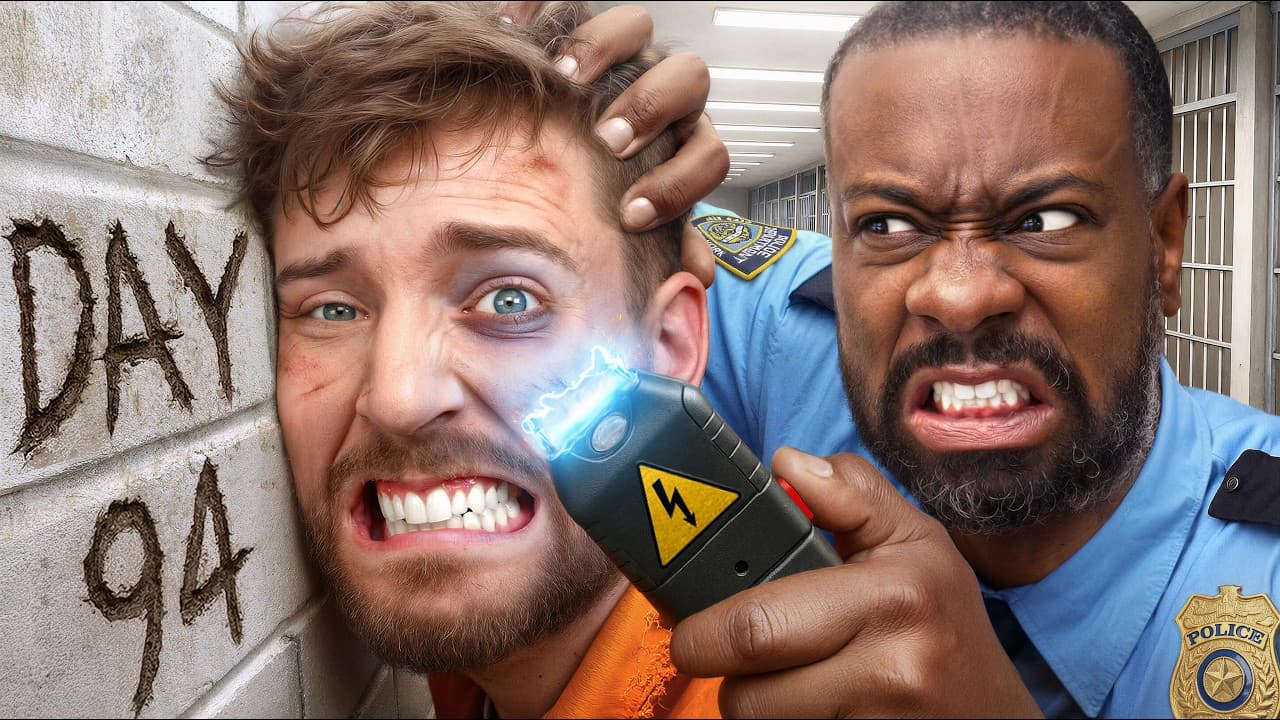
Two strangers, a cop and a criminal, must survive 100 days in a replica prison to win $500,000. They face challenges that test their trust and cooperation, including solitary confinement with a tempting button that could steal the entire prize. Their journey explores the dynamics of unlikely friendships and the moral dilemmas of trust.
Transcript
I built this maximum security prison, and if this cop and this criminal survive 100 days together, I will give them half a million dollars. - What's going on?
- Nice to officially meet you. - Nice to meet you. Lenny.
- Ian. You guys want to be uncuffed? That'd be great. Now that that's out the way… At any point over the next 100 days, if either of ... Read More
Key Insights
- The key to winning the challenge is cooperation between the cop and the criminal.
- Surviving in prison requires adapting to harsh conditions, including limited food and recreation.
- Trust is tested with a button that allows one to steal the entire prize.
- The prison environment is designed to mimic real prison conditions, enhancing the challenge.
- Physical and mental endurance are critical to surviving the 100 days.
- The offer of a family visit is a significant emotional test for the participants.
- The final challenge involves resisting the temptation to betray for a large sum of money.
- The experiment ultimately shows that trust and friendship can overcome adversity.
Install to Summarize YouTube Videos and Get Transcripts
Explore YouTube Video Summarizer or Get YouTube Transcript Extractor
Questions & Answers
Q: How do participants win the $500,000 prize?
Participants, a cop and a criminal, must survive together for 100 days in a replica prison. They face challenges that test their cooperation and trust. If they both endure without leaving, they split the $500,000 prize. The challenge includes resisting a button that could let one take the entire prize.
Q: What are the living conditions like in the replica prison?
The replica prison mimics real prison conditions, with strict schedules, limited food, and controlled recreation time. Participants sleep on hard beds and eat basic meals. The environment is designed to test their endurance and adaptability, making the experience as realistic and challenging as possible.
Q: What is the significance of the button in the solitary confinement challenge?
In the final challenge, each participant is placed in solitary confinement with a button. Pressing it allows one to leave immediately and take the entire $480,000 prize, betraying the other. The button tests their trust and moral decision-making, as they must decide whether to prioritize money over their relationship.
Q: How does the experiment explore the dynamics of trust and friendship?
The experiment places a cop and a criminal in a high-stress environment, forcing them to rely on each other to survive. Through various challenges, their trust and friendship are tested, particularly with the temptation of betrayal for money. Ultimately, they demonstrate that cooperation and trust can triumph over personal gain.
Q: What strategies do the participants use to cope with the prison environment?
Participants adapt by creating routines, engaging in physical activities, and using limited resources creatively. They build a basketball hoop from a bed frame and smuggle books for entertainment. These strategies help them maintain their mental health and strengthen their bond, crucial for enduring the 100-day challenge.
Q: What role does the family visit play in the experiment?
The family visit is an emotional test, offering a brief respite from the prison environment. It highlights the participants' sacrifices and motivations, as they endure the challenge to provide for their families. The visit also tests their resolve, as only one participant can see their family, creating potential tension.
Q: How does the experiment conclude?
The experiment concludes with the participants facing a final test of trust in solitary confinement. Despite the temptation to press a button and take the entire prize, both choose to trust each other, sharing the $480,000 prize. Their decision underscores the experiment's theme that trust and friendship can overcome adversity.
Q: What lessons can be learned from this social experiment?
The experiment teaches that trust and cooperation are vital in overcoming challenges. It demonstrates the power of unlikely friendships and the importance of moral integrity, even when tempted by personal gain. The participants' journey shows that meaningful relationships can be forged in the most unlikely circumstances.
Summary & Key Takeaways
-
Two strangers, a cop and a criminal, must endure 100 days in a replica prison for a chance to win $500,000. They face various challenges that test their trust, including solitary confinement with a tempting button that could steal the entire prize. Their journey explores the dynamics of unlikely friendships and the moral dilemmas of trust.
-
Surviving in the prison involves adapting to harsh conditions like limited food and recreation. Trust is crucial, especially when faced with a button that allows one to take the whole prize. The prison is designed to mimic real conditions, making physical and mental endurance vital.
-
The participants are tested emotionally with offers like a family visit and the chance to betray each other for money. Ultimately, the experiment demonstrates that trust and friendship can prevail, as both choose to share the prize instead of betraying each other.
Read in Other Languages (beta)
Share This Summary 📚
Summarize YouTube Videos and Get Video Transcripts with 1-Click
Try YouTube Summary with ChatGPT & Claude or YouTube Transcript Generator
Explore More Summaries from MrBeast 📚






Summarize YouTube Videos and Get Video Transcripts with 1-Click
Try YouTube Summary with ChatGPT & Claude or YouTube Transcript Generator