How Did Island Hopping Defeat Japan’s Defenses?
TL;DR
Island hopping advanced American forces toward Japan by capturing strategically useful islands while bypassing heavily fortified positions that lacked essential airfields or harbors. American air and naval power then isolated skipped garrisons, severed their supplies, and converted captured islands into staging bases, turning Japan’s extensive defensive perimeter into a costly logistical liability.
Transcript
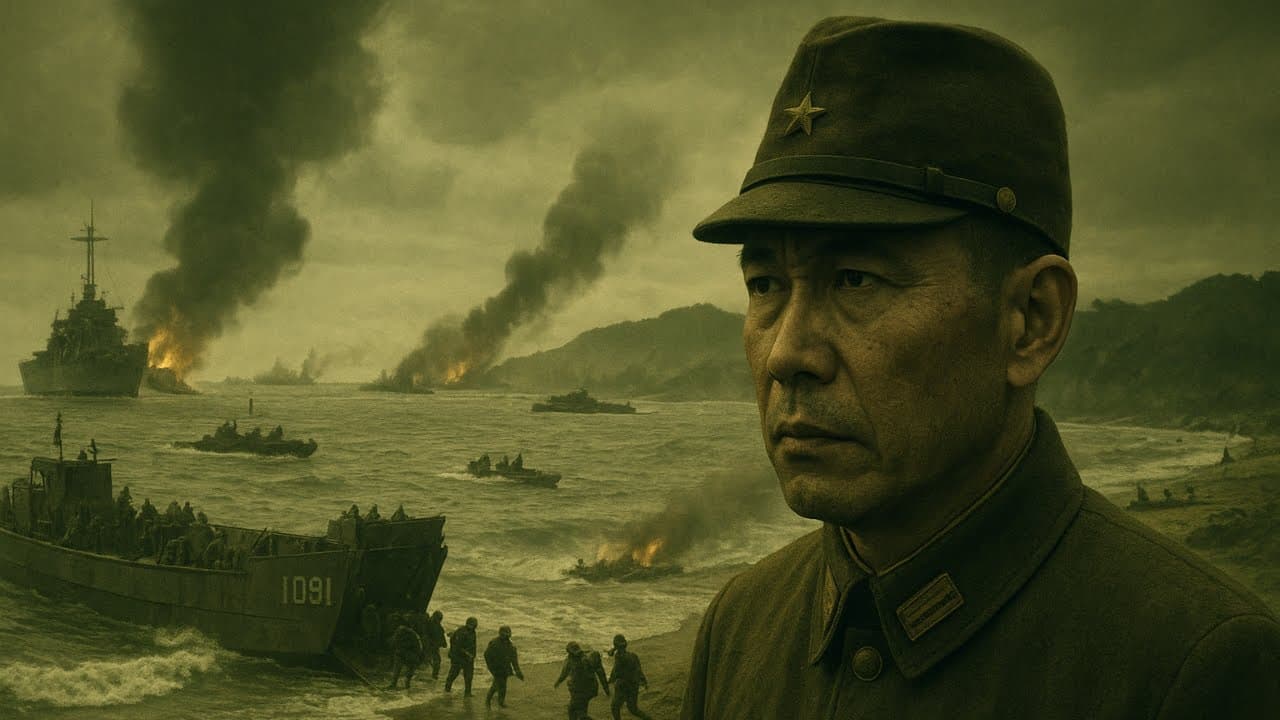
By 1943, the Japanese Empire had fortified hundreds of islands across the Pacific, turning them into floating fortresses of steel and concrete. They believed every inch of that oceanic empire would bleed the Americans dry. But then the US military did something no one in Tokyo had predicted. Instead of smashing headlong into every island, America's... Read More
Key Insights
- Island hopping was a selective campaign strategy that targeted islands needed for airfields, harbors, and future offensives while bypassing positions with little strategic value. This approach reduced unnecessary assaults and transformed each captured island into a stepping stone toward Japan.
- Japan’s defensive perimeter was vulnerable because its enormous geographic reach exceeded the capacity of its supply system. Maintaining distant garrisons required ships, fuel, and air cover across a Pacific described as more than 60 million square miles of water.
- American industrial capacity supported sustained forward movement by producing ships, aircraft, tanks, and landing craft faster than Japan could replace its losses. The transcript states that the United States was outbuilding Japan by 10 to 1 as the campaign developed.
- Guadalcanal was America’s first major Pacific victory and showed both that Japanese forces could be defeated and that repeated island assaults would be extremely costly. Its six months of jungle fighting, starvation, and air raids encouraged planners to consider bypassing later strongholds.
- American intelligence made island selection a calculated process based on aerial reconnaissance, submarine patrols, coast watchers, maps, currents, weather, enemy positions, and intercepted naval communications. Planners classified targets according to whether their airfields or harbors supported the next offensive.
- Operation Cartwheel neutralized Rabaul without a direct invasion by capturing surrounding locations in New Georgia, Bougainville, and parts of New Guinea. Allied airfields enabled repeated bombing and supply interdiction, leaving more than 100,000 Japanese troops trapped inside a strategically useless fortress.
- The two American advance routes served complementary purposes in the Pacific campaign. MacArthur’s southwest route threatened Japan’s southern access to oil and resources, while Nimitz’s central route sought island bases capable of supporting B-29 bomber attacks against the Japanese home islands.
- Japan’s doctrine of no retreat and no surrender limited its ability to respond flexibly to bypass operations. Garrisons prepared for decisive invasions that sometimes never came, while American forces selected different targets, destroyed isolated airfields, scattered fleets, and continued advancing.
Install to Summarize YouTube Videos and Get Transcripts
Explore YouTube Video Summarizer or Get YouTube Transcript Extractor
Questions & Answers
Q: What was the American island hopping strategy?
Island hopping was an American strategy of capturing only the Pacific islands that offered useful airfields, harbors, or staging positions for later operations. Heavily fortified islands without sufficient strategic value were bypassed. American naval and air forces then cut their supply and reinforcement routes, leaving their garrisons isolated while the main advance continued toward Japan.
Q: Why did the United States bypass Japanese islands?
The United States bypassed selected islands because attacking every Japanese fortress would have required years of fighting and potentially hundreds of thousands of lives. Some heavily defended islands offered little strategic value. By taking better-positioned islands and isolating the rest, American forces preserved resources, maintained momentum, and denied bypassed garrisons the supplies needed to remain effective.
Q: How did island hopping exploit Japan’s supply problems?
Island hopping exploited the fact that Japan’s empire extended farther than its supply lines could reliably support. Distant garrisons depended on convoys carrying food, ammunition, and fuel across immense distances. American submarines intercepted those convoys, while aircraft and fleets isolated bypassed bases. Fortified islands consequently became prisons where troops faced starvation, disease, and little hope of reinforcement.
Q: How did Guadalcanal influence island hopping strategy?
Guadalcanal demonstrated that American forces could defeat Japanese troops, but it also revealed the severe cost of direct island warfare. Marines landed in August 1942 and endured six months of jungle fighting, starvation, and repeated air raids. The experience encouraged American planners to ask whether later fortified islands could be skipped rather than conquered through similarly costly battles.
Q: How did American forces decide which islands to capture?
American planners selected islands according to their value for continuing the advance. Islands with airfields, harbors, or favorable positions for the next offensive became must-take targets. Positions lacking strategic value, or already vulnerable to isolation by sea and air, could be bypassed. Reconnaissance, codebreaking, submarine patrols, coast watchers, weather studies, currents, and enemy deployments informed these decisions.
Q: How was Rabaul neutralized without a direct invasion?
Rabaul was neutralized through Operation Cartwheel rather than assaulted directly. The fortified base held more than 100,000 troops, strong air defenses, and a protected harbor. Allied forces captured surrounding positions in New Georgia, Bougainville, and parts of New Guinea, constructed airfields, bombed Rabaul repeatedly, and severed its supply routes. By early 1944, the base was strategically useless.
Q: What roles did MacArthur and Nimitz play in island hopping?
General Douglas MacArthur led the Southwest Pacific advance through New Guinea toward the Philippines, aiming to disrupt Japan’s southern lifelines to oil and other resources. Admiral Chester Nimitz directed the Central Pacific advance through island chains including the Marshalls, Marianas, and Carolines. His route sought bases that could support B-29 bomber operations against the Japanese home islands.
Q: Why did Japan struggle to counter island hopping?
Japan struggled because its defensive plan assumed American forces would attack its fortified islands directly. Its doctrine emphasized courage, sacrifice, no retreat, and no surrender, making strategic withdrawal difficult to accept. When Japan concentrated defenders for an expected invasion, American commanders could select another target, isolate the prepared garrison, destroy its airfields, cut its supplies, and continue forward.
Summary & Key Takeaways
-
Japan fortified hundreds of Pacific islands, expecting direct American assaults to produce enormous casualties and delay any advance. American commanders recognized that conquering every position would take years, so they selected islands with useful airfields or harbors and bypassed strongholds that could be isolated by naval and air power.
-
General Douglas MacArthur advanced through New Guinea toward the Philippines while Admiral Chester Nimitz crossed the Central Pacific through island chains including the Marshalls, Marianas, and Carolines. These parallel campaigns targeted Japan’s southern resource routes and created bases from which American bombers and fleets could move progressively closer to Japan.
-
Operation Cartwheel demonstrated the strategy against Rabaul, a fortified base containing more than 100,000 troops. Rather than invade, Allied forces captured surrounding positions, constructed airfields, bombed the base, and cut its supply lines. By early 1944, Rabaul had been neutralized without the costly direct assault its defenses anticipated.
Read in Other Languages (beta)
Share This Summary 📚
Summarize YouTube Videos and Get Video Transcripts with 1-Click
Try YouTube Summary with ChatGPT & Claude or YouTube Transcript Generator