How Public Figures Handle Online Fitness Criticism
TL;DR
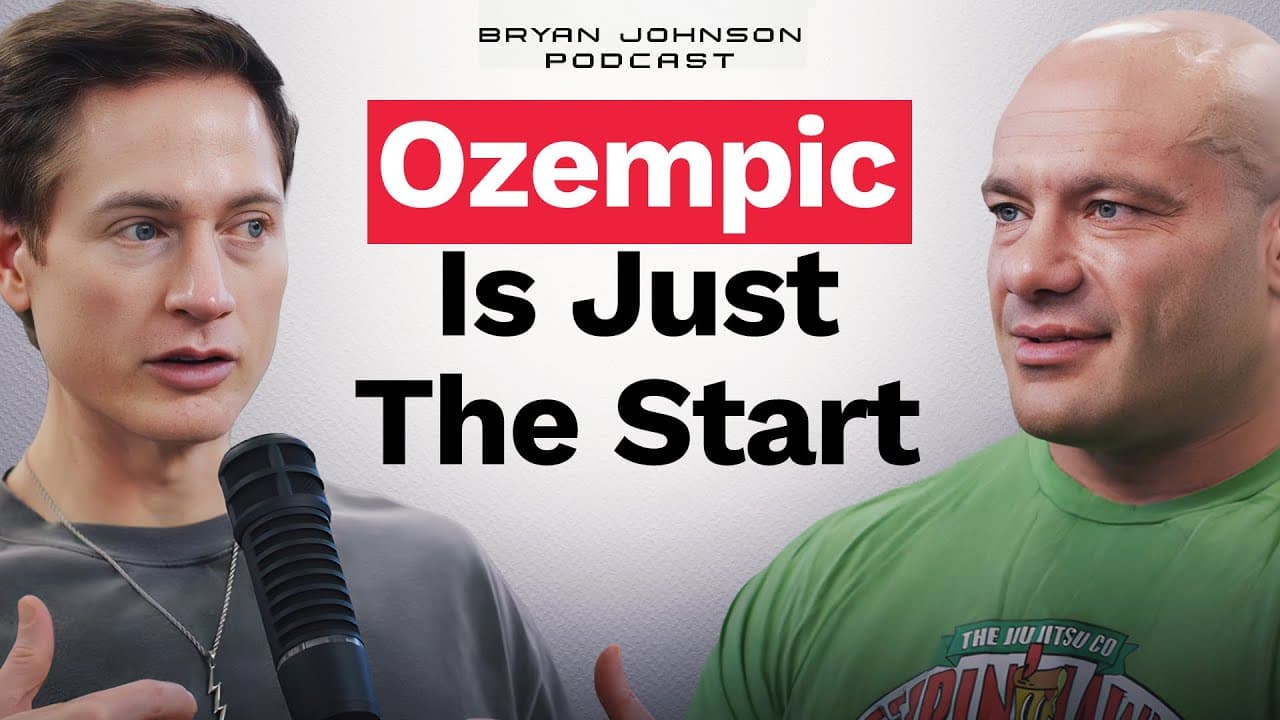
Online criticism becomes manageable when public figures accept that they are imperfect, consider valid feedback, and stop trying to correct every inaccurate judgment. Dr. Mike Israetel describes fame as a loss of everyday anonymity and argues that confidence, competitive bodybuilding experience, time limits, and the ability to let comments go help him maintain emotional stability.
Transcript
i think initially we met because I think you were talking [ __ ] about me exactly yeah and I made a nice comment in return it was an incredibly awesome move today I'm joined by Dr mike Israel who has a PhD in sports physiology look we're all flawed i said all of us i didn't mean you by lordship am I really going to alienate other people on a big pl... Read More
Key Insights
- Online fame changes ordinary anonymity because strangers may recognize a public figure in airports, shopping malls, and other everyday settings. Israetel says recognition is usually a positive interaction, but it requires him to reconsider how visible he is and how casually he can behave around other people.
- Social media criticism is unusually direct because people publish judgments they would rarely deliver face to face. A public figure can therefore encounter an enormous range of unfiltered opinions about personal appearance, professional credibility, communication choices, and mistakes that might otherwise remain private gossip.
- Accepting imperfection is Israetel's main defense against public criticism. He reminds himself that he is doing his best, that some complaints may contain valid points, and that inaccurate criticism does not create an obligation to correct every person who expresses it.
- Competitive bodybuilding can normalize physical judgment because competitors appear before audiences whose purpose is to assess their bodies. Israetel says this experience made opinions about his physique easier to tolerate, since bodily evaluation was already part of his life before his social media audience grew.
- Time constraints make exhaustive online debate impossible for a popular creator. Israetel once replied repeatedly until he believed a conversation was settled, but a growing audience removed that option and forced him to practice leaving disagreements unresolved.
- Confidence can coexist with openness to criticism because Israetel recognizes both his weaknesses and areas of strong competence. His approach is neither total dismissal nor complete submission to comments, but an aggregate judgment that some feedback is useful while much of it can be released.
- Comment filtering is one strategy for protecting psychological stability. Johnson says some friends avoid comments entirely and receive only selected positive feedback from their teams, illustrating that public figures build different systems for managing the emotional pressure created by large audiences.
- Human concerns shape how larger future-oriented ideas are communicated because people commonly focus on muscle, weight loss, anxiety, depression, income, status, and relationships. Johnson frames these immediate priorities as an important bridge to discussions about physiological science, AI, longevity, and humanity's future.
Install to Summarize YouTube Videos and Get Transcripts
Explore YouTube Video Summarizer or Get YouTube Transcript Extractor
Questions & Answers
Q: How does Dr. Mike Israetel handle online criticism?
Dr. Mike Israetel handles online criticism by accepting that he is imperfect, considering whether a complaint contains a useful point, and recognizing that he cannot correct every inaccurate judgment. He maintains confidence in the areas where he believes he is competent, while treating the constant release of unresolved comments and disagreements as an emotional exercise in letting go.
Q: How does online fame change everyday life for a public figure?
Online fame can remove the assumption of anonymity that normally accompanies activities such as walking through a shopping mall or traveling through an airport. Israetel describes recognition as enjoyable but still somewhat disorienting. It also creates a sense of being under a small, persistent spotlight because nearby people may recognize him and notice otherwise private or casual behavior.
Q: Why can social media comments be psychologically difficult?
Social media comments expose a person to a large and diverse population's unfiltered judgments. According to the discussion, people often write criticisms online that they would rarely express face to face after adolescence. The volume can become impossible to process, while judgments may address appearance, credibility, mistakes, phrasing, and personal character with unusual bluntness.
Q: Should public figures respond to every inaccurate comment?
Public figures do not have enough time to correct every inaccurate comment once their audience becomes large. Israetel says he previously continued replying until he felt that he had exhausted a conversation and won the debate. He eventually had to stop because of time constraints and accept that another person's mistaken criticism is not always his responsibility to resolve.
Q: How can confidence and self-criticism exist together?
Confidence and self-criticism can coexist when a person acknowledges both genuine strengths and real limitations. Israetel accepts that some criticisms may be deserved and that he could improve in many respects. At the same time, he believes he is highly capable in certain areas, allowing him to evaluate feedback without treating every negative opinion as a definitive judgment of his value.
Q: Why might bodybuilding prepare someone for public judgment?
Competitive bodybuilding places athletes onstage in minimal clothing before spectators and judges who explicitly evaluate their physiques. Israetel says he had experienced this process longer than he had been prominent on social media. As a result, opinions about his body feel familiar, and he can recognize that observers may be correct or incorrect without needing to challenge every assessment.
Q: Why do some creators avoid reading negative comments?
Some creators avoid negative comments because the volume and harshness of public judgment can threaten psychological stability. Johnson says several friends do not read comments at all. Instead, their teams collect and share the most encouraging responses while excluding negativity. The conversation presents this as one of several personal strategies for managing the unfamiliar pressures produced by online visibility.
Q: What everyday concerns shape discussions about humanity's future?
Johnson says people often focus on gaining muscle, losing weight, reducing anxiety or depression, earning more money, gaining status, and finding a partner. Although he is concerned about whether humanity evolves toward something spectacular or creates serious problems, he recognizes that future-oriented discussions must connect with the immediate physical, emotional, financial, and social priorities occupying people's attention.
Summary & Key Takeaways
-
Dr. Mike Israetel describes how online popularity changed his experience of ordinary public spaces. Recognition from strangers remains positive but slightly disorienting, while awareness that nearby people may know him creates a persistent sense of being watched. He has had to reframe how he understands anonymity, attention, and public behavior.
-
Social media exposes public figures to an unusually large and diverse collection of unfiltered opinions. Israetel acknowledges that some criticism contains useful points, while other judgments are inaccurate. Because responding to every comment is impossible, he focuses on accepting imperfection, maintaining confidence in his abilities, and releasing the urge to win every debate.
-
Bryan Johnson contrasts Israetel's approach with people who avoid negative comments or ask teams to filter feedback. Johnson enjoys reading comments, including carefully constructed insults, while Israetel finds emotional value in letting judgments pass. Their discussion connects public criticism with broader interests in fitness, physiological function, AI, steroids, longevity, depression, and planning for humanity's future.
Read in Other Languages (beta)
Share This Summary 📚
Summarize YouTube Videos and Get Video Transcripts with 1-Click
Try YouTube Summary with ChatGPT & Claude or YouTube Transcript Generator
Explore More Summaries from Bryan Johnson 📚
Summarize YouTube Videos and Get Video Transcripts with 1-Click
Try YouTube Summary with ChatGPT & Claude or YouTube Transcript Generator