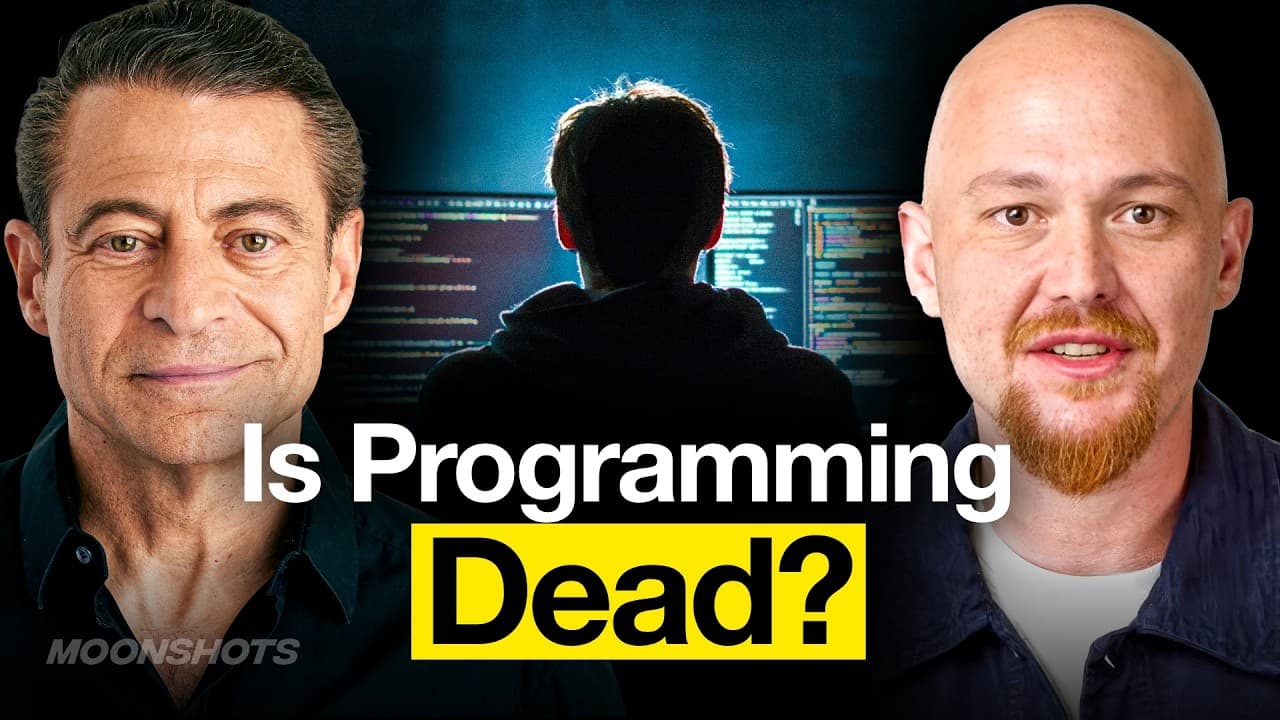
Replit CEO on the Career of Coding, AGI, and Vibe Coding Wars, with Amjad Masad, Dave B & Salim
TL;DR
AI-assisted creation can let non-programmers build software by talking their ideas into existence. Replit CEO Amjad Masad connects that possibility to his own experience: an internet-cafe system took him two or three years to build and months to deploy, inspiring him to reduce the barriers between an idea and a working product. Read on to see why he believes entrepreneurship and global access to computers will shape the future of work.
Transcript
throw away most of the advice that your parents and your society sort of give you cuz it's such a dynamic world right now and conforming is the worst thing that you could do. I'm John is founder and CEO of Replet which was a YC 2018 company. I am not a programmer. I am not a coder but I can now create software. I came to Silicon Valley to start the... Read More
Key Insights
- Software development has traditionally placed several barriers between an idea and a deployed product. Masad’s first internet-cafe system took two or three years to build, followed by additional months devoted to distribution, installation, and management.
- Replit’s mission is to let anyone with access to computers and the internet build something significant. Masad formed this goal after recognizing that his own path from Jordan to software used by millions could be repeated by undiscovered builders worldwide.
- Browser-based programming removes the need to reinstall a development environment whenever a programmer changes languages. Masad began building a cloud coding sandbox after encountering that recurring setup problem in college, when most other forms of computing were already moving onto the web.
- Open-source work can provide a merit-based route to opportunity outside conventional academic systems. Masad says his programming projects attracted attention, job offers, and immigration opportunities even though he was not a strong student and had completed university in Jordan.
- AI-assisted creation allows non-programmers to produce software through natural-language interaction. The discussion describes a future in which people can talk ideas into existence and configure machines without starting from preinstalled, static software or manually writing every component.
- Entrepreneurship is presented as a career suited to rapid technological change. Masad argues that conformity is especially risky in a dynamic world, while people who identify problems, create solutions, and produce measurable impact can rise regardless of their geographic origin.
- Global access to creation tools can reveal talent that established institutions overlook. Masad believes reducing technical barriers will allow impactful builders from across the world to emerge, compete through their results, and potentially affect millions of lives.
- Programming is evolving from direct code production toward coordination with AI and software agents. The chapter topics connect this shift with permissionless innovation, organizational change, competitive coding platforms, greenfield development, education, and a broader transition toward entrepreneurship.
Install to Summarize YouTube Videos and Get Transcripts
Explore YouTube Video Summarizer or Get YouTube Transcript Extractor
Questions & Answers
Q: Can people create software without knowing how to code?
Yes. The discussion says a person who is not a programmer or coder can now create software by talking ideas into existence, with AI handling more of the implementation. The goal is to reduce the programming and deployment barriers that previously stopped people from turning ideas into working products.
Q: Why did Amjad Masad create Replit?
Masad wanted to reduce the distance between having an entrepreneurial idea and deploying useful software. His first internet-cafe system in Jordan took two or three years to build, followed by months, up to a year, spent learning how to distribute, install, and manage it.
Q: How does Replit lower barriers to software development?
Replit moves programming into the browser and reduces the setup needed to start creating software. Masad began working on a browser-based coding sandbox after repeatedly having to install a development environment whenever he tried a different programming language.
Q: How will AI change the future of programming?
The discussion describes programming moving from manually writing static code toward giving machines conversational instructions. Masad envisions people buying machines with zero software and creating what they need by talking to them, making software more adaptable and creation more accessible.
Q: Why does Amjad Masad call entrepreneurship the career of the future?
Masad says entrepreneurship is the career most likely to survive in a rapidly changing world. He argues that conformity is especially risky under those conditions, while people who identify problems, build solutions, and create measurable impact can rise.
Q: How did open-source programming shape Amjad Masad’s career?
Masad’s browser-based coding sandbox spread through Hacker News and GitHub, drawing attention to his work while he was a 20-year-old in Jordan. Brendan Eich, identified in the discussion as the inventor of JavaScript, tweeted about the project, and Masad subsequently began receiving job offers.
Q: What role did browser-based coding play in online education?
Browser-based coding let learners practice programming in the cloud without first configuring local development environments. Peter Norvig contacted Masad about integrating his program into Udacity, and Codecademy also began using the technology; the existing account says it helped Codecademy teach 15 million people to code.
Q: How could AI coding tools uncover talent around the world?
Masad believes anyone with access to computers and the internet should be able to build something significant. By lowering the barriers to creating software, these tools can reveal capable builders worldwide and allow those producing the greatest impact to rise.
Summary & Key Takeaways
-
Amjad Masad traces Replit’s mission to his early experience building software for an internet cafe in Jordan. Although the idea was useful, programming, deployment, installation, and maintenance took years. That gap between imagining a product and delivering it motivated him to make software creation easier and more widely accessible.
-
Masad later created a browser-based coding sandbox after repeatedly installing development environments for different programming languages. The project spread through Hacker News and GitHub, drew attention from JavaScript inventor Brendan Eich, and supported cloud programming education. His technology eventually helped Codecademy teach 15 million people how to code.
-
The discussion presents AI-assisted development as a path toward permissionless innovation. People may increasingly create software by describing desired outcomes instead of manually producing every line of code. Masad believes this transition can expose capable builders worldwide, weaken pressures to conform, and elevate entrepreneurship as a durable form of work.
Read in Other Languages (beta)
Share This Summary 📚
Summarize YouTube Videos and Get Video Transcripts with 1-Click
Try YouTube Summary with ChatGPT & Claude or YouTube Transcript Generator
Explore More Summaries from Peter H. Diamandis 📚




Summarize YouTube Videos and Get Video Transcripts with 1-Click
Try YouTube Summary with ChatGPT & Claude or YouTube Transcript Generator