Kobe Bryant on the Mindset That Made Him Great
TL;DR
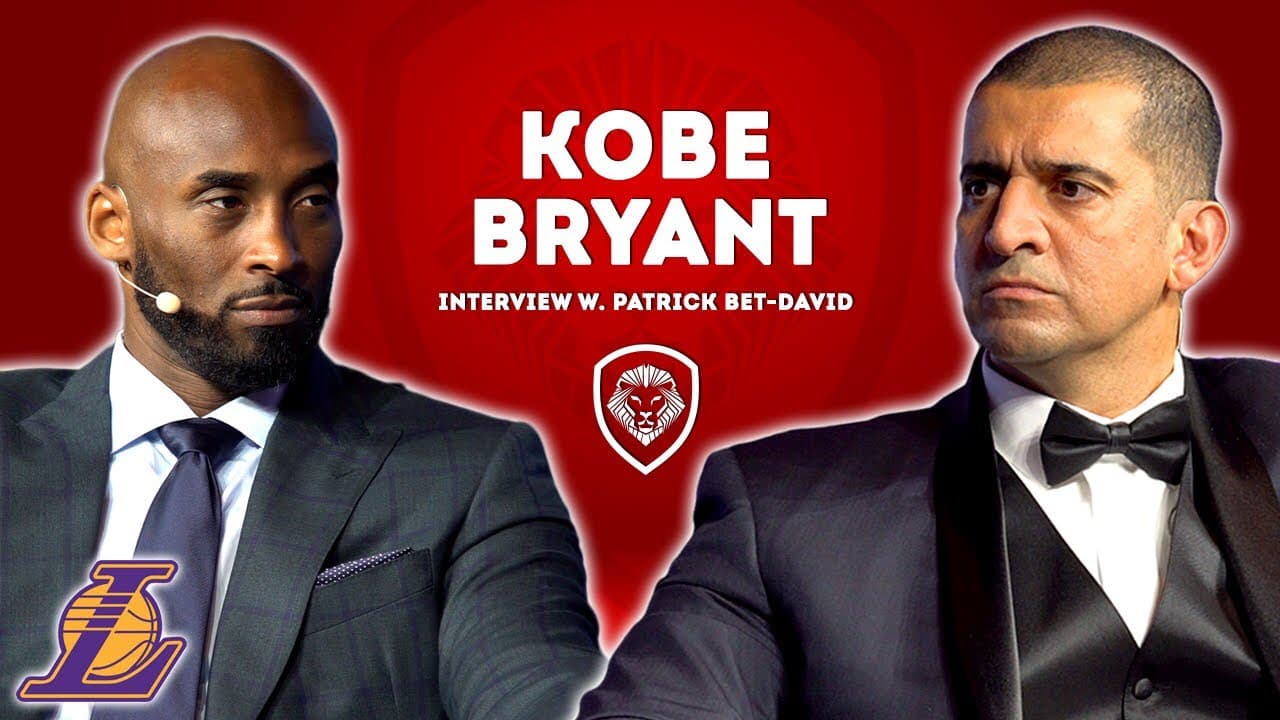
Kobe Bryant decided at 13 years old to become one of the best basketball players ever, and built a "kill list" from the Street and Smith rankings to hunt down all 56 players ranked ahead of him. He treated everything he watched or read as material for improving his game, saying that with that focus "the world becomes your library." In summer games he deliberately played to his weaknesses instead of his strengths.
Transcript
so at 13 years old I had a had a kill list I got a hunt them down now you got a problems right I don't think I'm as I said this before seriously seriously this is gonna be fun Michael and particularly become my big brother the greatest of all time but we call them black Jesus you're not intimidating me we're gonna go at it it's crazy yeah man you'r... Read More
Key Insights
- Kobe Bryant made the decision to become one of the best basketball players ever at 13 years old, and describes that goal as crystal clear from that moment, with anything outside that lane getting none of his time or attention.
- A kill list was Kobe's method for tracking rivals: he took the Street and Smith basketball rankings, where he sat at number 57, and marked the 56 players ahead of him to hunt down on the AAU travel circuit.
- Extreme curiosity is how Kobe describes his own personality in high school and still today, sparked by his teacher Jane Mastriano, who got him into writing not for its own sake but for what storytelling taught him about emotions and leadership.
- The world becomes your library when your point of view is fixed on one craft, according to Kobe, because TV shows, books, and conversations all start supplying the exact information you are looking for.
- Playing to your weaknesses rather than your strengths is Kobe's summer basketball strategy, since packed game schedules leave no time for skill work, and competition tempts players to use only what already works because they want to win.
- Kobe's evaluation of opponents at 13 focused on strengths, weaknesses, and whether they were goofy about the game or dominant only because they were bigger and stronger, rather than on who would win that day.
- The NBA was easier to compete in than high school, Kobe found, because many players sought financial stability and lost their passion, work ethic, and obsessiveness once they achieved it.
- Focus on a single priority was Kobe's edge over everyone else, though he says he did not fully understand that at the time; he contrasts himself with Michael Jordan, who was competitive at everything including golf.
- Kobe never took up golf despite Michael Jordan's repeated invitations, reasoning that Jordan had played since his Carolina days and would annihilate him, and a broken finger ended his one attempt at learning it.
Install to Summarize YouTube Videos and Get Transcripts
Explore YouTube Video Summarizer or Get YouTube Transcript Extractor
Questions & Answers
Q: At what age did Kobe Bryant decide he wanted to be one of the best basketball players ever?
Kobe Bryant made that deal with himself at 13 years old, and describes the goal as crystal clear from that point on. The inspiration came from his love of the game and from watching Magic Johnson and Michael Jordan do unbelievable things, which made him ask whether he could reach that level. His answer to himself was that he did not know, but he wanted to find out. That curiosity about how far he could push the thing led him down the path. From then on, anything outside the lane of becoming one of the greatest did not get his attention.
Q: What was Kobe Bryant's kill list?
The kill list was Kobe's method for tracking the players ranked above him as a teenager. Street and Smith published basketball rankings, and at 13 he was ranked 57th because he was roughly six foot four and scrawny, about 160 pounds soaking wet. He looked at number 56, number 55, and every name up to number one, learned who those players were and which club teams they played for, and made it his mission on the AAU travel circuit to hunt down and knock down all 56 names ahead of him. He describes it as very simple: each of them had a target on him from the start.
Q: Why did Kobe Bryant play to his weaknesses instead of his strengths?
Kobe explains that summer basketball involves so many games that there is little time left for dedicated skill work, which raises the question of when a player actually improves. In competition, players naturally use only their strengths because they want to win, so no development happens. His strategy was the opposite: during those games he worked on the things he was weak at, specifically naming his left-hand pull-up jump shot and his post game. The payoff came later. By 17 his game was completely well rounded, while the player he had faced at 13 was still doing the same things, which meant that opponent now had a problem.
Q: What did Kobe Bryant mean by 'the world becomes your library'?
Kobe said that when basketball was the most important thing to him, everything he encountered was filtered through it. TV shows he watched, books he read, and people he talked to were all processed for what they could teach him about becoming a better basketball player. He argues that once you hold that point of view, the world literally becomes your library to help you improve your craft, because you know exactly what you are looking for and the world responds by giving you the information you need. The focus is what makes ordinary input useful rather than the input itself being special.
Q: Why did Kobe Bryant say the NBA was easier to compete in than he expected?
Kobe sized up NBA peers the same way he had in high school, but found the league easier because of what he saw in his competition. Many players had pursued basketball for financial stability, and once they reached the NBA and got that stability, the passion, the work ethic, and the obsessiveness disappeared. Another group still had the passion but was not willing to commit their entire lives to the game, because family and other obligations meant basketball could not be their number one priority. Watching that, he thought it would be like taking candy from a baby, and it explained to him how Michael Jordan won so many championships.
Q: Why did Kobe Bryant refuse to play golf with Michael Jordan?
Michael Jordan tried to get Kobe to play golf all the time, but Kobe declined on strategic grounds. He had written book reports about Jordan going back to elementary school and knew Jordan started playing golf while at Carolina, so by his math Jordan had been playing roughly a hundred years. Kobe said the last thing he was going to do was get on a golf course and be annihilated. He did pick up a club once and was hitting what he called 400-yard grounders, which got his competitiveness going and made him want to learn the game, but he broke his finger that year and could not play much.
Q: How does Kobe Bryant describe the difference between his competitiveness and Michael Jordan's?
Kobe drew a distinction based on scope rather than intensity. He described Michael Jordan as competitive in all things, including things that do not make sense, giving ping pong as an example. Kobe said he was competitive only in the things he chose to participate in. That selectivity connects to his broader point about focus: trivial things were not going to pull his attention, and something had to have a purpose before he would engage with it. The golf story illustrates the rule in practice, since he declined to enter a contest he had no chance of winning and no reason to join.
Q: What role did writing and storytelling play in Kobe Bryant's development as a player?
Kobe credits his high school teacher Jane Mastriano, with whom he says he is still very close, for sparking his curiosity in writing. He is explicit that he did not pursue it for the writing's sake or for storytelling purposes. Instead, he believed there were things inherent in story that could help him be a better basketball player, a better teammate, and a better leader, and help him understand emotions better. It reflects his general method of treating any field as raw material for basketball improvement, which is the same logic behind his statement that the world becomes your library.
Q: What records did Patrick Bet-David cite when introducing Kobe Bryant?
Patrick Bet-David introduced Kobe as the greatest Laker of all time, a five-time champion, and the only guard to play with one team for 20 years. On scoring, he said Kobe has more 40-point games than LeBron James and Kevin Durant, more 50-point games than LeBron James, Kevin Durant, and Steph Curry combined, and more 60-point games than LeBron James and Michael Jordan combined. He told the audience that they would recognize who the guest was after the first accomplishment and asked them to bring the building down.
Summary & Key Takeaways
-
Patrick Bet-David introduces Kobe Bryant to a live audience as the greatest Laker of all time, a five-time champion, and the only guard to play with one team for 20 years, noting he has more 40-point games than LeBron James and Kevin Durant, more 50-point games than LeBron, Durant, and Steph Curry combined, and more 60-point games than LeBron and Michael Jordan combined.
-
Kobe describes his high school self as extremely curious, the same as he is now. A teacher named Jane Mastriano sparked his interest in writing, which he pursued not for storytelling's sake but because story contained things that could make him a better player, teammate, and leader, and help him understand emotions.
-
At 13 Kobe made a deal with himself to become one of the best players ever, inspired by watching Magic and Michael do unbelievable things and wondering whether he could reach that level. He built a kill list from the Street and Smith rankings, where he was ranked 57th as a scrawny six-four, 160-pound player.
-
His competitive approach was deliberately long-game: at 13 he sized up opponents' strengths and weaknesses and worked on what he was weak at, including his left-hand pull-up jump shot and post game, rather than playing to win each summer contest. By 17 his game was well rounded while those same opponents had not changed.
-
Kobe applied the same sizing-up in the NBA and found it easier, because many players chased financial stability and lost their obsessiveness once they got it, while others had passion but could not make the game their number one priority because of family and other commitments.
-
Patrick opens the conversation by sharing that Kobe is seven weeks older than him and that he became a die-hard Laker fan in 1990 after coming to the States from Iran. He recounts watching Game 1 of the Lakers series against the 76ers with his father, who had to be taken to the hospital afterward.
Read in Other Languages (beta)
Share This Summary 📚
Summarize YouTube Videos and Get Video Transcripts with 1-Click
Try YouTube Summary with ChatGPT & Claude or YouTube Transcript Generator
Explore More Summaries from Valuetainment 📚






Summarize YouTube Videos and Get Video Transcripts with 1-Click
Try YouTube Summary with ChatGPT & Claude or YouTube Transcript Generator