How to Trade TSLA, HOOD, and IWM This Week

TL;DR
Selling Tesla puts is presented as the preferred setup because the 14% decline increased implied volatility and put premiums, while buying calls before the robotaxi event is characterized as a gamble. Robinhood may offer a future opportunity after its S&P 500 disappointment, and IWM is viewed as a strong small-cap breakout, but CPI, PPI, bond auctions, and unresolved index divergence create substantial market risk.
Transcript
Tesla dropped 14% in one day as the rift between Donald Trump and Elon Musk heightened. Is that over for now? We also saw Robin Hood being snubbed from the S&P 500 and AMD showing a huge number of call options as well as an extremely optimal setup on AMD and a few other stocks here. There are some prime opportunities in the market as we head into i... Read More
Key Insights
- Tesla's 14% one-day decline was linked to the escalating dispute between Donald Trump and Elon Musk, which threatened expectations that the administration would support Tesla's full self-driving and robotaxi ambitions. Reports of a truce helped the shares rebound almost 4% the following day.
- Tesla's chart reached the Fibonacci golden pocket measured from the mid-April advance and may be forming a power-of-three pattern. However, the analyst says a move to new highs would require confirmation from market structure, which may not arrive before the robotaxi event.
- Selling Tesla puts is the analyst's preferred trade because the sharp decline raised implied volatility and put premiums. The July 18 $225 put was described as paying about $500, implying assignment of 100 shares at an effective $220 per share after premium.
- Tesla's robotaxi event creates significant event risk for directional options. A strong Austin presentation could produce a post-event rally if the earlier political selloff already brought forward a sell-the-news reaction, but disappointing results or renewed political conflict could undermine that scenario.
- Inflation data and Treasury auctions are the week's major market catalysts. CPI and core CPI arrive Wednesday, PPI arrives Thursday, and consumer sentiment follows Friday, while 10-year and 30-year bond auctions occur Wednesday and Thursday, respectively.
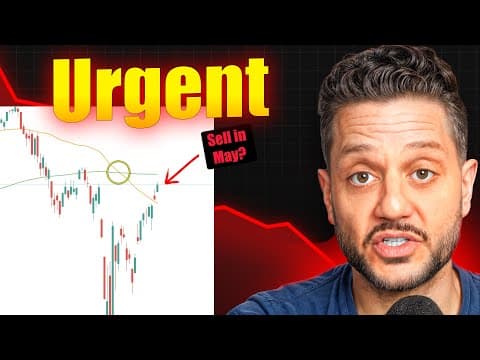
- The S&P 500 and Nasdaq retain a bearish divergence from the March high. The analyst says ES must rise above 6,5250 to remove that divergence, while a market-structure break could send the index toward gaps formed between May 9 and May 12.
- IWM has broken out of a monthlong range and an inverse head-and-shoulders formation. After an almost 2% Friday bounce, the analyst expects the Russell 2000 ETF could approach $220 and continues holding August 15 $215 calls that were reported as up 21%.
- Robinhood's S&P 500 disappointment caused an after-hours decline from about $77 to $69.44 after the index provider announced no changes. The analyst believes Robinhood remains a future inclusion candidate because it meets the cited requirements for market capitalization, profitability, liquidity, and US domicile.
Install to Summarize YouTube Videos and Get Transcripts
Explore YouTube Video Summarizer or Get YouTube Transcript Extractor
Questions & Answers
Q: What is the preferred Tesla options strategy after the 14% drop?
Selling puts is presented as the preferred Tesla options strategy because the 14% one-day decline increased implied volatility and made put premiums more attractive. The July 18 $225 put was available for approximately $500, creating an effective assignment price of $220 for 100 shares. A lower-risk example was the $200 put, which offered about $262 in premium.
Q: Why did Tesla stock fall 14% in one day?
Tesla fell 14% as the public dispute between Donald Trump and Elon Musk intensified. The market had previously expected their relationship to benefit Musk's companies by making it easier to advance products such as full self-driving and robotaxis. The conflict challenged that assumption and raised concern that the administration might obstruct Tesla or other Musk businesses.
Q: Could Tesla rally after the Austin robotaxi event?
Tesla could rally after the Austin robotaxi event if the Trump and Musk dispute remains contained, the administration does not interfere with regulation, and the presentation satisfies or exceeds market expectations. The analyst argues that the 14% political selloff may already have brought forward part of a sell-the-news reaction, potentially leaving room for gains after a successful event.
Q: What economic events could move the market this week?
CPI and core CPI are scheduled for Wednesday, PPI for Thursday, and consumer sentiment for Friday. A 10-year Treasury auction also occurs Wednesday, followed by a 30-year auction Thursday. These releases and auctions could affect yields and broader market direction, particularly while the S&P 500 and Nasdaq remain inside tight ranges with unresolved bearish divergence.
Q: What levels matter for the S&P 500 outlook?
The analyst identifies 6,5250 on ES futures as the critical upside level. A move above it would remove the bearish divergence between the S&P 500 and Nasdaq and could lead toward all-time highs before a later correction. If market structure breaks instead, the index could revisit gaps created between May 9 and May 12.
Q: Why is IWM considered a strong trading setup?
IWM is considered strong because it broke above a range, retested that breakout, and moved beyond an inverse head-and-shoulders formation. It then gained almost 2% on Friday. The analyst expects an immediate move toward $220 and is holding August 15 $215 calls, which were reported as showing a 21% gain at the time discussed.
Q: Why did Robinhood fall after reaching an all-time high?
Robinhood reached an all-time high of $77.73 as traders anticipated its addition to the S&P 500. After the index provider announced Friday that it would make no changes, the shares dropped after hours from roughly $77 to $69.44 before recovering somewhat toward $70. The anticipated inclusion had come from financial-media and influencer speculation, not an official announcement.
Q: Why does the analyst expect Robinhood to enter the S&P 500 eventually?
The analyst believes Robinhood will eventually enter the S&P 500 because it satisfies the requirements cited in the discussion. Its market capitalization exceeds the stated $20.5 billion threshold, and it also meets the referenced profitability and liquidity standards. Its Menlo Park headquarters provides the required US domicile. The analyst interprets the delay as slow index decision-making, not weak company performance.
Summary & Key Takeaways
-
Tesla fell 14% as tensions between Donald Trump and Elon Musk raised concerns about regulatory support for full self-driving and robotaxis. Although the stock rebounded almost 4% and reached a Fibonacci golden pocket, the upcoming Austin robotaxi event makes directional options risky. Selling elevated put premium is presented as the preferred strategy.
-
The market faces CPI and core CPI on Wednesday, followed by PPI on Thursday and consumer sentiment on Friday. Treasury auctions add another source of volatility after a $10 billion buyback of debt maturing in one to two years. The analyst expects rising yields if the auctions are considered unsuccessful.
-
Robinhood reached $77.73 amid speculation about S&P 500 inclusion, then fell to $69.44 after no changes were announced. The analyst compares this reaction with earlier declines and eventual rallies in Coinbase and Tesla. Meanwhile, IWM broke above its range and inverse head-and-shoulders pattern, supporting an immediate target near $220.
Read in Other Languages (beta)
Share This Summary 📚
Summarize YouTube Videos and Get Video Transcripts with 1-Click
Try YouTube Summary with ChatGPT & Claude or YouTube Transcript Generator
Explore More Summaries from The Traveling Trader 📚





Summarize YouTube Videos and Get Video Transcripts with 1-Click
Try YouTube Summary with ChatGPT & Claude or YouTube Transcript Generator