How to Make Aluminum Isopropoxide for Organic Reactions
TL;DR
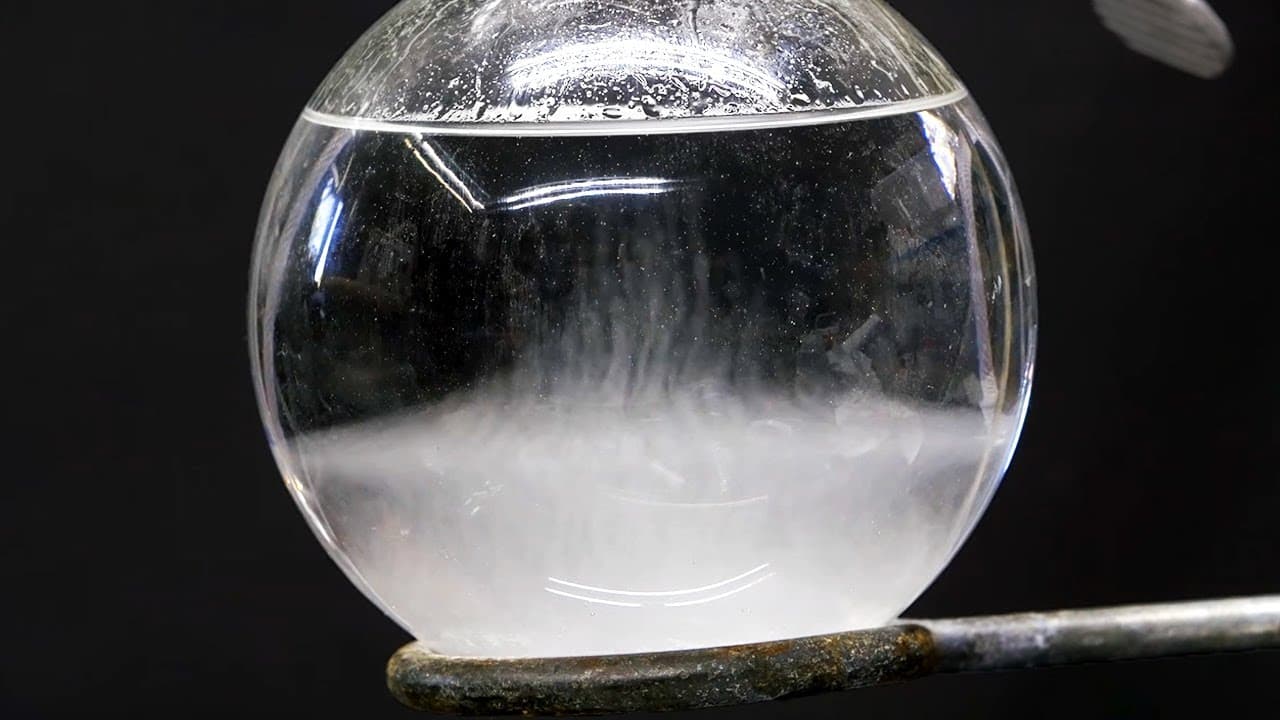
To prepare aluminum isopropoxide, dissolve aluminum foil, iodine, and mercuric chloride in dry isopropyl alcohol, then heat the mixture while controlling the reaction environment to avoid water. After the reaction completes, distill to remove excess isopropanol, yielding a viscous product that can solidify over time. The process is crucial for oxidizing alcohols or reducing ketones in organic chemistry.
Transcript
today we're going to be making some aluminum isopropoxide which is a useful reagent in organic chemistry it's mainly used to oxidize secondary alcohols to ketones or to do the opposite which is to reduce ketones or aldehydes to alcohols depending on the direction of the reaction it has different names if we're reducing a ketone to an alcohol it's c... Read More
Key Insights
- ❓ Aluminum isopropoxide is a versatile reagent used in organic chemistry reactions.
- ❓ The preparation of aluminum isopropoxide involves dissolving aluminum foil, iodine, and mercuric chloride in isopropyl alcohol.
- 💦 The reaction is water-sensitive and requires dry isopropyl alcohol and an efficient condenser.
- ❓ Distillation is used to remove excess isopropyl alcohol from the aluminum isopropoxide.
- 🫗 The final product is a viscous liquid that tends to supercool and can solidify over time.
Install to Summarize YouTube Videos and Get Transcripts
Explore YouTube Video Summarizer or Get YouTube Transcript Extractor
Questions & Answers
Q: What is the purpose of aluminum isopropoxide in organic chemistry reactions?
Aluminum isopropoxide is used to oxidize secondary alcohols to ketones or reduce ketones or aldehydes to alcohols, depending on the direction of the reaction.
Q: How is aluminum isopropoxide prepared?
Aluminum isopropoxide is prepared by dissolving aluminum foil, iodine, and mercuric chloride in isopropyl alcohol, heating the mixture, and distilling the resulting compound.
Q: What factors affect the yield of aluminum isopropoxide?
The presence of water negatively impacts the yield of aluminum isopropoxide. It is important to use dry isopropyl alcohol and ensure the reaction apparatus is water-sensitive.
Q: How is excess isopropyl alcohol removed from the aluminum isopropoxide?
Excess isopropyl alcohol is removed through simple distillation. The mixture is heated, and the collected fraction below a certain temperature represents the aluminum isopropoxide.
Summary & Key Takeaways
-
Aluminum isopropoxide is a reagent used to oxidize secondary alcohols to ketones or reduce ketones or aldehydes to alcohols.
-
The preparation of aluminum isopropoxide requires isopropyl alcohol, mercuric chloride, iodine, and aluminum foil.
-
The process involves dissolving the aluminum foil, iodine, and mercuric chloride in isopropyl alcohol, heating the mixture, and distilling the resulting aluminum isopropoxide.
Read in Other Languages (beta)
Share This Summary 📚
Summarize YouTube Videos and Get Video Transcripts with 1-Click
Try YouTube Summary with ChatGPT & Claude or YouTube Transcript Generator
Explore More Summaries from NileRed 📚

Summarize YouTube Videos and Get Video Transcripts with 1-Click
Try YouTube Summary with ChatGPT & Claude or YouTube Transcript Generator