How Can We Make Science More Engaging for Kids?

TL;DR
To make science more engaging for kids, it's essential to create adventurous and accessible stories that encourage exploration and experimentation. Improving science communication is critical to combatting anti-intellectualism, and scientists should showcase the adaptability of science as a self-modifying body of knowledge. Increasing reliance on scientific research in everyday decisions signals a positive shift in public engagement with science.
Transcript
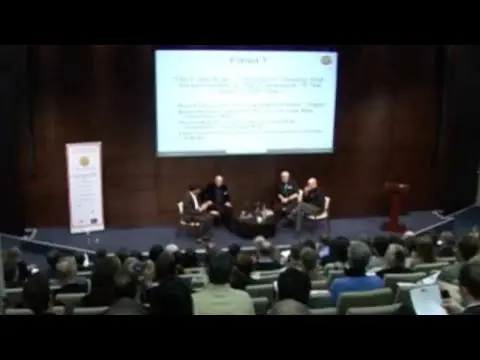
hi I'm Emily Levine terribly sorry to announce that I'm replacing Danny Hillis who has a sinus condition that didn't allow him to fly today and the only time I've ever had a more intimidating circumstance was replacing gore Vidal at the last moment so hi nice to meet you I'm actually really nervous because I looked at your bio about 20 minutes befo... Read More
Key Insights
- 👶 Science education for children should focus on making science accessible, engaging, and fun, encouraging children to explore and experiment with the world.
- 🔬 Science communication needs improvement to combat the rise of anti-intellectualism and promote rational thought. Scientists should be more willing to change their minds and present science as a self-modifying base of knowledge.
- 🤘 The inclusion of science in everyday decision-making is a positive sign, as people are increasingly relying on scientific research in areas like healthcare and purchasing choices.
Install to Summarize YouTube Videos and Get Transcripts
Explore YouTube Video Summarizer or Get YouTube Transcript Extractor
Questions & Answers
Q: How are Emily Levine and Danny Hillis working to make science more accessible for children?
Emily Levine and Danny Hillis are creating adventurous science stories illustrated by a comic book artist to engage children and encourage them to explore and experiment with the world around them.
Q: What concerns do Emily Levine and Danny Hillis have about the current state of science communication?
They are both worried about the rise of anti-intellectualism and people's rejection of facts and rational thought. They criticize the lack of effective science communication and the arrogance of some scientists.
Q: How do Emily Levine and Danny Hillis believe science can play a role in decision-making?
They believe that science should be a storyteller and help inform decision-making in areas such as healthcare and purchasing choices. They see hope in people's increasing reliance on scientific research in these areas.
Q: What is the role of comedy in science communication?
Comedy and science have similarities in connecting ideas and making unusual connections. Comedy can help make science more engaging and accessible to a wider audience.
Summary & Key Takeaways
-
Emily Levine replaces Danny Hillis in a conversation about science and comedy, discussing their nerves and the differences between performing on TED and on a comedy show.
-
They discuss the importance of science education for children and how they are working on adventurous science stories to make science more accessible and fun for young kids.
-
They both express concerns about the current state of science communication and the rise of anti-intellectualism, but also see hope in the increasing inclusion of science in everyday decision-making.
Read in Other Languages (beta)
Share This Summary 📚
Summarize YouTube Videos and Get Video Transcripts with 1-Click
Try YouTube Summary with ChatGPT & Claude or YouTube Transcript Generator
Explore More Summaries from Long Now Seminars 📚





Summarize YouTube Videos and Get Video Transcripts with 1-Click
Try YouTube Summary with ChatGPT & Claude or YouTube Transcript Generator