How Did the Project Help 2,000 People Walk Again With Prosthetic Limbs?
TL;DR
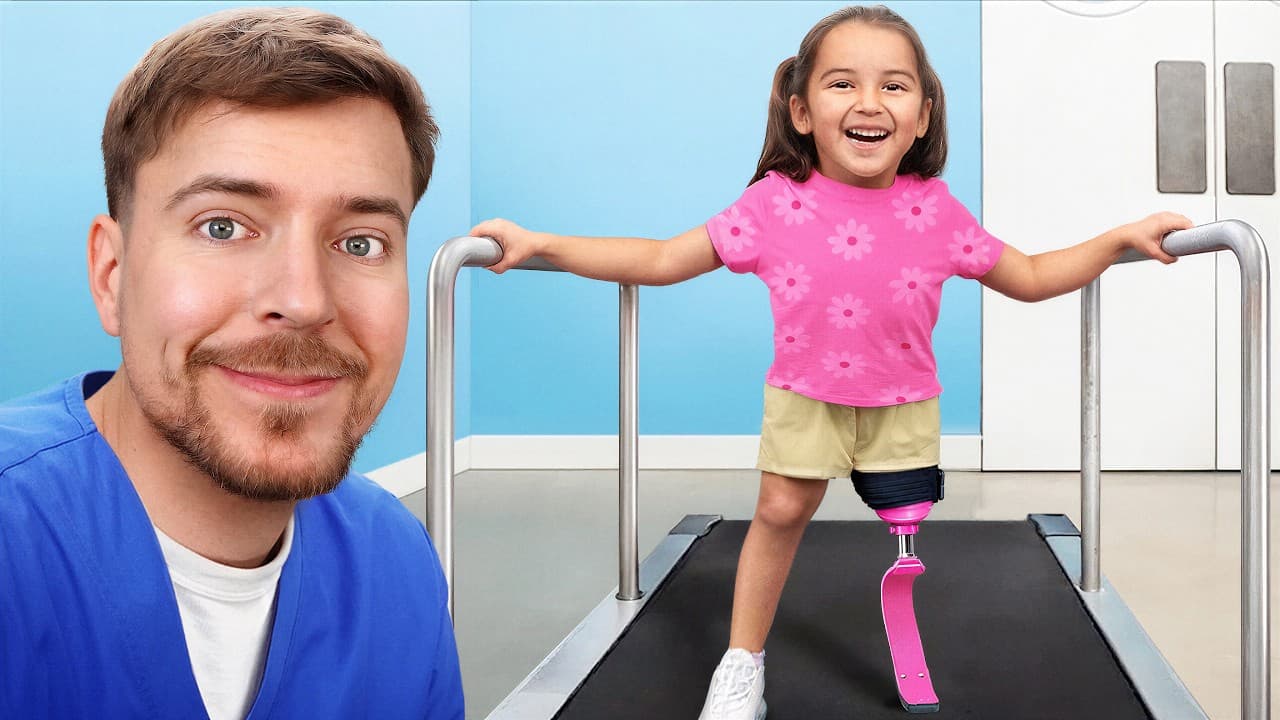
The project helped 2,000 people walk again by funding and fitting prosthetic limbs, reusing functional components, and bringing care to people who could not reach clinics. Prostheses can cost from 5 to $50,000, while recycled parts enabled the Range of Motion Project to provide quality care at one tenth the usual cost. Read on to see how restored mobility changed daily routines, family milestones, and access to independence.
Transcript
In this video, we're gonna to help 2000 people walk again! The video you are about to watch is unlike anything we've ever done. Walking is something most of us take for granted every day, but for millions of amputees all around the world, they don't have that same luxury. But in this video, for 2000 people, that is about to change. I had an acciden... Read More
Key Insights
- Prosthetic access is limited by cost and insurance coverage, with many participants unable to afford a suitable limb independently. The transcript states that a prosthesis can cost anywhere from 5 to 50,000, making outside funding essential for recipients without insurance or adequate benefits.
- Walking independence is closely connected to ordinary daily activities. Participants wanted not only major experiences, but also the ability to stand, wash dishes, play tennis with family, hug relatives at eye level, travel more freely, and stop feeling confined by limited mobility.
- A properly fitted prosthetic limb can support deeply personal family milestones. Travis received two legs so he could walk his daughter down the aisle and share a father-daughter dance, while the project also covered the wedding cost after learning how important the occasion was to the family.
- Recycled prosthetic components can reduce costs while preserving functional value. The Range of Motion Project maintains a global inventory of usable parts recovered from other prostheses, allowing the organization to provide quality care at one tenth the usual cost and serve underprivileged patients.
- Geography is a major barrier to prosthetic care in remote communities. Mountainous roads, rivers, jungles, and difficult terrain can prevent patients from reaching a clinic, leaving some people trapped at home and requiring prosthetic teams to deliver care directly where recipients live.
- Reliable transportation expands the reach of mobile prosthetic services. A $65,000 truck equipped for difficult terrain allowed the Range of Motion Project team to visit isolated patients, including Kevin, whose home was located on the side of a volcano in the jungle.
- Restored mobility can revive cultural and emotional connections. Kelly traveled from Bolivia to Ecuador without knowing whether she would receive a prosthetic, then danced after walking again, reconnecting her family with an important part of their shared past.
- Prosthetic care can transform childhood independence. Eduardo had previously dragged himself around and felt embarrassed about not having a leg, but his new prosthetic allowed him to move independently, illustrating why access matters at every stage of life.
Install to Summarize YouTube Videos and Get Transcripts
Explore YouTube Video Summarizer or Get YouTube Transcript Extractor
Questions & Answers
Q: How did the project help 2,000 people walk again?
The project funded and fitted prosthetic limbs for amputees who often lacked adequate insurance or could not afford care. It also worked with organizations such as the Range of Motion Project, which reused functional components and traveled to remote communities. Recipients regained abilities such as standing, walking, dancing, playing sports, and participating in family events.
Q: How much can a prosthetic limb cost?
The transcript says a prosthesis can cost anywhere from 5 to $50,000. Many recipients could not afford insurance or lacked adequate coverage, so they depended on fundraising and outside assistance. One person said buying a prosthesis independently would have taken ten years.
Q: How can prosthetic limbs help amputees regain independence?
Prosthetic limbs can restore the ability to stand, walk, travel, and handle ordinary activities. Greg hoped to play tennis with his family again but said he would be happy simply to stand and wash dishes. Stephanie walked independently for the first time in almost 15 years and was described as no longer being a prisoner.
Q: How did recycled components reduce the cost of prosthetic care?
The Range of Motion Project maintained a global inventory of functional components recycled from other prostheses. Founder David explained that this approach preserved quality while reducing the cost to one tenth. The savings helped the organization serve underprivileged amputees who could not access expensive technology.
Q: Why is insurance coverage a major barrier to receiving prostheses?
Many participants either could not afford insurance or did not have adequate coverage for a prosthesis. Without the project’s help, some might never have walked again because a limb can cost from 5 to $50,000. The transcript describes hope, fundraising, and outside assistance as the remaining options when insurance does not pay.
Q: How did receiving prosthetic legs change Travis’s role in his daughter’s wedding?
Travis received both a right and a left prosthetic leg and began walking during his fitting. That allowed him to plan to walk his daughter down the aisle and join the father-daughter dance. The project also covered the entire cost of the wedding.
Q: How did the project reach amputees living far from clinics?
Some patients lived beyond rivers, jungles, mountainous roads, and other difficult terrain, making clinic visits impractical. The project provided the Range of Motion Project with a $65,000 truck so its staff could carry care to remote homes. One patient lived on the side of a volcano in the jungle.
Q: What everyday activities became possible after recipients received prostheses?
Recipients described standing to wash dishes, playing tennis, walking with relatives, riding motorcycles, playing soccer, and dancing. Stephanie could look her father in the eyes and dance with him after walking again. These activities connected restored mobility with independence, recreation, and family participation.
Summary & Key Takeaways
-
The project set out to help 2,000 amputees walk again by providing prosthetic limbs without charging recipients. Participants described losing mobility after accidents, illness, infections, and other circumstances. Receiving properly fitted limbs allowed many of them to stand, walk, dance, play, and reconnect with ordinary activities that had become difficult or impossible.
-
Cost was a central barrier because prostheses can range from 5 to 50,000, while many recipients lacked insurance or adequate coverage. The project paid for limbs and sometimes offered additional financial assistance. In Guatemala, recycled functional components helped the Range of Motion Project maintain quality while reducing the cost to one tenth.
-
Access presented another obstacle because some patients lived beyond rivers, jungles, mountainous roads, and other difficult terrain. A new $65,000 truck enabled clinic staff to reach remote homes, including a patient living beside a volcano. The broader effort emphasized that mobility can restore independence, family connection, and participation in important life events.
Read in Other Languages (beta)
Share This Summary 📚
Summarize YouTube Videos and Get Video Transcripts with 1-Click
Try YouTube Summary with ChatGPT & Claude or YouTube Transcript Generator
Explore More Summaries from MrBeast 📚




Summarize YouTube Videos and Get Video Transcripts with 1-Click
Try YouTube Summary with ChatGPT & Claude or YouTube Transcript Generator