How to Manufacture Chain Link Fence from Wire
TL;DR
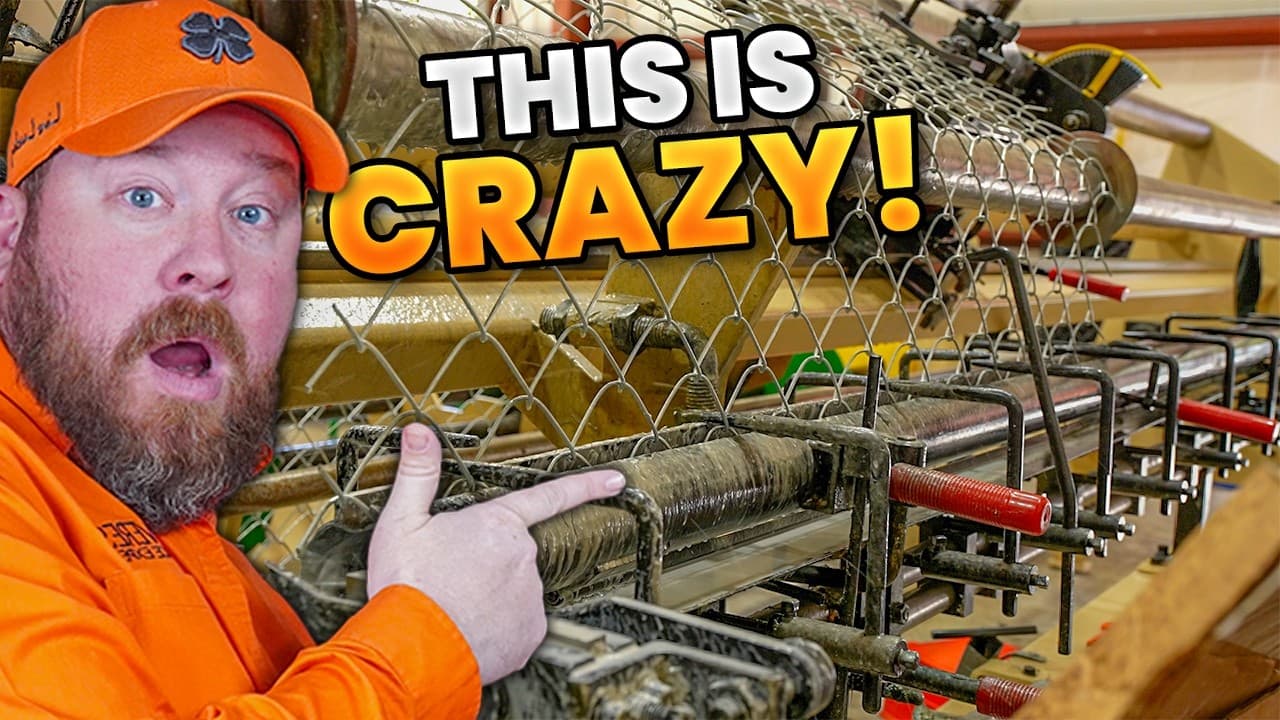
Chain link fence is made by feeding two smooth wire strands through forming and stretching worms, which shape the familiar diamond pattern and weave each new picket into the existing material. The machine then cuts the wire, finishes the edges with turrets, releases the completed roll, and prepares it for identification, wrapping, storage, or shipment.
Transcript
welcome back to another video with your boy Matt here at Ozark fence or in particular here at Ozark wireworks we had a couple of comments recently that they wanted to see some more of the Chain Link Manufacturing that we do here at Ozark wireworks and you're in luck today because we are here weaving wire thought we would shoot a quick video and bri... Read More
Key Insights
- Chain link production starts with smooth strand selected according to the required gauge, coating, and finished fence specification. The facility keeps 11 1/2-gauge, 11-gauge, 9-gauge, and vinyl-coated smooth strand available for different manufacturing runs.
- The demonstrated four-foot fence uses two coils of 11 1/2-gauge smooth strand. Both strands are positioned beneath a pulley system, which draws the material toward the central forming and stretching mechanisms of the wire-weaving machine.
- The diamond pattern is created by forming worms working with a blade. These components twist the incoming smooth strand into the recognizable chain link shape before the newly formed wire advances to the next section of the machine.
- Stretching worms act after the forming worms have shaped the strand. They stretch the formed wire so it can travel through the trough and enter the pre-existing chain link material in the correct configuration.
- Each new picket weaves into the existing fence as it moves down the trough. The operator demonstrates this movement in manual mode, making it possible to observe the individual picket before the machine proceeds to cutting and edge finishing.
- The cutting system uses heat-treated, high-carbon steel components. According to the explanation, the heat treatment helps prevent the cutting material from becoming dull as individual pickets are repeatedly cut during chain link production.
- The edge finish is controlled by two upper turrets. Depending on the chain link product being made, the machine can knuckle the edges, twist them, or apply a knuckled finish on one side and a twisted finish on the other.
- Completed rolls are removed from the wire dogs, tagged, palletized, strapped, and shrink-wrapped. A complimentary picket is placed with the new roll so installers can weave multiple rolls together when working in the field.
Install to Summarize YouTube Videos and Get Transcripts
Explore YouTube Video Summarizer or Get YouTube Transcript Extractor
Questions & Answers
Q: How is chain link fence manufactured from smooth wire?
Chain link fence is manufactured by selecting the appropriate smooth strand and feeding two coils beneath a pulley system into a wire-weaving machine. Forming worms and a blade twist the strand into a diamond pattern, while stretching worms extend the formed wire. Each picket then enters a trough, weaves into the existing fence, gets cut, and receives its required edge finish from the turrets.
Q: What wire types can be used to make chain link fence?
The facility shown keeps several varieties of smooth strand for chain link production, including 11 1/2-gauge, 11-gauge, 9-gauge, and vinyl-coated smooth strand. Workers assess the planned manufacturing run before choosing material. In the demonstrated run, they use two coils of 11 1/2-gauge strand to produce a four-foot roll of chain link fence.
Q: How does a chain link machine form the diamond pattern?
The machine forms the diamond pattern by drawing smooth strand into a set of forming worms. These worms work with a blade to twist the wire into the familiar chain link shape. After forming, the wire moves into another series of worms that stretch it. This forming and stretching process is described as the central operation in manufacturing the chain link material.
Q: What do the stretching worms do in chain link production?
The stretching worms receive the wire after the forming worms and blade have twisted it into the diamond configuration. They stretch the newly shaped wire before it enters the trough. From there, the formed picket travels into the pre-existing chain link and weaves into the growing fence. Stretching is therefore part of preparing each shaped picket for insertion into the material.
Q: How is each new wire picket added to the fence?
After the wire passes through the forming and stretching worms, the machine sends the resulting picket down a trough. As it moves through that trough, it weaves into the existing chain link fence. The demonstration uses the machine's manual mode to show this insertion clearly. Once the picket is woven into place, the next manufacturing step is cutting the wire.
Q: How does the machine cut chain link wire?
The machine cuts the wire after a formed picket has moved down the trough and woven into the existing fence. Its cutting area includes heat-treated, high-carbon steel. The stated purpose of the heat treatment is to keep the cutting material from dulling during production. Cutting prepares the inserted picket for the following step, when the upper turrets finish its edges.
Q: How are the edges of chain link fence finished?
Two turrets at the top of the machine create the required edge treatment after a picket has been formed, woven, and cut. The selected finish depends on the kind of chain link being manufactured. The turrets can knuckle the fence, twist its ends, or create a mixed configuration with a knuckled edge on one side and a twisted edge on the other.
Q: What happens after a chain link fence roll is completed?
When the machine signals that a roll is complete, workers pull it down from the wire dogs. They remove a complimentary picket and place it with the new roll so field installers can weave multiple rolls together. The roll is then tagged to identify its type. Full pallets are strapped, shrink-wrapped, and either stored for customer orders or sent to Ozark Fence.
Summary & Key Takeaways
-
Manufacturing begins by selecting smooth strand in the gauge and coating required for the planned fence. Ozark Wireworks receives this material by the truckload and stocks 11 1/2-gauge, 11-gauge, 9-gauge, and vinyl-coated varieties. The demonstrated production run uses two coils of 11 1/2-gauge strand to make a four-foot roll.
-
A pulley system draws both strands into the weaving machine, where forming worms and a blade twist them into the recognizable diamond pattern. Stretching worms then extend the formed wire before it travels through a trough and weaves into the existing fence. Heat-treated, high-carbon steel components cut each completed picket after insertion.
-
Turrets finish the fence edges by knuckling, twisting, or combining the two treatments, depending on the product being manufactured. When a roll is complete, workers remove it from the wire dogs, preserve a complimentary picket for joining rolls during installation, attach an identification tag, palletize and strap finished rolls, then shrink-wrap them for storage or shipment.
Read in Other Languages (beta)
Share This Summary 📚
Summarize YouTube Videos and Get Video Transcripts with 1-Click
Try YouTube Summary with ChatGPT & Claude or YouTube Transcript Generator