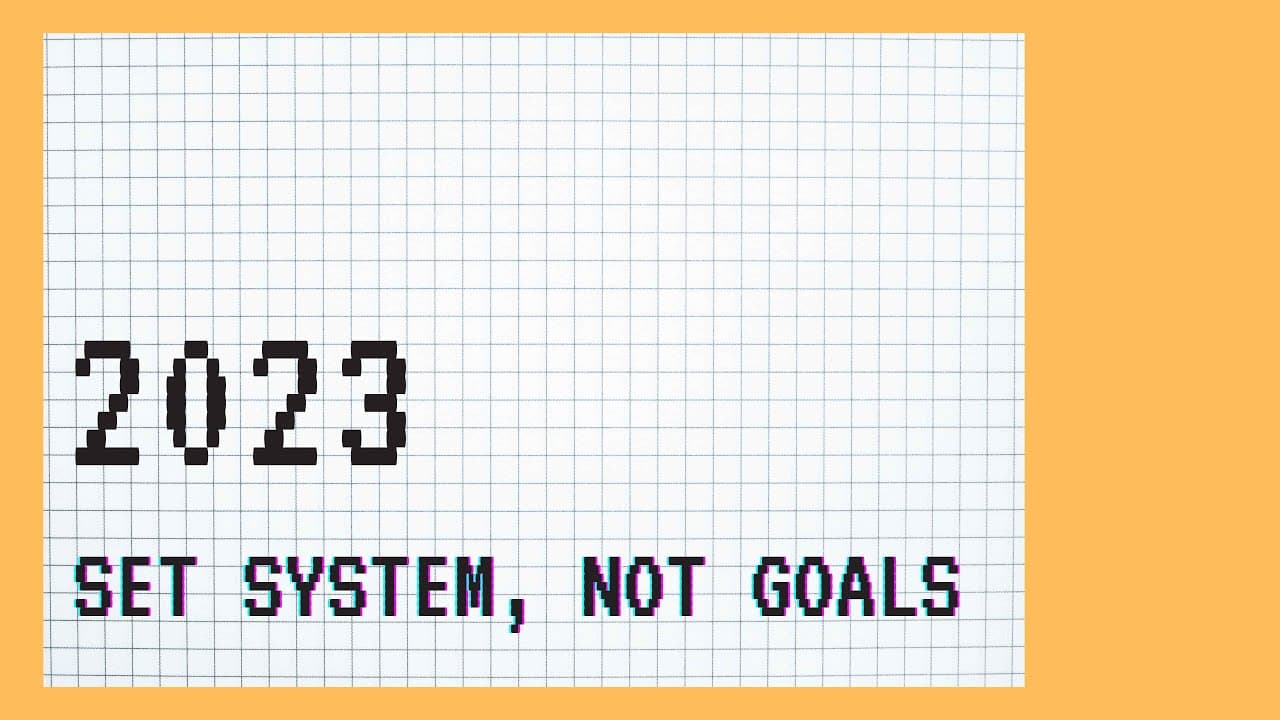
Life Design 2023: How Do You Set Systems Rather Than Goals?
TL;DR
Life Design 2023 replaces outcome-focused goals with systems built through three steps: dream big, start small, and reassess regularly. The process defines an ideal identity across five categories, grades current progress out of five, and converts broad ambitions into SMART tasks using a three plus one system. Read on for the exact framework and practical assessment method.
Transcript
winners and losers have the same goals that James Clear puts it really clearly the way we think about success is fundamentally flawed we put too much emphasis on the goal itself and not enough on the system that leads to the goal we are obsessed with the outcome rather than the process and the most successful people in the world are those who focus... Read More
Key Insights
- "They realize that the goal is just a byproduct of the system they have in place." (0:27)
- "It's a three-step, anti-goal setting process: the first one is to dream big, the second one is to start small, and the third one is to reassess regularly." (0:39)
- "The type of person you want to become is often more important than any goal you want to reach." (1:48)
- "Three plus one means to stop, start, continue, and then plus one is a big change you want to make in your life." (6:02)
- "SMART means specific, measurable, achievable, relevant, and time-bound." (6:26)
Install to Summarize YouTube Videos and Get Transcripts
Explore YouTube Video Summarizer or Get YouTube Transcript Extractor
Questions & Answers
Q: Why should you set systems rather than goals?
Winners and losers can have the same goals, so the goal alone does not explain success. The most successful people focus on the process and treat the goal as a byproduct of the system they maintain.
Q: What is the Life Design 2023 anti-goal-setting process?
It is a three-step process implemented and refined during 2022. The steps are to dream big, start small, and reassess regularly.
Q: What does it mean to dream big in this process?
Dreaming big means giving yourself space to write down ambitious ideas before judging whether they are realistic. The example given is reaching one million YouTube subscribers in two years.
Q: Why focus on who you want to become?
The type of person you want to become can be more important than a particular goal. Defining that person clarifies your values and beliefs, allowing the necessary habits and future goals to follow.
Q: Which five categories define the ideal person?
The five categories are health, time, money, relationships, and growth. The examples include being fit and energized, spending 50% of time creating, sustainably experimenting, enjoying company, and creating content that feels true to oneself.
Q: How do you assess your current position against your ideal self?
Rate yourself out of five in each of the five categories. In the example, health scored four, time scored 2.5, and money, relationships, and growth each scored three, making time the next year's priority.
Q: What is the three plus one system?
The three parts are stop, start, and continue. The plus one is a big change you want to make in your life, while the smaller actions turn vague ambitions into steps you can actually perform.
Q: How are SMART tasks different from SMART goals?
The framework applies SMART criteria to tasks rather than goals. Each task should be specific, measurable, achievable, relevant, and time-bound so an inspiring idea becomes concrete and actionable.
Summary & Key Takeaways
-
The traditional emphasis on goals rather than systems is flawed. Successful people focus on the system that leads to the goal.
-
Step One: Dream big and focus on who you want to become in order to make the dream happen.
-
Step Two: Start small and utilize a three plus one system to make actionable and measurable tasks.
-
Step Three: Assess regularly through daily, monthly, and annual evaluations to maintain momentum and make necessary adjustments.
Read in Other Languages (beta)
Share This Summary 📚
Summarize YouTube Videos and Get Video Transcripts with 1-Click
Try YouTube Summary with ChatGPT & Claude or YouTube Transcript Generator
Explore More Summaries from ⚡️ Framework Thinking & Mental Models ⚡️ 📚
Summarize YouTube Videos and Get Video Transcripts with 1-Click
Try YouTube Summary with ChatGPT & Claude or YouTube Transcript Generator