What Is the Briggs-Raucher Oscillating Reaction?
TL;DR
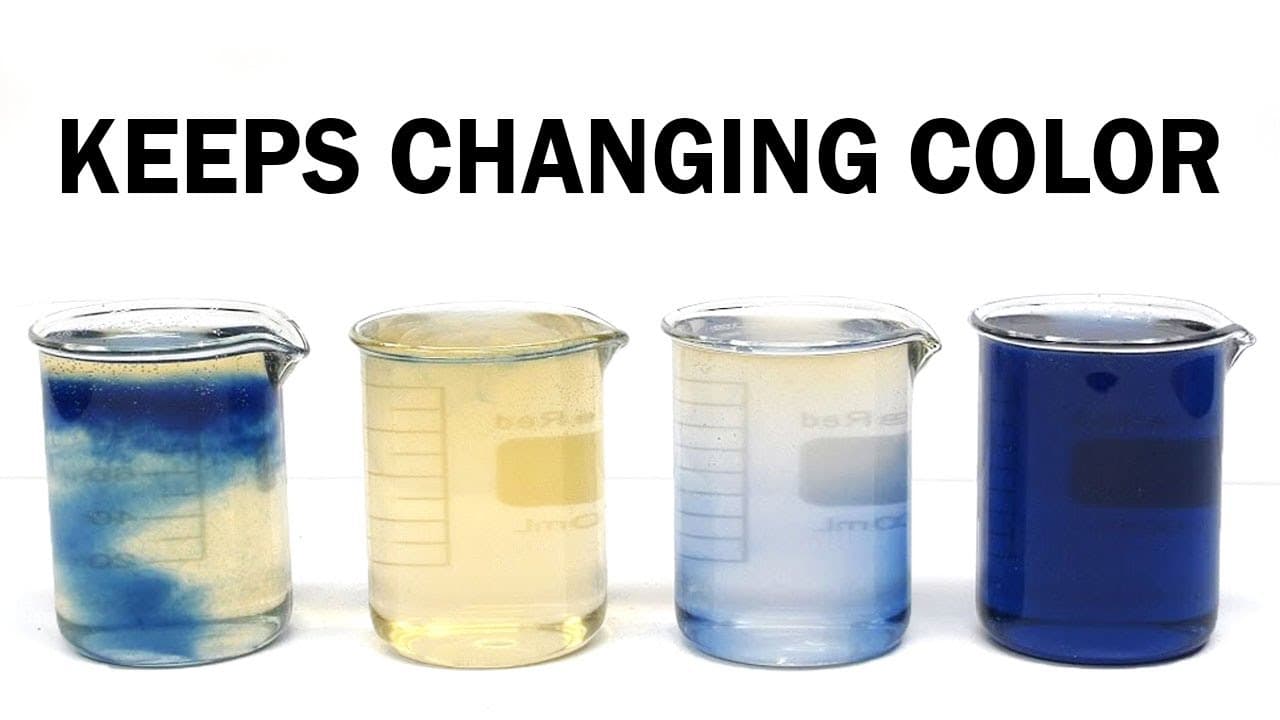
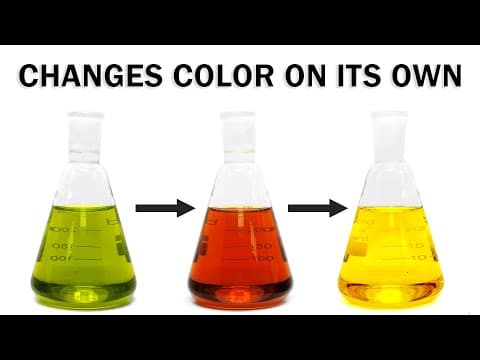
The Briggs-Raucher reaction is an oscillating chemical process that involves mixing three colorless solutions to create a cycle of colors, shifting from yellow to black before returning to colorless. This oscillation occurs due to fluctuations in iodide concentration, which influences the reaction pathways, allowing for the generation and consumption of various intermediates.
Transcript
Today we're going to be talking about the Briggs-Raucher reaction. This reaction is quite unique because it's one of the very few oscillating chemical reactions that we know of Three colourless solutions are mixed, and it slowly becomes darker and darker yellow, until it suddenly turns black. The black colour slowly fades and the solution momentari... Read More
Key Insights
- 💛 The Briggs-Raucher reaction is an oscillating chemical reaction that involves three colorless solutions and results in a cycle of color changes from yellow to black and back to colorless.
- ❓ The reaction requires specific ingredients for each solution, including potassium iodate, sulfuric acid, cornstarch, malonic acid, manganese sulfate, and hydrogen peroxide.
- ❓ The oscillation in the reaction is caused by fluctuations in the concentration of iodide, with different processes dominating at different concentrations.
- ❓ The reaction can be visually observed and creates interesting patterns when not stirred uniformly.
- ❓ The reaction products can be neutralized and filtered to properly dispose of the chemicals involved.
- ❓ The Briggs-Raucher reaction offers a unique and intriguing study of chemical oscillations and the behavior of intermediates.
- 👨🔬 There is ongoing research and exploration in understanding the complex mechanisms behind the Briggs-Raucher reaction.
Install to Summarize YouTube Videos and Get Transcripts
Explore YouTube Video Summarizer or Get YouTube Transcript Extractor
Questions & Answers
Q: How does the Briggs-Raucher reaction differ from other oscillating chemical reactions?
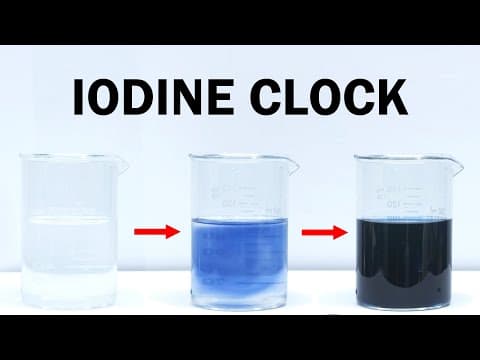
The Briggs-Raucher reaction is unique because it involves three colorless solutions that cycle through color changes, whereas other reactions like the iodine clock reaction only change colors once. Additionally, the Briggs-Raucher reaction involves specific intermediates and processes that contribute to its oscillation.
Q: What ingredients are necessary for each of the three solutions in the Briggs-Raucher reaction?
Solution A requires potassium iodate and sulfuric acid; solution B requires cornstarch, malonic acid, and manganese sulfate; and solution C only requires 30% hydrogen peroxide.
Q: Why is it important to use distilled water in the preparation of the solutions?
Tap water contains chloride ions that can disrupt the reaction, so using distilled water ensures the purity of the solutions and prevents unwanted chemical interactions.
Q: How does the reaction oscillate between different colors?
The oscillation occurs due to fluctuations in iodide concentration. The radical and non-radical processes in the reaction compete for iodide at different concentrations, leading to the generation and consumption of various intermediates that cause the color changes.
Summary & Key Takeaways
-
The Briggs-Raucher reaction is a unique oscillating chemical reaction that involves mixing three colorless solutions, resulting in a cycle of color changes from yellow to black and back to colorless.
-
The reaction requires three separate solutions, each containing specific ingredients such as potassium iodate, sulfuric acid, cornstarch, malonic acid, manganese sulfate, and hydrogen peroxide.
-
The oscillation occurs due to fluctuations in the concentration of iodide, with different processes dominating at different concentrations, resulting in the generation and consumption of various intermediates.
Read in Other Languages (beta)
Share This Summary 📚
Summarize YouTube Videos and Get Video Transcripts with 1-Click
Try YouTube Summary with ChatGPT & Claude or YouTube Transcript Generator
Explore More Summaries from NileRed 📚

Summarize YouTube Videos and Get Video Transcripts with 1-Click
Try YouTube Summary with ChatGPT & Claude or YouTube Transcript Generator