How to Live Better by Owning and Chasing Less
TL;DR
Living better with less starts by questioning why possessions, status, and income have become priorities, then removing burdens that do not support a meaningful life. Minimalism is not opposition to material possessions or a rigid decluttering formula. It is a flexible way to examine attachments, address underlying dissatisfaction, and create space for healthier priorities.
Transcript
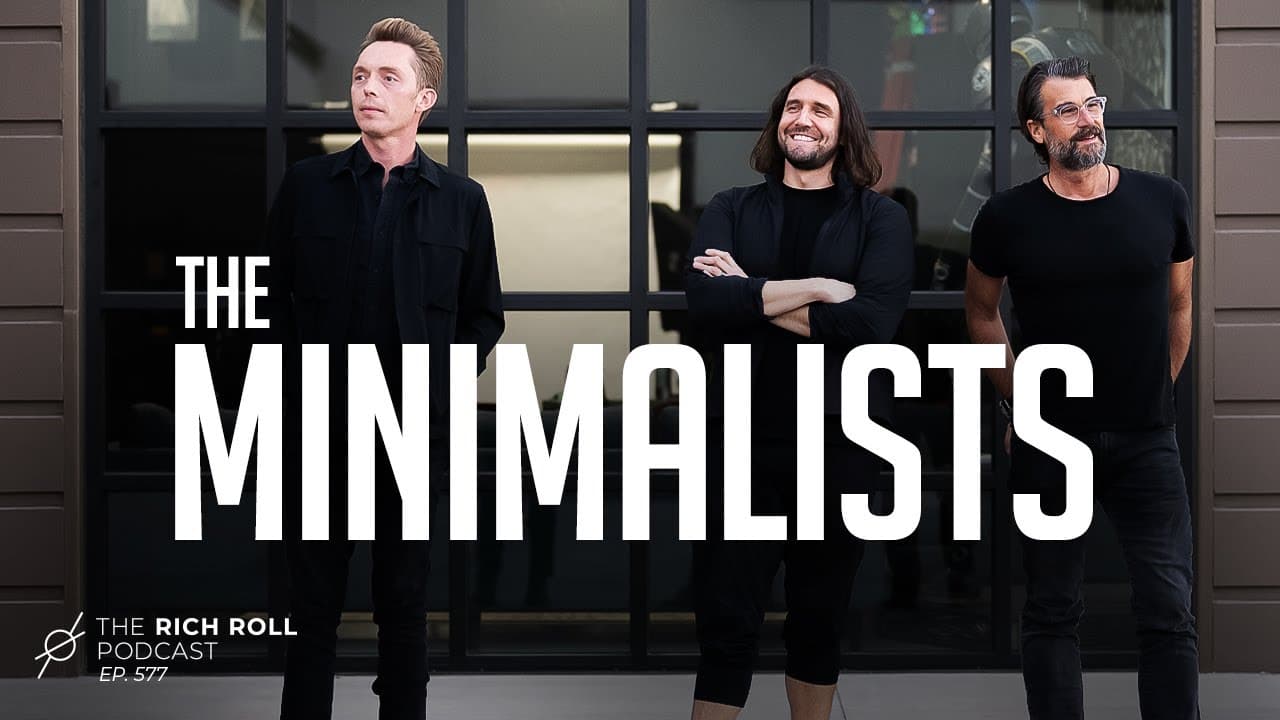
Hey people welcome to the podcast Joshua Fields Millburn and Ryan Nicodemus, AKA The Minimalists, are in the house dropping truths on how to live better with less. I love these guys. I've known them for years. So much respect for their mission, their work, empowering millions of people all over the world. This conversation is stellar, potentially e... Read More
Key Insights
- Minimalism is a way to question whether possessions, achievements, and other people's perceptions deserve the priority they receive. Joshua and Ryan do not consider owning things morally wrong. Their concern is excessive attachment and the burdens created when material objects or status dominate a person's attention.
- Financial achievement is not guaranteed to produce happiness. Ryan once treated an annual income of $50,000 as the number that would make a desirable home and happy life possible, but earning approximately $52,000 led to a financed truck and a new, higher target instead of contentment.
- Corporate success can replace one form of chaos with another. Joshua and Ryan escaped poor, dysfunctional childhood environments and earned good money, yet their demanding careers, debt, clutter, job-title chasing, stress, and uncontrolled spending produced a different kind of instability rather than the security they expected.
- Personal loss can expose misplaced priorities. When Joshua's mother died and his marriage ended during the same month, he began questioning his corporate career and the things he had spent years acquiring. He concluded that possessions had become priorities without delivering the happiness he expected from them.
- Minimalism does not require copying someone else's possessions or lifestyle. Seeing Colin Wright live with 52 items showed Joshua that a relatively normal person could make an abnormal choice, but Joshua did not aspire to that exact number. The example expanded his sense of what was possible.
- The purpose behind decluttering matters more than a fixed procedure. Joshua found the reasons for reducing possessions more compelling than numbered instructions for cleaning a closet or kitchen. He argues that focusing narrowly on techniques can distract people from the underlying problems driving consumption and attachment.
- Material possessions are not inherently incompatible with minimalism. Joshua and Ryan acknowledge owning ordinary items, including a car, bed, couch, clothing, and hair products. Their approach distinguishes useful ownership from emotional attachment, ego, excessive consumption, and allowing possessions to determine personal priorities.
- A useful starting question is how life might become better with less. The phrase invites examination beyond physical clutter, including debt, career pressure, achievement, ego, and concern about appearances. It treats reduction as a means of improving life rather than making fewer possessions the final objective.
Install to Summarize YouTube Videos and Get Transcripts
Explore YouTube Video Summarizer or Get YouTube Transcript Extractor
Questions & Answers
Q: What is minimalism according to The Minimalists?
Minimalism is presented as a way to scrutinize possessions, priorities, attachments, achievement, ego, and concern about other people's perceptions. It does not require rejecting all material goods or following a strict rule about how many items to own. Its central purpose is to ask whether having less could relieve burdens and support a better, more intentional life.
Q: How can owning less help someone live better?
Owning less can help when possessions have become sources of clutter, debt, stress, attachment, or misplaced attention. Joshua realized that the things he had worked hard to buy were not producing the happiness he expected, even though they had become major priorities. Reducing unnecessary burdens can create room to reconsider what deserves attention and why.
Q: Why did money fail to make Ryan Nicodemus happy?
Ryan associated happiness with reaching a particular income because his father had estimated that earning $50,000 annually could make a desirable home affordable. Ryan later earned approximately $52,000, felt proud, and financed a new truck, but remained unhappy. He responded by raising the target to $60,000, $80,000, six figures, or more possessions, which kept satisfaction moving further away.
Q: What caused Joshua Fields Millburn to reconsider his life?
Joshua's mother died and his marriage ended in the same month while he was already dissatisfied with his corporate career managing 150 retail stores. Those events led him to question nearly everything, especially the possessions he had spent about a dozen years working to acquire. He concluded that his priorities were misaligned because those things had not made him happy.
Q: Does minimalism require getting rid of every possession?
Minimalism does not require eliminating every possession. Joshua and Ryan explicitly say they are not against material goods and do not believe owning things is morally wrong. They mention ordinary possessions such as a car, bed, couch, jacket, and hair products. The issue is whether attachment, clutter, ego, or consumption has displaced more important priorities.
Q: Why is the reason for decluttering more important than the method?
The reason matters because a list of steps for clearing a closet or kitchen may address visible clutter without examining the problem beneath it. Joshua says he was more interested in why minimalists changed their lives than in prescriptive instructions. When technique becomes the main focus, it can divert attention from dissatisfaction, debt, attachment, ego, or compulsive acquisition.
Q: How did Joshua first discover minimalism?
Joshua encountered minimalism online after someone tweeted about Colin Wright, who lived with 52 items and later appeared in The Minimalists' first documentary. Joshua did not want to reproduce that exact lifestyle, but the example showed him that a relatively normal person could choose an unusual approach. He then discovered other minimalists with families and houses.
Q: How can career success create a different kind of chaos?
Career success can create chaos when income, job titles, spending, debt, and possessions expand without resolving the dissatisfaction that motivated the pursuit. Joshua and Ryan rose from poor, dysfunctional households into well-paid corporate careers, but they remained overwhelmed and stressed. They describe the result as trading childhood chaos for another form of chaos that only appeared controlled.
Summary & Key Takeaways
-
Joshua Fields Millburn and Ryan Nicodemus grew up in poor, dysfunctional households in Dayton, Ohio. Seeking security and happiness, they pursued successful corporate careers, earned good money, accumulated possessions, and took on debt. Despite their achievements, both remained overwhelmed, stressed, and dissatisfied with the lives they had constructed.
-
For Joshua, his mother's death and the end of his marriage in the same month triggered an examination of his career, possessions, priorities, and concern about other people's perceptions. He realized that the things he had worked hard to acquire were not making him happy and had instead become misplaced priorities.
-
Minimalism appealed to Joshua because the people he discovered online offered varied examples rather than a single dogma. He became more interested in why people reduce possessions than in prescriptive decluttering instructions. The central question became how life might improve with less clutter, debt, attachment, status seeking, and misplaced attention.
Read in Other Languages (beta)
Share This Summary 📚
Summarize YouTube Videos and Get Video Transcripts with 1-Click
Try YouTube Summary with ChatGPT & Claude or YouTube Transcript Generator
Explore More Summaries from Rich Roll 📚

Summarize YouTube Videos and Get Video Transcripts with 1-Click
Try YouTube Summary with ChatGPT & Claude or YouTube Transcript Generator