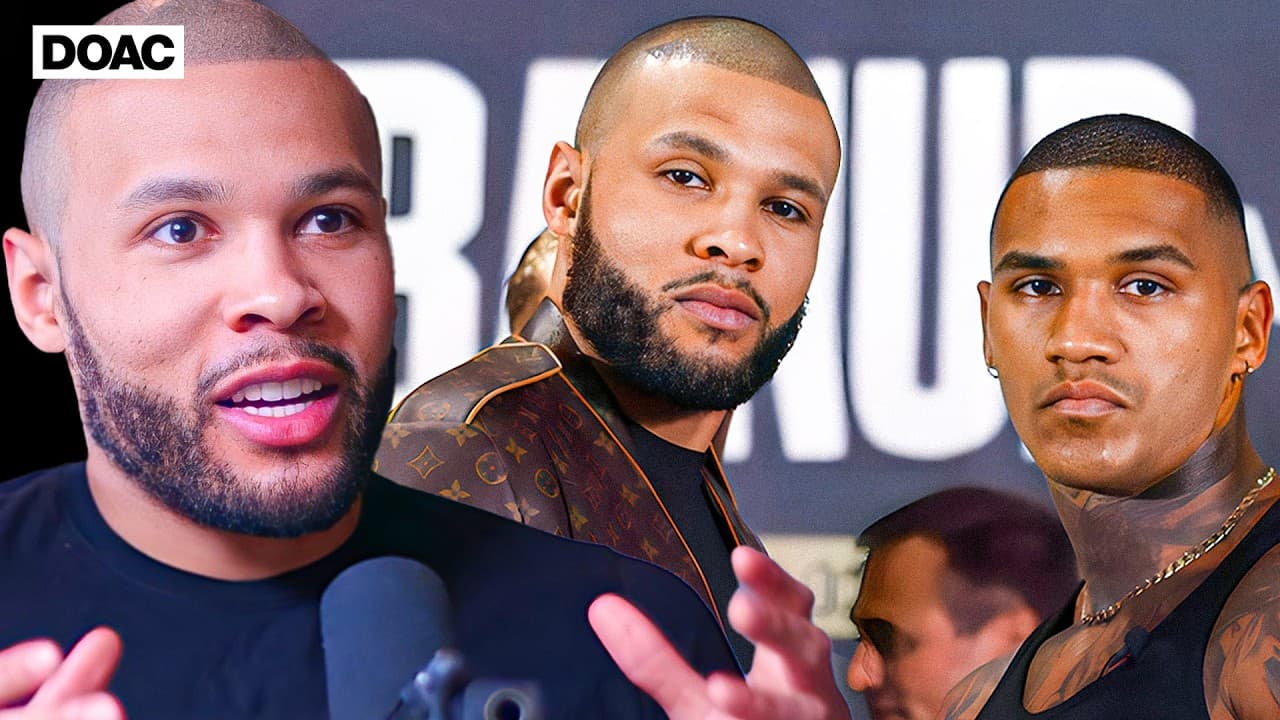
How Does Chris Eubank Jr’s Mental Strength Prepare Him to Beat Conor Benn?
TL;DR
Mental strength makes a great boxer by enabling them to face pain, doubt, and opportunities to quit; Chris Eubank Jr estimates that fighting is 70–80% mental. Confidence can grow through training, but he believes some courage and resilience must already exist. His punishing Cuban sparring experience shows how honoring difficult commitments can create lasting self-belief. Read on to understand how that mindset is built.
Transcript
People that don't know about boxing or don't know how to fight, they think that you got to be big and strong and mean and full of hate. And that's what enables you to be a great fighter or to be able to to win in the fight game. And sure, some of those things are going to help you, you know, speed, power, all of that stuff plays a big part for sure... Read More
Key Insights
- Mental strength is the largest component of great fighting, according to Eubank, who estimates boxing is 70–80% mental. Physical qualities such as size, speed, and power matter, but they cannot replace the courage required to enter the ring and accept pain.
- The walk to the ring is itself a major psychological test because a boxer knows that the bell will sound, physical harm will follow, and large audiences may be watching. Eubank says many people could not complete even that walk, let alone fight.
- Confidence can improve through training because fighters become more certain of their abilities and carry that belief into their performances. Eubank has seen fighters grow mentally over time, although he believes some basic courage, belief, and fortitude must already be present.
- Every fighter encounters moments of doubt when pain and pressure produce questions about safety, ability, and surrender. Eubank says he has experienced such moments himself, showing that mental strength does not eliminate doubt, but determines the response to it.
- Technical sparring is intended to develop specific skills without trying to hurt or stop the other fighter. In Cuba, Eubank expected this controlled approach, but a much larger Olympic heavyweight instead rushed him and struck him with powerful shots.
- Eubank’s Cuban sparring experience became a defining personal test after the heavyweight punched him out of the ring. Despite falling several feet onto concrete, hurting his knee, and facing another round, he returned because he had committed to completing three rounds.
- Finishing a difficult commitment can change a person’s internal story by establishing that hardship does not determine whether they quit. Eubank could accept losing to a much larger opponent, but he believed he could not live comfortably with allowing that opponent to make him surrender.
- Private training decisions prepare a fighter for public pressure because quitting when nobody is watching can normalize surrender. Eubank connects finishing a painful treadmill session with developing the belief that he will also persist after being hurt or challenged in the ring.
Install to Summarize YouTube Videos and Get Transcripts
Explore YouTube Video Summarizer or Get YouTube Transcript Extractor
Questions & Answers
Q: How important is mental strength in boxing?
Chris Eubank Jr estimates that boxing is 70–80% mental. Speed, power, size, and aggression help, but a boxer also needs the courage and grit to enter the ring, accept pain, and continue when doubt creates an opportunity to quit.
Q: Can a boxer develop mental strength through training?
Mental strength can improve as training and sparring make fighters more confident in their abilities, which can strengthen their performances. However, Eubank believes a fighter must already possess some underlying courage, belief, and mental fortitude.
Q: Why is the walk to the boxing ring mentally difficult?
A boxer walks through a large crowd knowing that the bell will sound and that they must hurt someone while expecting to be hurt themselves. Eubank says many people could not complete that walk, even before the fight begins.
Q: What is technical sparring in boxing?
Technical sparring is controlled practice in which the fighters agree to develop skills rather than hurt or stop each other. A session might focus on the jab, foot movement, or another specific technique.
Q: What happened during Chris Eubank Jr’s sparring session in Cuba?
Before turning professional, Eubank was paired with Cuba’s Olympic heavyweight representative, whom he described as about three times his size. The heavyweight attacked with powerful shots and knocked Eubank out of the ring during the second round, causing him to fall three or four feet onto concrete and hurt his knee.
Q: Why did Chris Eubank Jr return to the ring after being knocked out of it?
Eubank returned because he had committed to three rounds and could not accept leaving because another man had made him quit. He felt he could live with being beaten by a much larger boxer, but not with running from the challenge.
Q: How did the Cuban sparring experience strengthen Chris Eubank Jr mentally?
Completing the session showed Eubank that he could endure severe adversity without surrendering. He described it as his worst boxing experience but said that from that day onward, he was never scared again.
Q: How do private training decisions build resilience?
Eubank believes that continuing through difficulty when nobody is watching reinforces the expectation that he will not surrender publicly. He applied this idea during a 40-minute treadmill session, continuing after a calf cramp began with eight minutes remaining because he did not want quitting to become his response to hardship.
Summary & Key Takeaways
-
Chris Eubank Jr argues that boxing depends more on mental strength than size, aggression, speed, or power. A fighter must walk toward an opponent while anticipating pain, withstand doubts during competition, and continue despite wanting an escape. He estimates that success in fighting is 70–80% mental.
-
Confidence and mental fortitude can be improved through training, sparring, and successful experiences. However, Eubank believes fighters need an underlying degree of courage, belief, and resilience. Painful moments expose whether a person can resist self-doubt, reject an opportunity to quit, and find a way forward.
-
A punishing sparring experience with a much larger Cuban Olympic heavyweight became a defining test for Eubank. After being knocked from the ring onto concrete, he returned and completed the agreed rounds. That decision convinced him he could endure severe adversity without quitting and shaped his approach throughout his career.
Read in Other Languages (beta)
Share This Summary 📚
Summarize YouTube Videos and Get Video Transcripts with 1-Click
Try YouTube Summary with ChatGPT & Claude or YouTube Transcript Generator
Explore More Summaries from The Diary Of A CEO Clips 📚





Summarize YouTube Videos and Get Video Transcripts with 1-Click
Try YouTube Summary with ChatGPT & Claude or YouTube Transcript Generator