Why Netflix Wants Warner Bros. Discovery Assets
TL;DR
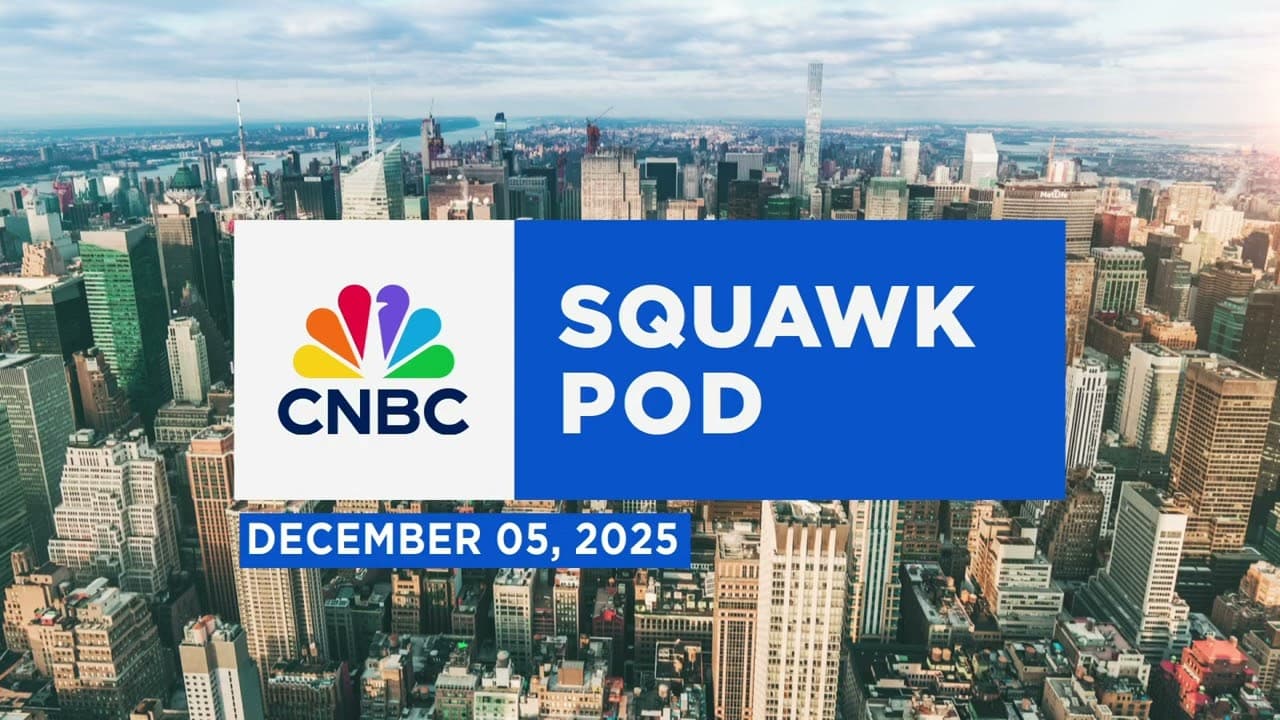
Netflix agreed to buy Warner Bros. Discovery’s film and streaming assets for $27.75 per share in cash and stock, while the linear cable networks would remain a separate public company. The transaction offers shareholders a substantial premium, but combining major streaming businesses creates antitrust risk in the United States and Europe, with a regulatory process that could last roughly a year and a half.
Transcript
Bring in show music, please. This is SquawkPod and I'm CNBC producer Cameron Costa. On today's episode, Netflix wins the bidding war for Warner Brothers Discovery, at least for now. How this huge deal will play and pay out with CNBC's own reporting thanks to Andrew Ross Sorcin. My sources this morning are now saying that Paramount had bid $30. And ... Read More
Key Insights
- Netflix agreed to acquire Warner Bros. Discovery’s film studio and streaming business after competing with Paramount Skydance and Comcast. The transaction does not include the linear cable networks, which are expected to become a separately traded public company called Global Networks.
- The announced consideration is $27.75 per Warner Bros. Discovery share in cash and Netflix stock. The discussion described approximately $23.25 to $23.50 as cash and roughly $4.50 as Netflix shares, although the speakers cited slightly different cash figures while reviewing the newly released terms.
- The transaction values Warner Bros. Discovery at $72 billion in equity and $82.7 billion in total enterprise value, including debt. Approximately 85 percent of the offer was described as cash, with collars governing the value of the Netflix stock component.
- The remaining linear cable business could add meaningful shareholder value beyond the acquisition consideration. Estimates discussed for that publicly traded company ranged from about $2.50 to as much as $4 per share, potentially taking the combined value above $30 per share.
- The proposed deal offers a substantial premium to Warner Bros. Discovery shareholders. The company’s stock had traded around $11 or $12 before the bidding process, while David Zaslav had reportedly sought approximately $30 per share when accounting for both the sale and remaining business.
- Antitrust approval is the transaction’s largest unresolved challenge. Regulators could scrutinize the combination of what the discussion characterized as the world’s number one and number four streaming companies, with potential opposition arising in the United States, Europe, and individual states.
- The regulatory defense depends partly on defining competition beyond paid streaming subscriptions. Netflix and Warner Bros. Discovery could argue that YouTube, Amazon Prime, and other online platforms compete for the same viewing time, attention, and audiences, making the relevant entertainment market broader.
- Hollywood’s response to the deal is strongly negative among many industry participants. Entertainment journalist Matt Belloni reported receiving derisive private messages, while former Hulu leader Jason Kilar argued that selling Warner Bros. Discovery to Netflix would be an especially effective way to reduce Hollywood competition.
Install to Summarize YouTube Videos and Get Transcripts
Explore YouTube Video Summarizer or Get YouTube Transcript Extractor
Questions & Answers
Q: What assets is Netflix buying from Warner Bros. Discovery?
Netflix agreed to buy Warner Bros. Discovery’s film studio and streaming operations, including the HBO Max platform discussed in the report. The linear cable networks are not part of the assets moving to Netflix. Instead, those networks are expected to remain in a separate, publicly traded company called Global Networks following the planned separation.
Q: How much is Netflix offering Warner Bros. Discovery shareholders?
The announced consideration is $27.75 per Warner Bros. Discovery share, combining cash with Netflix common stock. The discussion initially identified $23.25 in cash and $4.50 in stock, while a later report cited $23.50 in cash and the balance in collared stock. Approximately 85 percent of the overall offer was characterized as cash.
Q: What is the total value of the Netflix and Warner Bros. Discovery deal?
The transaction was described as having an equity value of $72 billion and a total enterprise value of $82.7 billion. The larger enterprise figure includes Warner Bros. Discovery’s debt. These values apply to the proposed acquisition of the studio and streaming assets, while the linear cable networks would remain in a separately valued public company.
Q: Why could Warner Bros. Discovery shareholders receive more than $27.75 per share?
Shareholders could receive value from two components: Netflix’s $27.75-per-share cash-and-stock consideration and ownership value associated with the separate linear cable company. CNBC participants estimated that remaining company could be worth about $2.50 to as much as $4 per share, potentially raising the combined shareholder value above $30 per share.
Q: Why does the Netflix deal face antitrust risk?
The deal could unite what the discussion described as the world’s number one and number four streaming companies, prompting concerns about reduced competition. Approval may face challenges from federal regulators, individual states, and European authorities. Hollywood critics also argue that placing Warner Bros. Discovery’s major content assets inside Netflix could further concentrate power in entertainment distribution and production.
Q: How might Netflix defend the acquisition to regulators?
Netflix could argue that regulators should evaluate competition across the broader market for online attention instead of examining paid streaming services alone. Under that approach, YouTube, Amazon Prime, and other digital platforms would count as competitors for viewing time, audiences, and attention. A broader market definition could make the combined company appear less dominant than a streaming-only analysis.
Q: What happens if regulators block the Netflix acquisition?
The proposed agreement includes a $5.8 billion breakup fee, reflecting the meaningful possibility that regulatory approval could fail. The participants expected an extended review in the United States and Europe, potentially involving individual states as well. They suggested that Netflix might hope to close the acquisition in roughly a year and a half if it clears that process.
Q: Why does Netflix want Warner Bros. Discovery’s intellectual property?
The strategic rationale presented is audience and subscriber growth rather than support for Netflix’s existing stock value. Entertainment journalist Matt Belloni said Netflix already has stock value but needs to expand subscribers and its overall audience. Warner Bros. Discovery provides a storied studio, a streaming platform, and valuable intellectual property that could strengthen Netflix’s content offering.
Summary & Key Takeaways
-
Netflix emerged from a bidding contest involving Paramount Skydance and Comcast, agreeing to acquire Warner Bros. Discovery’s studio and streaming operations. The consideration was described as $27.75 per share, mostly in cash, with additional potential value for shareholders from the separately traded company holding the linear cable networks.
-
The transaction’s financial structure includes cash and Netflix stock, with collars applying to the stock component. CNBC reported an equity value of $72 billion and a total enterprise value of $82.7 billion, including debt. A $5.8 billion breakup fee reflects the substantial risk that regulators might prevent completion.
-
The central strategic and regulatory debate concerns how competition should be measured. Netflix and Warner Bros. Discovery could argue that the relevant market includes YouTube, Amazon Prime, and other services competing for online attention. Critics in Hollywood counter that joining prominent streaming businesses could reduce competition, while creatives expressed strong dissatisfaction with the proposed combination.
Read in Other Languages (beta)
Share This Summary 📚
Summarize YouTube Videos and Get Video Transcripts with 1-Click
Try YouTube Summary with ChatGPT & Claude or YouTube Transcript Generator
Explore More Summaries from CNBC Television 📚



Summarize YouTube Videos and Get Video Transcripts with 1-Click
Try YouTube Summary with ChatGPT & Claude or YouTube Transcript Generator