How to Use Money for Greater Happiness
TL;DR
Use money to fund a good life rather than treating wealth itself as the goal. Ben Felix frames well-being through positive emotion, engagement, relationships, meaning, accomplishment, and vitality, while noting that income has only a weak relationship with happiness: one dataset showed a 0.09 correlation between average happiness and log income. Read on to see why time, adaptation, and changing preferences matter in financial decisions.
Transcript
This is probably the most important video I'll ever make. I hope it will change your life the same way that researching it changed mine. I used to think that working, saving, and investing were all about getting as much money as possible. Don't get me wrong, money is a powerful tool. We need at least enough money to live, and money can solve some p... Read More
Key Insights
- Money is a powerful tool but not the main goal of personal finance.
- A good life is subjective, but research identifies common contributing factors.
- Happiness can be measured as experienced or reflective happiness.
- The PERMA-V model outlines key factors for well-being: positive emotion, engagement, relationships, meaning, accomplishment, and vitality.
- Income increases happiness up to a point; beyond that, the effect diminishes.
- Social comparison and materialism can negatively impact happiness.
- Time is often more valuable than money for increasing happiness.
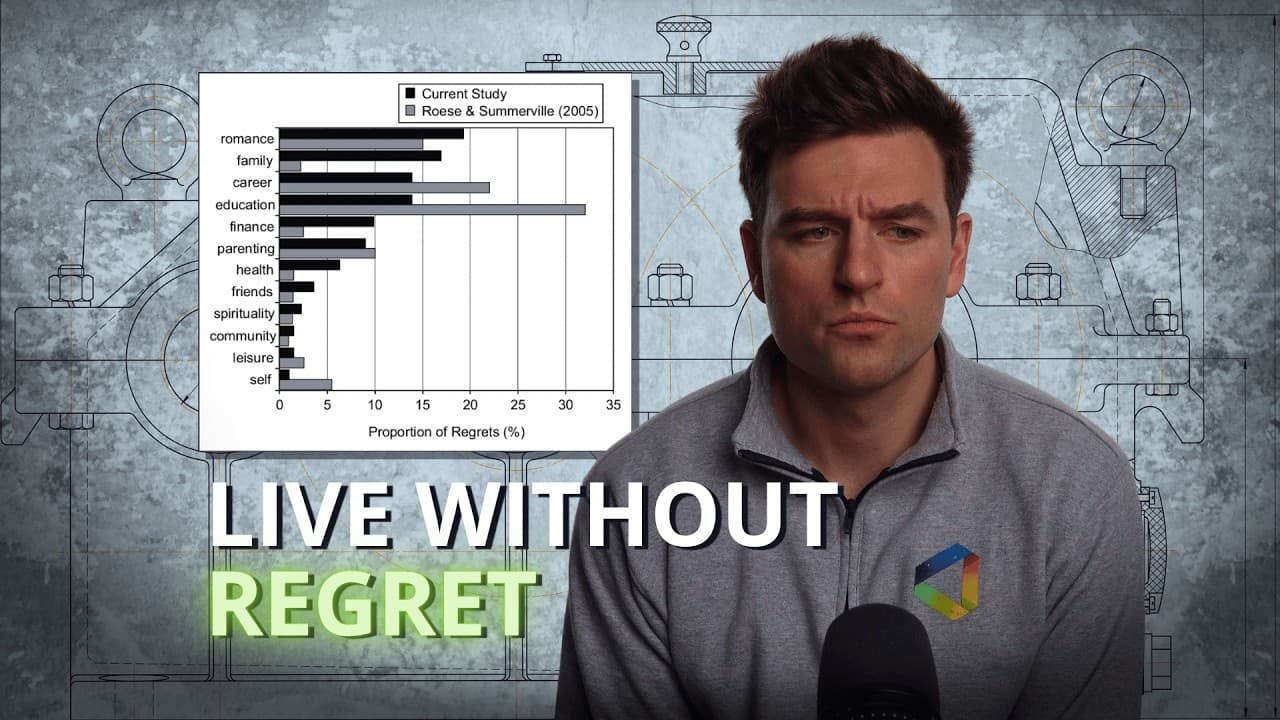
- Regret often stems from inaction rather than action, emphasizing the importance of proactive decision-making.
Install to Summarize YouTube Videos and Get Transcripts
Explore YouTube Video Summarizer or Get YouTube Transcript Extractor
Questions & Answers
Q: How can you use money to be happier?
Use money as a tool for funding the life you want, not as the ultimate objective of personal finance. Financial choices should account for how they affect your time, relationships, health, meaning, and day-to-day emotions, because a higher income and greater wealth are only part of a good life.
Q: How does income affect happiness?
The evidence described is mixed, but the relationship is generally weak. A 2023 analysis found that well-being continued rising with income for happier people, while less happy people experienced a plateau at higher incomes; the correlation between average happiness and log income in the experience-sampling data was 0.09.
Q: What is the PERMA-V model?
PERMA-V organizes six contributors to well-being: positive emotion, engagement, relationships, meaning, accomplishment, and vitality. Vitality includes eating well, sleeping well, and exercising, while engagement refers to becoming absorbed in a challenging task that matches your skills.
Q: What is the difference between experienced and reflective happiness?
Experienced happiness concerns how you feel now or felt recently. Reflective happiness concerns how you evaluate your life overall, such as rating it from zero for the worst possible life to 10 for the best possible life.
Q: Why might more money fail to create much more happiness?
The transcript says people adapt quickly even to major financial changes, creating a hedonic treadmill in which an initial burst of happiness fades. Higher incomes can also coincide with greater demands on time, less leisure, stronger materialistic values, social comparison, and moves to more expensive neighborhoods.
Q: How large is the observed difference in happiness across income levels?
In the experience-sampling data discussed, the difference between median happiness at household incomes of $15,000 and $250,000 was about five points on a 100-point scale. The income relationship was measured on a logarithmic scale, meaning each step represented a doubling of income rather than a linear increase.
Q: Why should financial goals account for time and changing preferences?
How a goal changes your daily use of time may predict happiness better than the stable circumstance it creates. Preferences, values, and personalities also change, so an early-retirement target or distant major purchase chosen today may not satisfy your future self as expected.
Summary & Key Takeaways
-
Money should be seen as a tool to create a meaningful life, not just a means to accumulate wealth. Personal finance is about balancing income with life satisfaction, which includes positive emotions, engagement, relationships, meaning, accomplishment, and vitality.
-
Studies show that while income can increase happiness, the effect plateaus after reaching a certain level. Beyond that, additional income may not significantly enhance life satisfaction, and can even introduce stress and negative social comparisons.
-
Prioritizing time over money, focusing on experiences rather than material possessions, and making proactive decisions to avoid future regrets can lead to a more fulfilling life. Understanding personal goals and values is crucial in aligning financial decisions with long-term happiness.
Read in Other Languages (beta)
Share This Summary 📚
Summarize YouTube Videos and Get Video Transcripts with 1-Click
Try YouTube Summary with ChatGPT & Claude or YouTube Transcript Generator
Explore More Summaries from Ben Felix 📚






Summarize YouTube Videos and Get Video Transcripts with 1-Click
Try YouTube Summary with ChatGPT & Claude or YouTube Transcript Generator