How to Rewire Your Mind and Build Self-Belief
TL;DR
Change your life by challenging fearful self-talk and repeatedly replacing it with thoughts that support focused action. Belief is presented as a decision reinforced through discipline, especially when motivation disappears. Treat failure as feedback, pain as training, and every difficult action as another repetition that strengthens the mindset needed to move forward.
Transcript
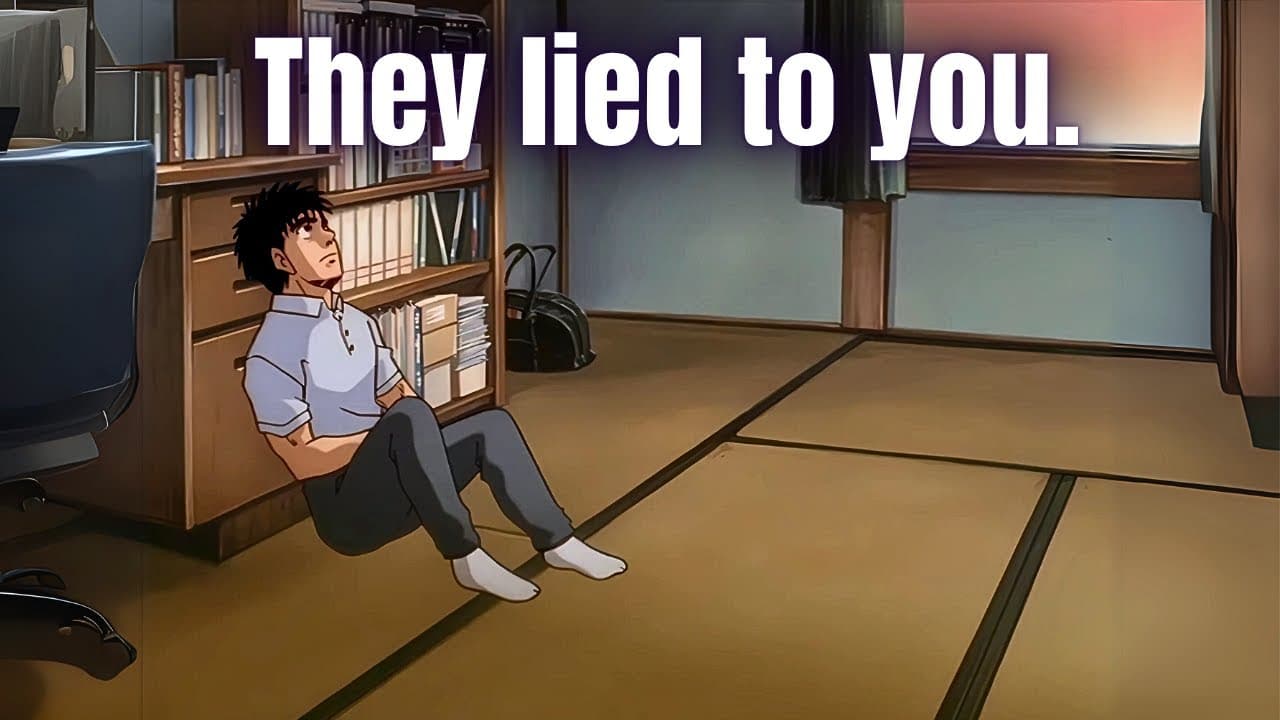
They lied to you. Not out of hate, out of habit. They said life is about working hard, following rules, and hoping for the best. But here's the truth. Your thoughts shape your reality. Not your boss, not your parents, not your past, just your mind. Every thought is a seed. Think weakness, grow weak. Think strength, and even your scars become tools.... Read More
Key Insights
- Thoughts are portrayed as the first domino behind actions, habits, identity, and results. The message argues that changing recurring thought patterns can alter the choices a person makes, particularly when fear, doubt, and excuses have kept that person inactive.
- Belief is a decision rather than a temporary feeling. It is reinforced by repeatedly showing up, making difficult choices, and acting when nobody is watching, even when confidence or motivation is missing.
- Negative self-talk is described as a learned loop rather than an accurate identity. Statements such as "I can't" or "I'm not good enough" should be caught, challenged, and replaced with language focused on learning, persistence, and a different next attempt.
- Mental discipline is presented as more dependable than motivation. Motivation comes and goes, while discipline is built on the difficult days when the mind resists action and the body wants to quit.
- Failure is framed as feedback rather than a final judgment. This interpretation keeps a setback from becoming a permanent identity and directs attention toward adjustment, another attempt, and continued movement.
- Pain is framed as training rather than punishment. The message does not recommend pretending that everything is fine, but encourages choosing an interpretation that builds strength, control, and responsibility for the internal response.
- Repeated thoughts become patterns that influence behavior. The recommended practice is to filter daily self-talk, stop casually repeating weakness, and use repetition, truth, courage, and action to reinforce strength instead.
- Self-leadership begins by changing one recurring sentence. Replacing "I'm not ready" with "I'm learning," or "What if I fail?" with "What if this works?" creates a practical starting point for a different narrative and different behavior.
Install to Summarize YouTube Videos and Get Transcripts
Explore YouTube Video Summarizer or Get YouTube Transcript Extractor
Questions & Answers
Q: How can I change negative self-talk every day?
Start by noticing one sentence you repeat automatically when fear or difficulty appears. Challenge whether it is truth or simply an old pattern, then replace it with language that supports action. Change "I'm not ready" to "I'm learning," "I always screw up" to "This time I'm doing it differently," or "What if I fail?" to "What if this works?" Repeat the replacement and support it with action.
Q: What is the difference between belief and motivation?
Belief is presented as a repeated decision, while motivation is described as a spark that comes and goes. Belief grows when you show up without an audience, choose the hard option over an easy distraction, and continue when you do not feel inspired. The decisive test is what you do on the days when your mind says "not today" and your body wants to quit.
Q: How does mental discipline become stronger?
Mental discipline becomes stronger through repeated action during difficult moments. The transcript compares the process to training a muscle and calls it mental weightlifting. Catch thoughts that weaken direction, challenge them, and replace them with focus, grit, or one more attempt. Actions performed on tired days matter because those are the moments when excuses feel safest and persistence requires a deliberate choice.
Q: Why does the message call thoughts the first domino?
Thoughts are called the first domino because the message traces actions, habits, and results back to them. A belief that effort is pointless can prevent an attempt, while a belief that learning is possible can support another step. Controlling the initial thought does not remove difficulty, but it changes the command given to the habits and actions that follow.
Q: How should I respond to failure and pain?
Treat failure as feedback rather than a final verdict, and view pain as training rather than punishment. This does not require pretending that everything is okay. It means taking responsibility for the interpretation and response that remain under your control. Ask what the experience can teach, adjust your direction, and continue acting instead of turning one difficult event into a permanent identity.
Q: What should I do when I do not feel motivated?
Act according to discipline instead of waiting for a better feeling. The message says motivation is temporary, so progress depends on what happens when enthusiasm disappears. Show up, complete another repetition, or take one step forward even while tired. These difficult days are presented as the moments when the mind grows stronger because continuing requires a choice rather than an emotional spark.
Q: How can repeated thoughts affect identity?
Repeated thoughts are described as patterns that the brain begins to follow. Continually saying "I can't," "I'll never figure this out," or "This isn't for me" can reinforce fear and inactivity. Repeating "I'm learning," "I'm not done," and "I've got more in me," while taking matching action, can gradually make constructive self-talk part of how a person sees and directs themselves.
Q: What does taking responsibility for your mindset mean?
Taking responsibility means recognizing that outside events may be unfair or uncontrollable, while your internal response remains your job. You cannot control everything life throws at you, but you can decide how to interpret and catch it. This responsibility involves filtering self-talk, refusing borrowed limits, choosing a useful meaning for setbacks, and repeatedly directing thoughts toward the life and goals you want.
Summary & Key Takeaways
-
Thoughts are presented as the starting point of actions, habits, identity, and results. Repeated messages such as "I can't" can reinforce avoidance, while constructive alternatives can encourage movement. The central recommendation is to notice limiting self-talk, challenge it, and deliberately replace it with language that supports learning, direction, and persistence.
-
Belief is described as self-leadership rather than temporary excitement. It develops by showing up when nobody is watching, choosing difficult actions over easy distractions, and continuing on days when motivation is absent. Confidence and discipline are not treated as inborn qualities, but as patterns built through repeated thoughts, courageous choices, and consistent action.
-
The message emphasizes responsibility for internal responses without pretending that hardship does not exist. People cannot control everything life presents, but they can choose whether pain means training or punishment and whether failure means feedback or final defeat. Rewriting these interpretations helps replace inherited limits, automatic excuses, and repetitive fear with purposeful action.
Read in Other Languages (beta)
Share This Summary 📚
Summarize YouTube Videos and Get Video Transcripts with 1-Click
Try YouTube Summary with ChatGPT & Claude or YouTube Transcript Generator
Explore More Summaries from The Growth Paradox 📚



Summarize YouTube Videos and Get Video Transcripts with 1-Click
Try YouTube Summary with ChatGPT & Claude or YouTube Transcript Generator