Why Do Most Startups Undercharge for Their Products?
TL;DR
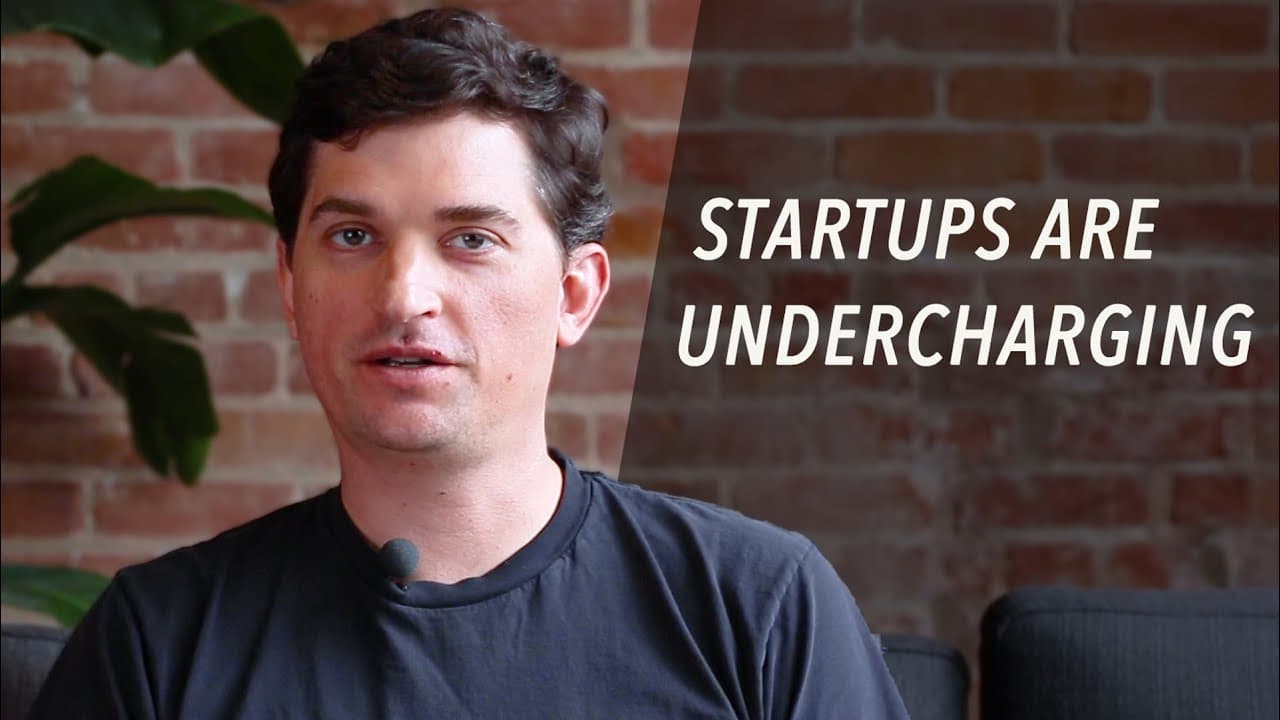
Most startups undercharge due to misconceptions about pricing strategies and investor expectations. This can lead to attracting the wrong customers who only prioritize low price, which skews valuable feedback. Successful companies often charge a premium because they provide exceptional solutions to real problems, indicating strong market demand.
Transcript
most of the time people are way under charging for their product for some reason the ideas out there that you should either not charge for your product or you charge such a tiny fraction of what you could be charging that that you're you're not set up for success so to give you an example I've seen startups charge 1/10 or 1/100 of what they should ... Read More
Key Insights
- 💰 Startups often undercharge for their products, possibly due to misconceptions or pressure from investors. Increasing prices early on is often advised for success.
- 💲 Competing solely on price is risky as it doesn't guarantee product value or customer satisfaction. Charging a fraction of competitors' prices may lead to inaccurate data and attract customers seeking cheap options.
- 💼 Successful products usually charge a premium rather than offering massive discounts. Customers are willing to pay more for a product that solves a significant problem, indicating market demand.
- 💵 Examples like Instacart, Jordache, and Airbnb show that successful companies often offer premium pricing, emphasizing unique value instead of being the cheapest option.
- 💸 Companies serving previously untapped markets or offering a more expensive but superior product have seen success. It's not always about being the cheapest alternative.
- 📈 A good sign of product market fit is when customers are willing to pay more for your product compared to existing options, indicating its value and desirability.
- ⚖️ Charging higher prices can enable businesses to invest in quality, innovation, and customer experience, ultimately leading to long-term success.
- 🚩 It's crucial to consider the context and market dynamics to determine the right pricing strategy, ensuring profitability and customer satisfaction. Comparing prices with direct competitors can provide insights.
Install to Summarize YouTube Videos and Get Transcripts
Explore YouTube Video Summarizer or Get YouTube Transcript Extractor
Questions & Answers
Q: Why do many startups undercharge for their products?
Many startups mistakenly believe that investors prefer low pricing or that competing on price is the key to success, leading them to undercharge for their products.
Q: What are the risks of undercharging for a product?
Undercharging can attract customers who prioritize price over value, providing inaccurate feedback and potentially hindering the product's success in the market.
Q: What is a good sign that your product is in demand?
A good sign of product-market fit is when customers are willing to pay a premium for your product compared to other options available, indicating that it solves a significant problem.
Q: Are there successful companies that charge a higher price than their competitors?
Yes, many successful companies charge a premium for their products because they offer unique solutions, unparalleled value, or serve previously untapped markets. Examples include Instacart, Jordache, and Airbnb.
Q: How can charging a higher price benefit your product?
Charging a higher price can attract customers who are willing to pay for quality, allow for better profit margins, and indicate the perceived value of your product in the market.
Summary & Key Takeaways
-
Many startups undercharge for their products due to misconceptions about investor preferences or competition based on price.
-
Charging a low price can attract customers who are only seeking the cheapest option, rather than those who truly value the product.
-
Successful companies often charge a premium because they offer a valuable solution to customers' problems.
Read in Other Languages (beta)
Share This Summary 📚
Summarize YouTube Videos and Get Video Transcripts with 1-Click
Try YouTube Summary with ChatGPT & Claude or YouTube Transcript Generator
Explore More Summaries from Y Combinator 📚






Summarize YouTube Videos and Get Video Transcripts with 1-Click
Try YouTube Summary with ChatGPT & Claude or YouTube Transcript Generator