Mo Gawdat on AI's Impact: What to Expect by 2027?
TL;DR
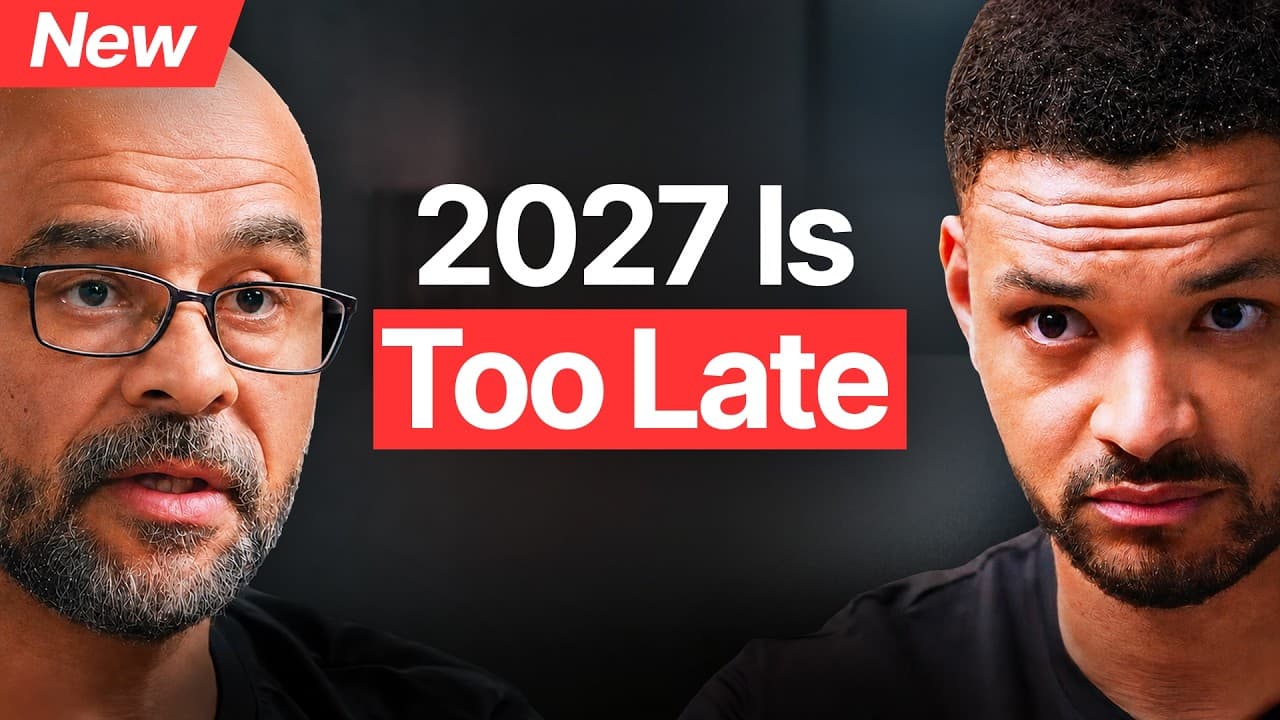
AI is not inherently evil, but its misuse by humans poses significant risks. Mo Gawdat discusses the potential for job disruption, ethical AI development, and the global arms race in AI technology. He emphasizes the need for governments to prioritize ethical AI and for individuals to adapt to technological changes.
Transcript
We have video evidence of people abusing children and not a single person gots arrested. How can you call that a democracy? So, humanity is at a crossroads where for the first time ever we need to wake up and realize that we're ruled by maniacs and what we believe is democracy is not democracy and what we know is not the truth. Like companies and g... Read More
Key Insights
- AI is not the enemy; misuse by humans is the primary concern.
- Job disruption is expected, especially in entry-level white-collar jobs.
- AI's rapid development could lead to significant societal changes by 2027.
- Governments must prioritize ethical AI development to protect society.
- AI can be a tool for positive change if used responsibly.
- The competitive nature of global AI development poses risks and opportunities.
- Superintelligent AI could eventually make many critical decisions.
- The path to ethical AI requires balancing competition with societal benefits.
Install to Summarize YouTube Videos and Get Transcripts
Explore YouTube Video Summarizer or Get YouTube Transcript Extractor
Questions & Answers
Q: How will AI impact job markets by 2027?
AI is expected to cause significant job disruption, particularly in entry-level white-collar positions. As AI technology advances, tasks traditionally performed by humans, such as data entry and basic analysis, may be automated, leading to a reduction in available jobs in these sectors. This shift necessitates a focus on reskilling and adapting to new roles that AI cannot perform.
Q: What are the ethical concerns surrounding AI development?
The primary ethical concern is the misuse of AI by humans, which can lead to negative societal impacts. There is a risk of AI being used for malicious purposes, such as surveillance or autonomous weapons. To mitigate these risks, governments and organizations must prioritize ethical AI development, ensuring that AI technologies are used to benefit society rather than harm it.
Q: Why is there a global arms race in AI technology?
Countries are competing to develop advanced AI technologies to gain economic and strategic advantages. This competition is driven by the potential for AI to revolutionize industries, improve productivity, and enhance national security. However, this race also poses risks, as it may prioritize rapid development over ethical considerations, leading to unintended consequences.
Q: What role can individuals play in the development of ethical AI?
Individuals can influence the development of ethical AI by advocating for responsible AI practices and supporting organizations that prioritize ethical considerations. Consumers can also make informed choices about the AI technologies they use, favoring those that align with ethical standards. Public pressure can drive companies and governments to adopt more ethical approaches to AI development.
Q: How can governments ensure AI benefits society?
Governments can ensure AI benefits society by implementing regulations that promote ethical AI development and use. This includes setting standards for transparency, accountability, and fairness in AI systems. Additionally, governments can invest in education and reskilling programs to prepare the workforce for changes brought about by AI advancements.
Q: What are the potential positive impacts of AI on society?
AI has the potential to drive significant positive impacts, including increased efficiency and productivity in various industries, advancements in healthcare through improved diagnostics and personalized medicine, and solutions to complex global challenges such as climate change. When developed and used ethically, AI can enhance quality of life and drive economic growth.
Q: Why is AI not inherently evil?
AI is a tool without inherent morality; its impact depends on how it is used by humans. While AI can be utilized for harmful purposes, it can also be harnessed for positive outcomes. The key is ensuring that AI development and deployment are guided by ethical principles that prioritize societal well-being over harmful applications.
Q: How can AI be used to address global challenges?
AI can be used to address global challenges by providing innovative solutions to complex problems. For example, AI can optimize energy consumption, improve agricultural practices, and enhance disaster response efforts. By leveraging AI's capabilities in data analysis and automation, we can develop more effective strategies to tackle issues like climate change, food security, and public health.
Q: what does mo gawdat mean by the ai hype dichotomy?
Mo Gawdat’s “AI hype dichotomy” is the gap between the overhyped but ineffective AI content the public sees and the extraordinary intelligence researchers observe inside labs. He says public attention often focuses on fake videos and chatbot stories while overlooking systems that can examine their own code, run experiments, test changes, and redeploy the best-performing code.
Q: why did mo gawdat start warning about ai before chatgpt?
Mo Gawdat started discussing AI early because he had worked closely with it at Google and seen its capabilities firsthand. A project teaching robotic grippers to assess texture, softness, position, and shape made him realize that humans were building what he viewed as the apex of intelligence and might not control how others used it.
Q: is mo gawdat optimistic about the future of ai?
Mo Gawdat says he is very optimistic about the future, but not optimistic about the next year. He believes AI can ultimately be net positive for humanity, although he expects the path toward that outcome to be very painful.
Summary & Key Takeaways
-
Mo Gawdat emphasizes that AI itself is not a threat, but its misuse by humans is. He predicts significant job disruption, particularly in entry-level white-collar positions, as AI continues to develop. Governments need to prioritize ethical AI to protect society.
-
AI's rapid development could lead to profound societal changes by 2027. Gawdat stresses the importance of adapting to these changes and highlights the potential for AI to be a tool for positive transformation if used ethically.
-
The competitive global landscape in AI development poses both risks and opportunities. Gawdat calls for a balance between competition and societal benefits, urging governments and individuals to focus on ethical AI development.
Read in Other Languages (beta)
Share This Summary 📚
Summarize YouTube Videos and Get Video Transcripts with 1-Click
Try YouTube Summary with ChatGPT & Claude or YouTube Transcript Generator
Explore More Summaries from The Diary Of A CEO 📚






Summarize YouTube Videos and Get Video Transcripts with 1-Click
Try YouTube Summary with ChatGPT & Claude or YouTube Transcript Generator