What Is Value Asymmetry and How Can It Improve Relationships?
TL;DR
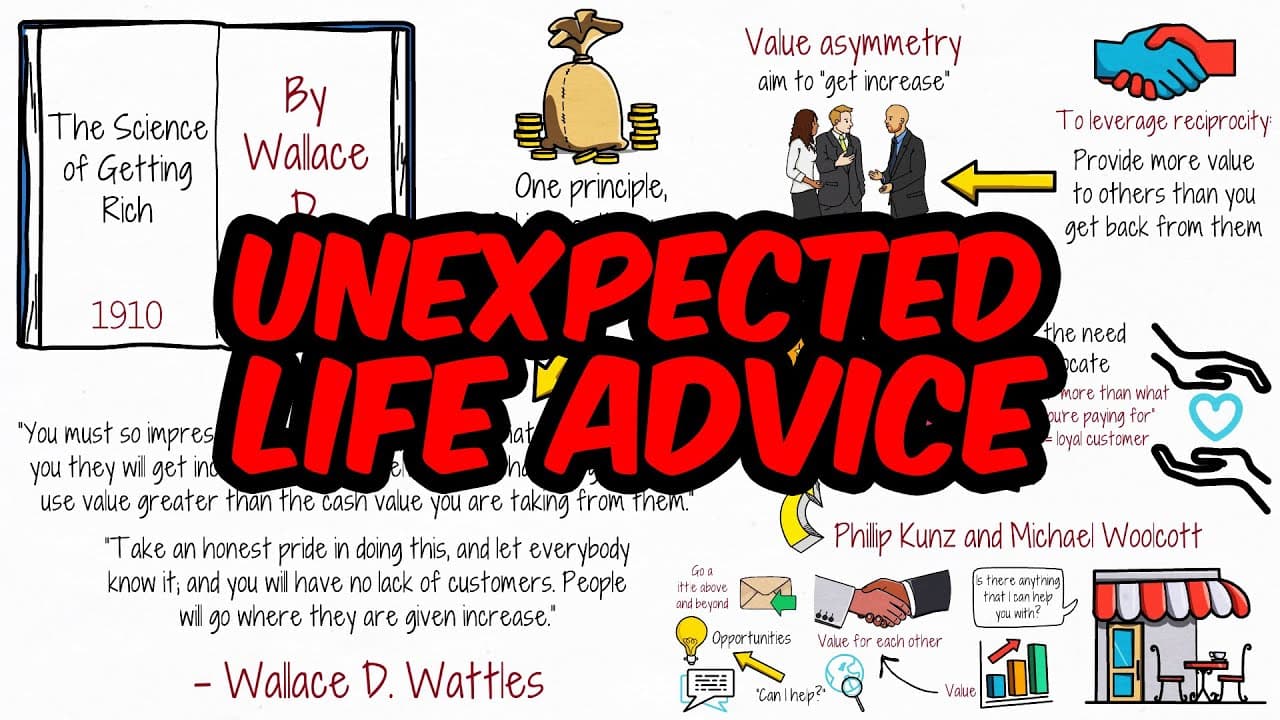
Value asymmetry is the principle of providing more value to others than you receive in return, which fosters strong relationships through reciprocity. By creating value in interactions, even through small gestures, you encourage mutual growth and open doors to future opportunities.
Transcript
Earlier this year, I stumbled upon a book called The Science of Getting Rich, written by a somewhat obscure author named Wallace D. Wattles back in 1910. While I’m still not sure that I’ll be getting rich any time soon, there’s one principle in the book that has stuck with me — something I’ve found useful not just in the context of wealth creation,... Read More
Key Insights
- 💪 Providing value asymmetry in interactions fosters reciprocity and strong relationships.
- 🏍️ Reciprocity compels individuals to repay what they receive, creating a cycle of give and take.
- 🥺 Small gestures of value can lead to long-term benefits and opportunities.
- 🥺 Building relationships based on value exchange can lead to mutual growth and success.
- 🤪 Going above and beyond in giving can result in fruitful connections and opportunities.
- 🥺 Creating value for others can lead to positive outcomes and fulfilling relationships.
- 🏛️ Building reciprocity in relationships can foster trust and goodwill.
Install to Summarize YouTube Videos and Get Transcripts
Explore YouTube Video Summarizer or Get YouTube Transcript Extractor
Questions & Answers
Q: What is the principle of value asymmetry?
The principle of value asymmetry involves giving more value to others than you receive, leveraging the concept of reciprocity for stronger relationships and opportunities.
Q: How does reciprocity play a role in relationships?
Reciprocity compels people to repay what they receive, leading to the establishment of strong connections and mutual benefits in various interactions.
Q: How can creating value for others benefit you in the long run?
By providing value to others, even in small ways, you can build lasting relationships, open up opportunities, and experience positive outcomes down the line.
Q: Why is it important to give more than you receive in relationships?
Giving more than you receive in relationships not only fosters trust and goodwill but also creates a cycle of value exchange that can lead to mutual growth and success.
Summary & Key Takeaways
-
The principle of value asymmetry emphasizes providing more value to others in every interaction.
-
Reciprocity compels people to repay what they receive, creating strong relationships.
-
Creating value for others, even in small ways, leads to long-term benefits and opportunities.
Read in Other Languages (beta)
Share This Summary 📚
Summarize YouTube Videos and Get Video Transcripts with 1-Click
Try YouTube Summary with ChatGPT & Claude or YouTube Transcript Generator
Explore More Summaries from The Art of Improvement 📚



Summarize YouTube Videos and Get Video Transcripts with 1-Click
Try YouTube Summary with ChatGPT & Claude or YouTube Transcript Generator