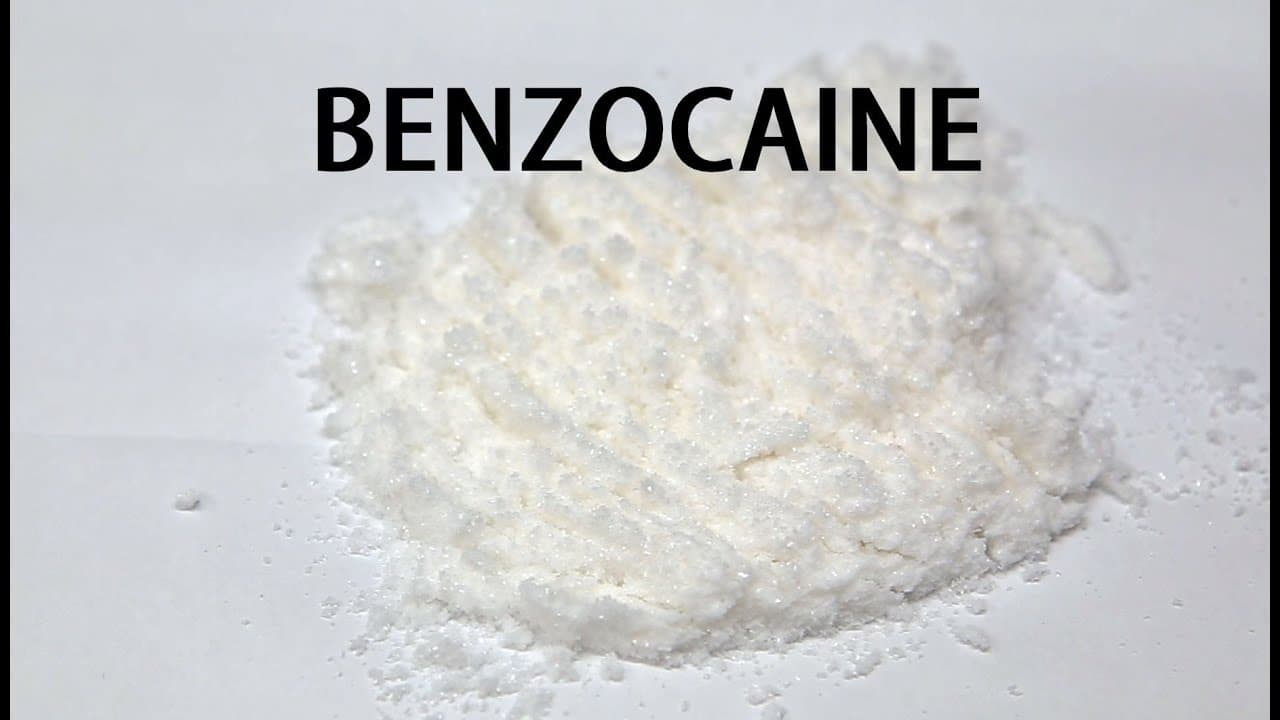
How to Synthesize Benzocaine from PABA
TL;DR
Benzocaine can be synthesized from PABA using a reflux reaction with anhydrous ethanol and sulfuric acid, achieving approximately 70% yield. This local anesthetic works by blocking sodium channels in nerve cells, leading to numbness, but should never be ingested as it poses serious health risks.
Transcript
benzocaine is a commonly used local anesthetic which can be found in a lot of over-the-counter medications it can be pretty easily made from something called paba which was actually used for a long time as the active ingredient in sunscreen however due to some health issues it fell out of favor and it's not really used anymore you'll probably notic... Read More
Key Insights
- 🔄 Benzocaine is a widely used local anesthetic found in various over-the-counter medications.
- ❓ The synthesis of benzocaine involves a reflux reaction using anhydrous ethanol, sulfuric acid, and PABA, with a yield typically around 70%.
- 💦 Benzocaine works by blocking sodium channels in nerve cells, preventing the generation of signals and resulting in numbness.
- ❓ The suffix "-caine" in benzocaine and cocaine indicates that they are local anesthetics, but they have distinct chemical structures and effects.
- 🎭 Benzocaine should not be consumed or eaten, as it can cause serious health issues even in legally obtained topical forms.
- ❓ It is not possible to convert benzocaine into cocaine or any other illicit drug.
- ❤️🩹 Local anesthetics have a hydrophilic and lipophilic end connected by an ester or amide linkage.
Install to Summarize YouTube Videos and Get Transcripts
Explore YouTube Video Summarizer or Get YouTube Transcript Extractor
Questions & Answers
Q: What is the difference between benzocaine and cocaine?
Although both benzocaine and cocaine have the suffix "-caine," indicating that they are local anesthetics, it is not possible to convert benzocaine to cocaine or any other illicit drug. The structures and effects of these substances are significantly different.
Q: Can benzocaine be consumed or eaten?
It is not recommended to consume or eat benzocaine. Even legally obtained topical ointments containing benzocaine have caused life-threatening effects in some individuals. Benzocaine should be used strictly as directed and for its intended purpose.
Q: How does benzocaine work as a local anesthetic?
Benzocaine works by blocking sodium channels in nerve cells. Nerve cells typically maintain a negative charge inside the cell, which is controlled by low sodium ion concentration. When a nerve cell wants to send a signal, sodium channels open, allowing sodium ions to enter and generate a signal. Benzocaine blocks these channels, preventing the influx of sodium ions and the generation of a signal.
Q: What is the synthesis process of benzocaine?
The synthesis of benzocaine involves a reflux reaction using anhydrous ethanol, sulfuric acid, and PABA. The reaction is an equilibrium reaction known as esterification, where PABA reacts with ethanol to form benzocaine and water, with sulfuric acid acting as a catalyst. The reaction is refluxed for around 90 minutes to ensure completion.
Summary & Key Takeaways
-
Benzocaine is a widely used local anesthetic found in many over-the-counter medications. It can be synthesized from PABA, which was previously used in sunscreens.
-
Local anesthetics have a hydrophilic end and a lipophilic end, connected by either an ester or an amide linkage.
-
The synthesis of benzocaine involves a reflux reaction using anhydrous ethanol, sulfuric acid, and PABA. The reaction is an equilibrium reaction, with the yield typically around 70%.
Read in Other Languages (beta)
Share This Summary 📚
Summarize YouTube Videos and Get Video Transcripts with 1-Click
Try YouTube Summary with ChatGPT & Claude or YouTube Transcript Generator
Explore More Summaries from NileRed 📚
Summarize YouTube Videos and Get Video Transcripts with 1-Click
Try YouTube Summary with ChatGPT & Claude or YouTube Transcript Generator