How Will OpenAI’s New AI Device Transform Technology?
TL;DR
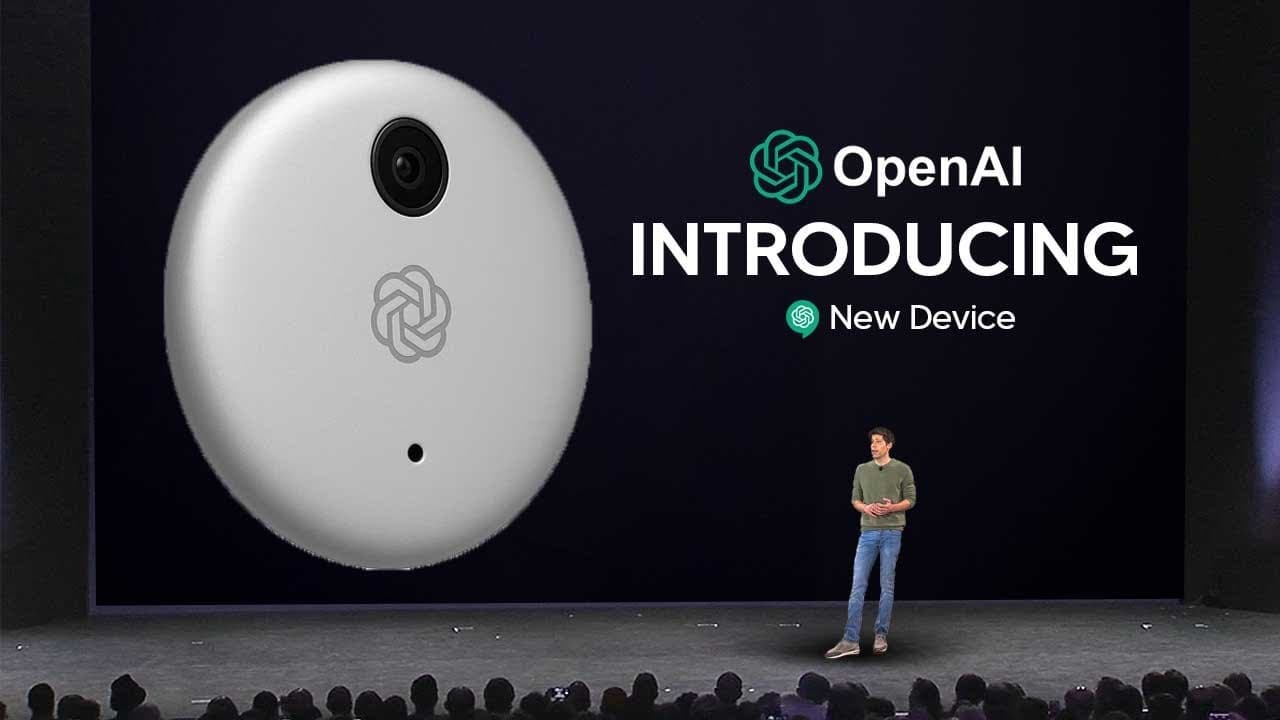
OpenAI's groundbreaking AI device aims to redefine interactions by eliminating screens and functioning as a pocket-sized, contextually aware companion. Targeting the shipment of 100 million units by 2027, this device seeks to significantly reduce reliance on traditional smartphones and computers, creating a revolutionary AI-native experience.
Transcript
openai dropped what might just be the biggest bombshell in consumer technology since the iPhone itself we are talking guys about a $6.5 billion acquisition of Joanie IV startup and plans for a completely screenfree AI device and ambitions to ship $100 million units right out of the gate now this actually caught my attention on Twitter because this ... Read More
Key Insights
- OpenAI has acquired Joanie Ives' startup IO for $6.5 billion, marking its largest acquisition to date, to create a revolutionary screen-free AI device.
- The device aims to reduce reliance on traditional screens by serving as a third core device alongside laptops and smartphones, emphasizing a more seamless interaction with AI.
- Sam Alman and Joanie IV's collaboration is rooted in a shared vision for AI-native devices, aiming for a design movement that transcends current tech paradigms.
- The device is expected to be pocket-sized, contextually aware, and designed to integrate smoothly into daily life without being a wearable or smartphone replacement.
- OpenAI plans to ship 100 million units quickly, aiming to break records in consumer electronics with mass production starting in 2027.
- The AI device market has seen several flops, such as the Humane AI Pin, highlighting the challenges of creating successful AI hardware.
- Successful AI integration is occurring in existing products like Meta's smart glasses, which offer a more subtle and effective AI experience.
- Future AI devices are expected to focus on ambient intelligence and edge computing, providing privacy and seamless integration into daily life.
Install to Summarize YouTube Videos and Get Transcripts
Explore YouTube Video Summarizer or Get YouTube Transcript Extractor
Questions & Answers
Q: What is the significance of OpenAI's acquisition of Joanie Ives' startup?
OpenAI's acquisition of Joanie Ives' startup IO for $6.5 billion is significant as it marks the company's largest acquisition and a major step towards creating a revolutionary screen-free AI device. This collaboration brings together two influential figures in technology, aiming to redefine how users interact with AI by introducing a third core device alongside traditional tech like laptops and smartphones.
Q: How does the new AI device differ from traditional tech products?
The new AI device differs from traditional tech products by being completely screen-free and designed to reduce reliance on screens. It is pocket-sized and contextually aware, serving as a third core device alongside laptops and smartphones. Unlike other devices, it is not a smartphone replacement or wearable, emphasizing seamless interaction with AI without the need for constant screen engagement.
Q: What are the challenges faced by the AI device market?
The AI device market has faced challenges with several products, such as the Humane AI Pin, failing to meet expectations. Issues like overheating, connectivity problems, and high costs have led to poor user experiences and product failures. Successful AI integration requires seamless functionality, affordability, and effective user interaction, which many current products have struggled to achieve.
Q: What are the future predictions for AI devices in the next five years?
Future predictions for AI devices in the next five years include a focus on ambient intelligence and edge computing, providing seamless integration into daily life without relying on screens. Devices are expected to be more contextually aware, offering privacy and faster processing through on-device AI. This evolution aims to make AI an integral part of everyday life, enhancing user experiences without being intrusive.
Q: How does OpenAI plan to ensure the success of its new AI device?
OpenAI plans to ensure the success of its new AI device by leveraging its model supremacy, data, and API ecosystem. By integrating advanced AI models and fostering a robust developer community, OpenAI aims to create a device that is intuitive, reliable, and genuinely useful. The collaboration with Joanie IV also emphasizes a design movement that prioritizes user experience and seamless interaction.
Q: What role does privacy play in the development of future AI devices?
Privacy plays a crucial role in the development of future AI devices, with a focus on on-device processing to protect user data. As regulatory scrutiny increases, especially in regions like the European Union, AI devices must ensure data security and transparency. OpenAI's approach emphasizes privacy as a competitive advantage, offering users control over their data and device interactions.
Q: What are some potential killer features of the new AI device?
Potential killer features of the new AI device include a multimodal grocery assistant that generates meal plans and shopping lists, real-time personal memory for recalling names and details, and seamless language translation for conversations in foreign languages. These features aim to solve real-world annoyances, making the device an essential tool for enhancing daily life.
Q: What are the risks and unknowns associated with the new AI device?
The risks and unknowns associated with the new AI device include challenges with battery life and heat management, which have plagued similar devices. Pricing is another hurdle, as the device must be affordable to avoid being a luxury item. Privacy concerns about a device that is always potentially listening must also be addressed to gain user trust and ensure widespread adoption.
Summary & Key Takeaways
-
OpenAI's acquisition of Joanie Ives' startup IO for $6.5 billion marks a significant step towards creating a screen-free AI device. This collaboration aims to redefine how users interact with technology by introducing a third core device that sits alongside traditional tech like laptops and smartphones.
-
The planned AI device is designed to be contextually aware and pocket-sized, emphasizing seamless interaction without the need for a screen. OpenAI's ambitious goal is to ship 100 million units faster than any previous consumer tech product, with mass production targeted for 2027.
-
The AI device market has faced challenges, with several products failing to meet expectations. However, successful integrations, such as Meta's smart glasses, demonstrate the potential for AI to enhance existing devices. Future AI devices are expected to focus on ambient intelligence and privacy, offering a more integrated user experience.
Read in Other Languages (beta)
Share This Summary 📚
Summarize YouTube Videos and Get Video Transcripts with 1-Click
Try YouTube Summary with ChatGPT & Claude or YouTube Transcript Generator
Explore More Summaries from TheAIGRID 📚



Summarize YouTube Videos and Get Video Transcripts with 1-Click
Try YouTube Summary with ChatGPT & Claude or YouTube Transcript Generator