How to Make Uranium Glass Safely at Home
TL;DR
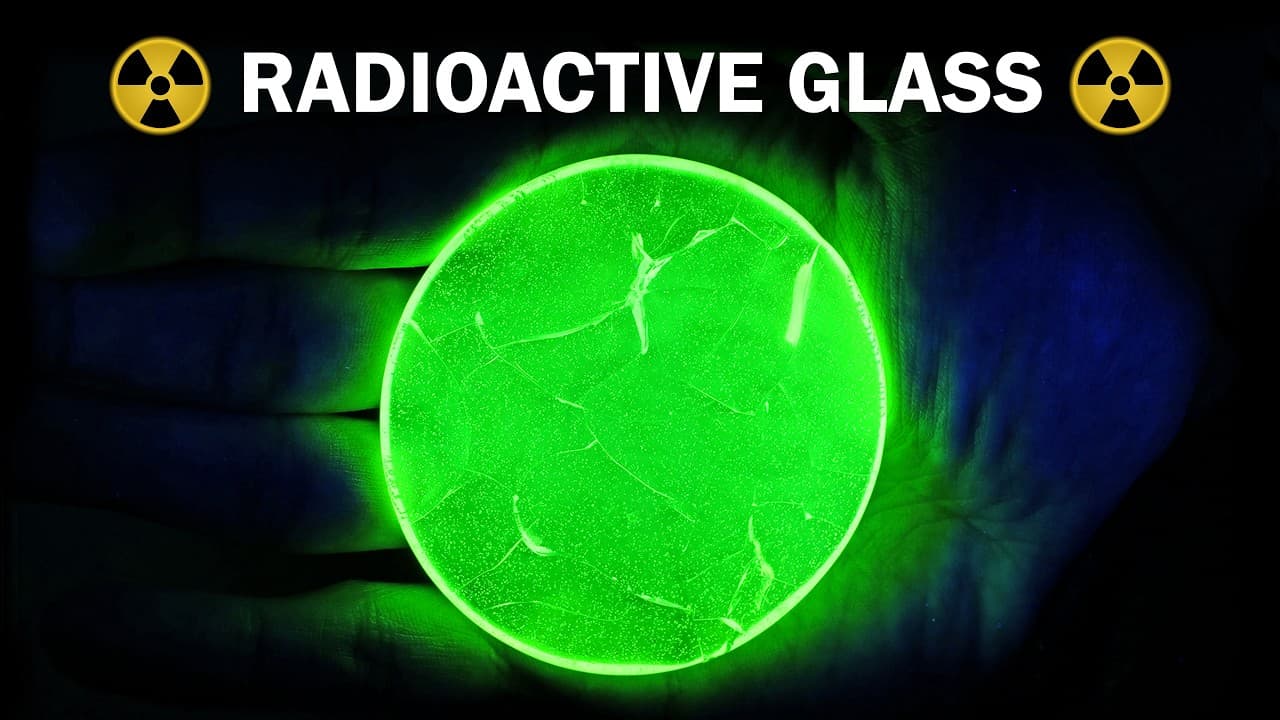
To make uranium glass safely at home, start by obtaining depleted uranium nitrate, then mix it with silica, sodium carbonate, and boric acid while ensuring proper safety protocols. The final glass should exhibit fluorescence under UV light, indicating the presence of uranium, but handle it cautiously due to low-level radioactivity, primarily in the form of alpha particles.
Transcript
this video has been sponsored by brilliant sometime last year was the first time that I heard about uranium glass and I thought that it was some marketing thing or something but it's actually real I mean it's not glass made entirely out of uranium but it is glass with uranium in it this got me really interested in it and I decided to buy some and I... Read More
Key Insights
- 😎 Uranium glass contains uranium and fluoresces green under a blacklight due to its fluorescence properties.
- 😎 Uranium glass production declined during World War II due to the diversion of uranium for nuclear research.
- 😎 The amount of uranium in uranium glass is relatively small, resulting in minor radioactivity.
- 😎 The process of making uranium glass involves obtaining purified uranium and combining it with other glass ingredients.
- 😎 Handling uranium glass occasionally poses minimal health risks, but prolonged exposure is not recommended.
- 😎 Uranium glass can be tested for radioactivity using a Geiger counter, with alpha particles being the primary form of radiation emitted by uranium.
- 😎 Proper handling and disposal of uranium glass is necessary due to its radioactivity.
Install to Summarize YouTube Videos and Get Transcripts
Explore YouTube Video Summarizer or Get YouTube Transcript Extractor
Questions & Answers
Q: What is uranium glass and why does it glow green under a blacklight?
Uranium glass is glass that contains uranium, which causes it to fluoresce green under a blacklight. The presence of uranium in the glass causes it to emit UV light, which then excites the electrons in the glass and creates the green glow.
Q: Why did uranium glass production decline during World War II?
Uranium glass production declined during World War II because the government started confiscating uranium for nuclear research. This led to a decrease in the availability of uranium for glass production, which ultimately impacted the industry.
Q: Are there health risks associated with handling uranium glass?
Uranium glass does contain radioactive materials, but the amount of uranium in the glass is relatively small, making the radioactivity minor. Handling uranium glass occasionally poses minimal health risks, but carrying it around or wearing it for prolonged periods is not recommended.
Q: What is the process of making uranium glass?
The process of making uranium glass involves obtaining a purified source of uranium, such as depleted uranium. This source is then combined with other glass ingredients, such as silica, sodium carbonate, and boric acid, to create the glass mixture. The mixture is melted at high temperatures and then cooled to form the final uranium glass product.
Summary & Key Takeaways
-
Uranium glass is a type of glass that contains uranium and fluoresces green under a blacklight.
-
Uranium glass production declined during World War II as uranium was diverted for nuclear research.
-
The content discusses the process of making uranium glass using purified sources and the potential health risks associated with handling uranium.
Read in Other Languages (beta)
Share This Summary 📚
Summarize YouTube Videos and Get Video Transcripts with 1-Click
Try YouTube Summary with ChatGPT & Claude or YouTube Transcript Generator
Explore More Summaries from NileRed 📚

Summarize YouTube Videos and Get Video Transcripts with 1-Click
Try YouTube Summary with ChatGPT & Claude or YouTube Transcript Generator