What Is the Zero Conditional in English Grammar?
TL;DR
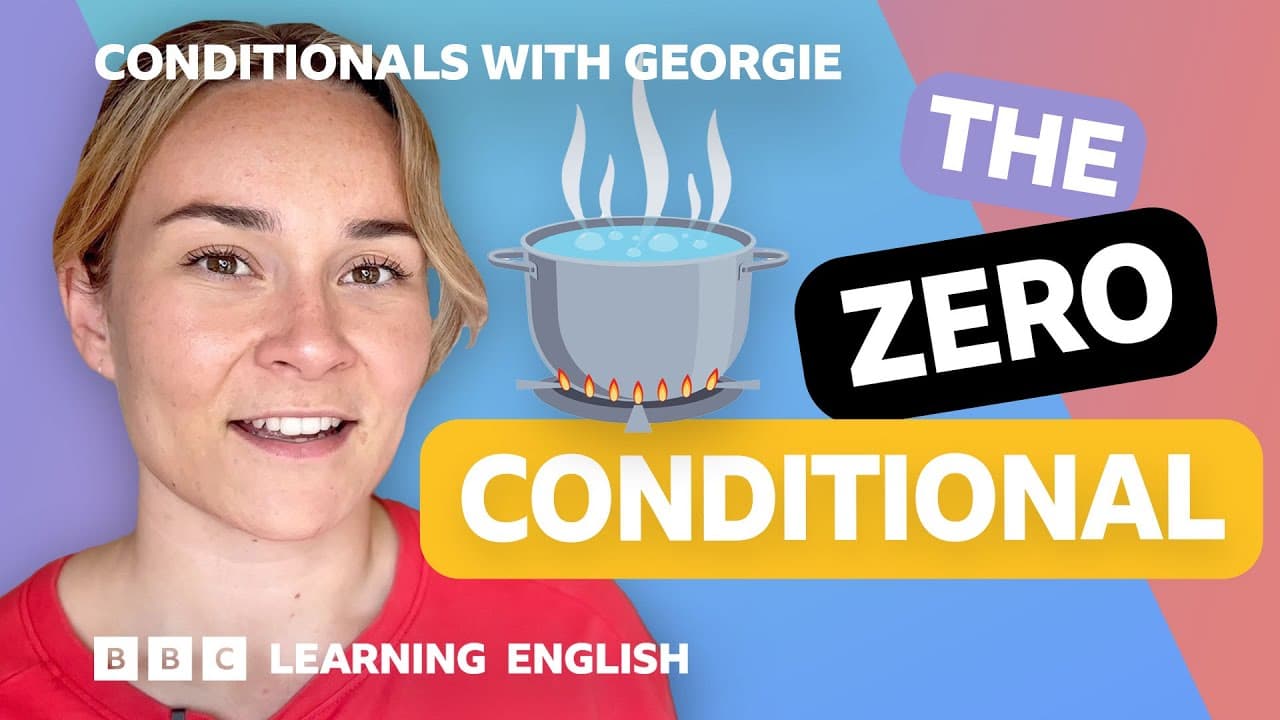
The zero conditional describes facts and general truths using the present simple tense in both clauses. It applies to scientific statements like 'If you heat water, it boils,' as well as personal experiences, rules, and habitual actions, such as feeling groggy after poor sleep. Understanding its structure helps communicate reliably in English.
Transcript
Hello, I'm Georgie from BBC Learning English, and in this video you'll learn how to talk about facts using something called the zero conditional. Let's get started. Now, we're often taught the zero conditional in the context of scientific facts. Typical examples are: If you heat water, it boils. If you mix red and blue paint, you get purple. And th... Read More
Key Insights
- The zero conditional is used to talk about facts and things that are always true, often taught in the context of scientific facts.
- Common examples include statements like 'If you heat water, it boils.' These illustrate the cause-and-effect relationship inherent in the zero conditional.
- Real-life applications of the zero conditional extend to personal experiences, such as feeling groggy after a poor night's sleep.
- The zero conditional can also describe habitual actions, like playing guitar after work to avoid stress.
- Rules and laws can be expressed using the zero conditional, such as paying a fine if caught without a train ticket.
- The structure of the zero conditional involves using the present simple tense in both the if-clause and the main clause.
- Using adverbs like 'usually' and 'generally' can help express personal truths within the zero conditional framework.
- Practicing the zero conditional can improve understanding of English grammar and its application in everyday situations.
Install to Summarize YouTube Videos and Get Transcripts
Explore YouTube Video Summarizer or Get YouTube Transcript Extractor
Questions & Answers
Q: What is the primary use of the zero conditional?
The zero conditional is primarily used to talk about facts and situations that are always true. It expresses general truths, scientific facts, and habitual actions, often illustrating a cause-and-effect relationship. This grammatical structure helps convey consistent outcomes based on specific conditions.
Q: How can the zero conditional be applied to personal experiences?
The zero conditional can be applied to personal experiences by describing habitual reactions to specific conditions. For instance, saying 'If I don't get a good night's sleep, I feel groggy' illustrates a general truth about one's personal experience, demonstrating the zero conditional's versatility.
Q: What is the structure of the zero conditional?
The zero conditional structure involves using the present simple tense in both the if-clause and the main clause. This format is crucial for expressing facts and general truths, as it maintains a consistent tense throughout the sentence, ensuring clarity and coherence in communication.
Q: Can the zero conditional be used to express rules and laws?
Yes, the zero conditional can effectively express rules and laws. For example, 'If you travel without a ticket, you pay a fine' illustrates a general rule. This application demonstrates the zero conditional's ability to convey consistent outcomes based on established regulations.
Q: Why are adverbs like 'usually' and 'generally' used with the zero conditional?
Adverbs like 'usually' and 'generally' are used with the zero conditional to express personal truths and habitual actions. These adverbs help convey the frequency or regularity of an occurrence, adding nuance to the statement and emphasizing the general nature of the truth being expressed.
Q: How does the zero conditional relate to scientific facts?
The zero conditional is often taught in the context of scientific facts to illustrate its use in expressing truths that are universally accepted. Examples like 'If you heat water, it boils' demonstrate the cause-and-effect relationship that the zero conditional encapsulates, making it ideal for conveying scientific truths.
Q: What is an example of the zero conditional in everyday life?
An everyday example of the zero conditional is 'If I finish work, I play guitar.' This statement describes a habitual action that occurs under specific conditions. It highlights how the zero conditional can be used to express personal routines and the general truths of daily life.
Q: How can one practice using the zero conditional?
To practice using the zero conditional, one can create sentences about personal truths or habitual actions. Additionally, resources like worksheets and exercises from educational platforms such as BBC Learning English can provide structured practice opportunities, helping learners master this grammatical form through repetition and application.
Summary & Key Takeaways
-
The zero conditional is a grammatical structure used to express facts and general truths. It is commonly taught through scientific examples, such as 'If you heat water, it boils.' However, it also applies to personal experiences and rules, illustrating a cause-and-effect relationship.
-
Real-life examples of the zero conditional include personal experiences, where it describes habitual reactions to certain conditions, such as feeling tired after insufficient sleep. This usage highlights the flexibility of the zero conditional in conveying truths beyond scientific facts.
-
The structure of the zero conditional requires the present simple tense in both the if-clause and the main clause. This grammatical form is essential for expressing rules, laws, and general truths, making it a valuable tool for effective communication in English.
Read in Other Languages (beta)
Share This Summary 📚
Summarize YouTube Videos and Get Video Transcripts with 1-Click
Try YouTube Summary with ChatGPT & Claude or YouTube Transcript Generator
Explore More Summaries from BBC Learning English 📚

Summarize YouTube Videos and Get Video Transcripts with 1-Click
Try YouTube Summary with ChatGPT & Claude or YouTube Transcript Generator