Did Life on Earth Come from Space?
TL;DR
Explores the panspermia hypothesis that life on Earth may have originated from space.
Transcript
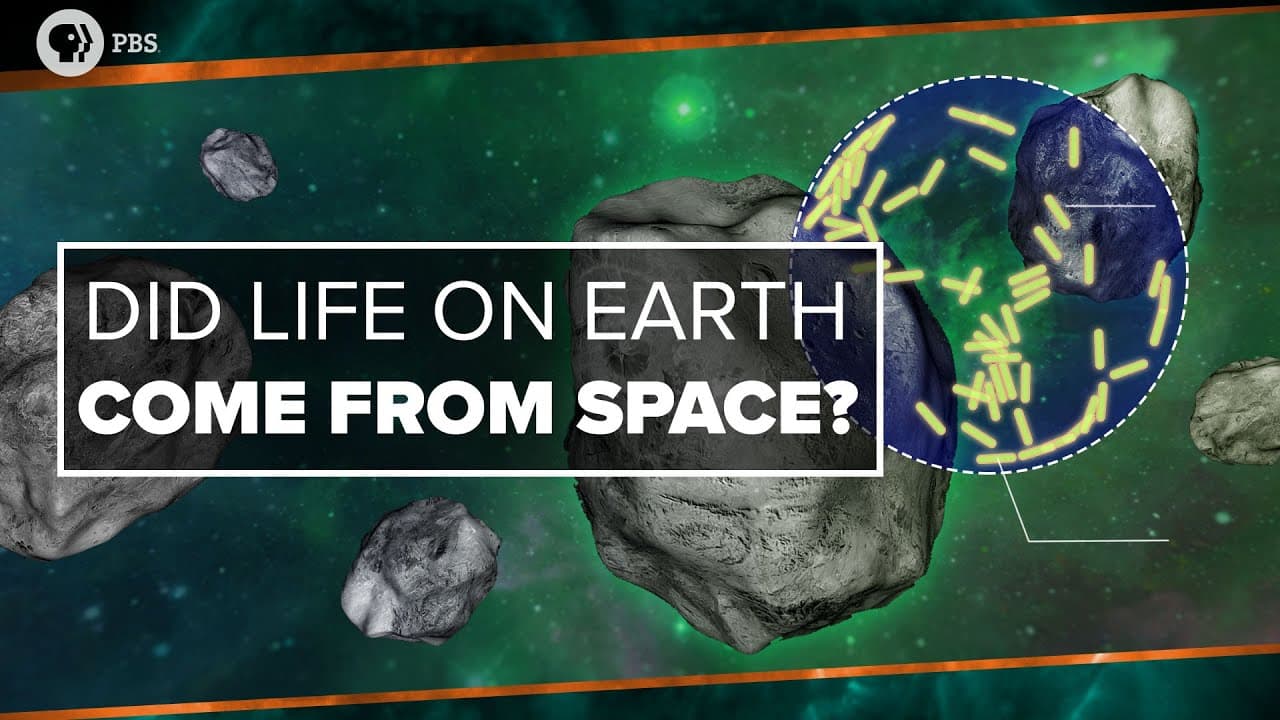
what if the first genesis of life the abiogenesis is so unlikely that it only happened once in the entire galaxy and that once was not on earth what if primitive life arrived on earth after having traveled vast distances across the Milky Way some scientists think this may be the case this is the panspermia hypothesis there's something odd about the... Read More
Key Insights
- The panspermia hypothesis suggests life originated elsewhere in the galaxy and traveled to Earth, challenging traditional views of abiogenesis.
- The first appearance of life on Earth occurred relatively soon after the planet became habitable, raising questions about the speed of evolution.
- Microbial life could potentially survive space travel by being embedded in rocks, protecting them from harsh conditions such as radiation and extreme temperatures.
- Endoliths, organisms living within rocks, are considered prime candidates for surviving interstellar journeys due to their resilience and low metabolic rates.
- Various experiments have tested microbes' ability to survive space conditions, showing some can endure vacuum, microgravity, and extreme dryness.
- Radiation remains a significant challenge for microbes traveling through space, with only those protected by rock likely to survive long-term exposure.
- The possibility of life traveling between solar systems is slim due to the vast distances and low probability of rocks being captured by other stars.
- Directed panspermia, where life is intentionally spread by advanced civilizations, is a speculative but intriguing concept related to panspermia.
Install to Summarize YouTube Videos and Get Transcripts
Explore YouTube Video Summarizer or Get YouTube Transcript Extractor
Questions & Answers
Q: What is the panspermia hypothesis?
The panspermia hypothesis suggests that life on Earth may have originated from elsewhere in the galaxy. It proposes that primitive life forms traveled across vast distances, potentially embedded in rocks, and eventually colonized Earth. This challenges the traditional view that life originated solely on Earth through abiogenesis.
Q: Why is the first appearance of life on Earth considered odd?
The first appearance of life on Earth is considered odd because it occurred relatively soon after the planet became habitable. Fossils date back to only a few hundred million years after Earth's habitability began, raising questions about how quickly evolution could transform non-living matter into living cells in such a short geological timeframe.
Q: How can microbes survive space travel according to the panspermia hypothesis?
Microbes could survive space travel by being embedded in rocks, which provide protection from harsh conditions like radiation, extreme temperatures, and the vacuum of space. Endoliths, organisms that live within rocks, are particularly suited for this due to their resilience, low metabolic rates, and ability to withstand long periods of dormancy.
Q: What challenges do microbes face during space travel?
Microbes face several challenges during space travel, including exposure to vacuum, microgravity, extreme dryness, and radiation. While some microbes can survive vacuum and dryness, radiation is particularly destructive, capable of damaging DNA and cellular structures. Only those protected by rock or with specific adaptations, like endospores, may survive long-term exposure.
Q: What experiments have been conducted to test microbial survival in space?
Various experiments have tested microbial survival in space, including sending microbes on satellites and the International Space Station. These tests have shown that some microbes can survive vacuum, extreme cold, and dryness. However, radiation remains a significant challenge, with only certain life forms, like endospores, showing resilience to long-term exposure.
Q: What is directed panspermia?
Directed panspermia is a speculative concept suggesting that life could be intentionally spread by advanced civilizations across the galaxy. This idea posits that life forms are deliberately sent to other planets to engineer life elsewhere. While intriguing, it remains a theoretical concept without concrete evidence to support its occurrence.
Q: Why is the likelihood of life traveling between solar systems considered low?
The likelihood of life traveling between solar systems is considered low due to the vast distances involved and the low probability of rocks being captured by other stars. Even if a rock escapes a solar system, the chances of it being gravitationally captured by another star are minimal, making successful panspermia events rare.
Q: What role do endoliths play in the panspermia hypothesis?
Endoliths, organisms that live within rocks, are considered prime candidates for surviving interstellar journeys in the panspermia hypothesis. Their resilience to harsh conditions, low metabolic rates, and ability to remain dormant for extended periods make them suitable for enduring the long and challenging journey through space, potentially spreading life across the galaxy.
Summary & Key Takeaways
-
The panspermia hypothesis posits that life on Earth may have originated from elsewhere in the galaxy, challenging traditional ideas about the origins of life. Endoliths, organisms living within rocks, are considered potential candidates for surviving interstellar journeys due to their resilience and low metabolic rates.
-
Experiments have shown that various microbes can survive the harsh conditions of space, including vacuum, microgravity, and extreme dryness. However, radiation poses a significant challenge, with only microbes protected by rock likely to survive long-term exposure.
-
The likelihood of life traveling between solar systems is low, given the vast distances and low probability of rocks being captured by other stars. Directed panspermia, where life is intentionally spread by advanced civilizations, remains a speculative but intriguing concept.
Read in Other Languages (beta)
Share This Summary 📚
Summarize YouTube Videos and Get Video Transcripts with 1-Click
Try YouTube Summary with ChatGPT & Claude or YouTube Transcript Generator
Explore More Summaries from PBS Space Time 📚
Summarize YouTube Videos and Get Video Transcripts with 1-Click
Try YouTube Summary with ChatGPT & Claude or YouTube Transcript Generator