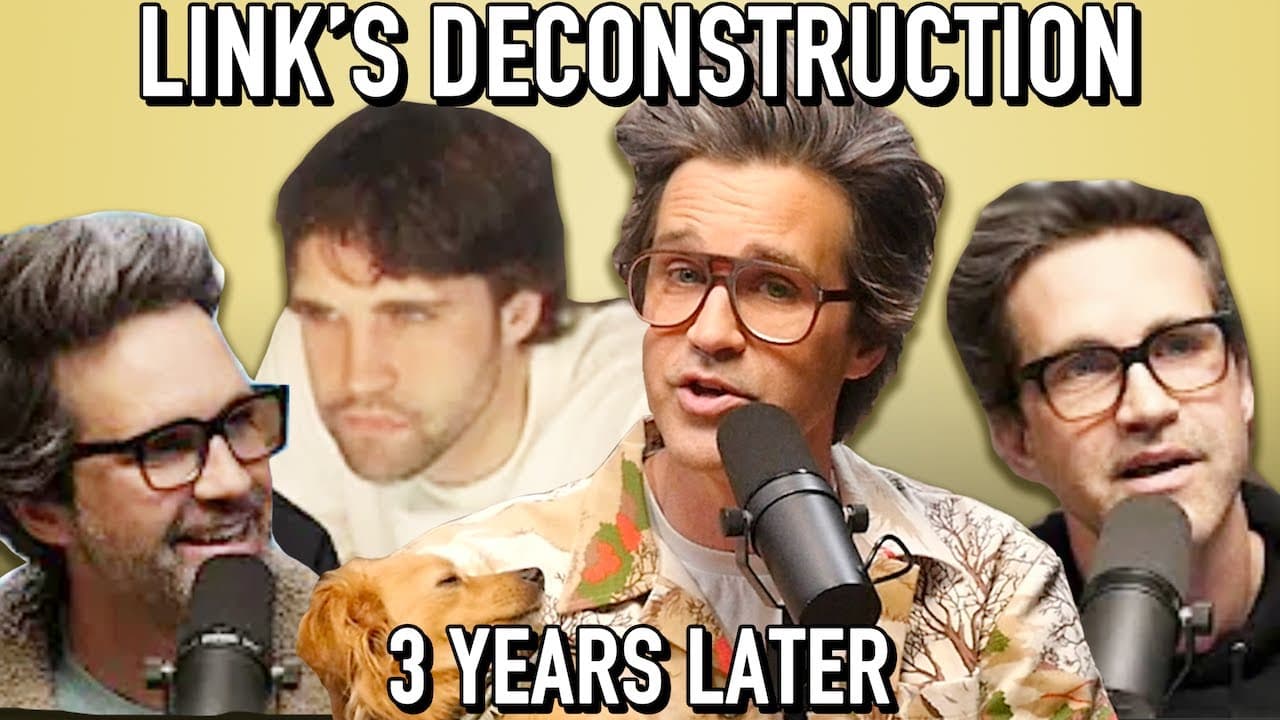
What Is Link's Deconstruction Update 3 Years Later on Ear Biscuits?
TL;DR
Link says he feels happier and ready to build a positive spiritual framework after releasing much of the guilt and shame connected to his upbringing. His outlook centers on self-acceptance, therapy, meaningful everyday moments, and lessons about presence drawn from his pets. Returning to his bike after 11 or 12 weeks made that gratitude tangible. Read on for how these experiences reshape his spirituality.
Transcript
Welcome to "Ear Biscuits," the podcast where two lifelong friends talk about life for a long time. I'm Link. And I'm Rhett. This week at the round table of dim lighting, we are hearing from Link and his three year update on where he stands spiritually. It's all about me today, baby. Man, you know what? I'm happy to be doing this. Previous years I d... Read More
Key Insights
- Happiness changes the conversation: Link does not approach this update as another reluctant accounting of lost beliefs. He says he is happy to be doing it and feels on top of his own little world. That emotional shift matters because it allows him to describe spirituality through gratitude, acceptance, and possibility, rather than making deconstruction the only organizing idea.
- Journaling captures genuine excitement: Link brings handwritten journal material to the discussion, signaling that his reflections were developed privately before being shared with Rhett. He jokes that his handwriting has barely changed since high school and becomes especially jumbled when he gets excited. The pages therefore reflect both deliberate self-examination and the energy he feels about his current direction.
- The ride marks recovery: Getting back on the bike is not merely exercise for Link. He calls it a milestone after 11 or 12 weeks without something special to him. The ride lets him test his body, face lingering nervousness, and reconnect with an activity he missed, turning physical recovery into a concrete expression of his wider emotional renewal.
- Caution takes a specific form: Link eases back into riding by choosing flatter ground, going around the dam, and limiting his single-track exposure. He wears a helmet but skips his pads because he does not intend to attempt terrain beyond his present fitness level. His approach combines confidence in the healing bone with attention to how bumps still affect his shoulder.
- Healing remains physically incomplete: Although Link believes the bone has reunited, his shoulder still feels tight and uncomfortable. His doctor had previously suggested allowing four more weeks before another X-ray, and Link says those four weeks have now passed. He decides against spending additional time on imaging because he sees no particular reason to believe the bone has failed to heal.
- Physical therapy builds confidence: Jane, whom Link calls his physical therapy guru, helps him regain trust in his body. Her encouragement and statement that she is proud of him make him feel good about his progress. The therapy is therefore not presented only as mechanical rehabilitation. It also supports the confidence required to resume valued experiences after an injury.
- A difficult location becomes a goal: Link wants eventually to climb the same mountain where he fell and broke himself. Reaching that spot requires rebuilding his fitness, so it gives his recovery a clear direction. Returning would let him replace the memory of the tumble with the experience of completing the climb and enjoying the ride back down.
- Gratitude depends on attention: Link deliberately tries to identify special moments instead of allowing them to pass without acknowledgment. The first bike ride after his injury becomes one such moment because it restores something he deeply missed. His statement that he feels blessed is tied to savoring what is actually present, even while he leaves open the possibility that this life is all there is.
- Self-acceptance replaces self-judgment: Link's growth involves loosening the guilt and shame connected to his upbringing. Therapy, reflection, and breathing exercises help him meet his emotional life with compassion rather than condemnation. The result is not a claim that every question has been resolved, but a greater ability to inhabit his identity without continually measuring himself against inherited expectations.
- Animal behavior becomes instruction: Link treats his pets as sources of spiritual insight without forcing their behavior into a rigid belief system. Jade's receptivity to love, Jasper's enthusiasm, and Saka's quiet grounding each highlight a different way of being. Their ordinary conduct gives Link concrete models for qualities he wants to recognize and practice in his own life.
- Creative work offers connection: Humor and creativity remain meaningful because they connect Link and Rhett with listeners and viewers. Link has sought validation from therapists and friends, yet he also recognizes that their work can have a genuinely healing effect on the audience. That recognition supports a more authentic view of creativity as shared comfort rather than only external approval.
- Construction follows deconstruction: Link wants his spiritual language to reflect what he is building, not only what he has dismantled. After working through substantial guilt and shame, he is interested in a framework shaped by presence, love, curiosity, reflection, gratitude, and acceptance. The change does not erase his earlier process. It shows that the process has opened space for affirmative practices and values.
Install to Summarize YouTube Videos and Get Transcripts
Explore YouTube Video Summarizer or Get YouTube Transcript Extractor
Questions & Answers
Q: What is Link's spiritual deconstruction update three years later?
Link says he is very happy and feels on top of his own little world as he begins the three-year update. He connects that change to self-acceptance and to releasing guilt and shame associated with his upbringing. Therapy, breathing exercises, reflection, creative work, and attention to meaningful moments all support the shift. He now wants to focus less on repeatedly deconstructing former beliefs and more on building a positive, accepting spiritual framework.
Q: Why was returning to his bike important to Link?
The ride was Link's first since his injury and followed roughly 11 or 12 weeks away from an activity that is special to him. It let him reconnect with something he had deeply missed while testing how his recovering shoulder handled movement and bumps. He experienced some nervousness, but he still regarded the day as a milestone. The experience reinforced his intention to notice, acknowledge, and savor important moments in his life.
Q: How did Link change his riding approach after the injury?
Link chose terrain that was mostly flat, rode around the dam, and tried only a few areas of single track. He wore a helmet but did not use his pads because he did not expect to attempt anything beyond his current fitness level. He paid particular attention to bumpiness and the shock transferred through his arms to his shoulder. This measured ride allowed him to ease back into biking while learning what still felt tight or uncomfortable.
Q: What recovery goal does Link set for himself?
Link wants to rebuild enough fitness to climb the mountain where he took the tumble that broke his shoulder. The location matters because returning would confront the place associated with the injury. He imagines completing the climb and then enjoying the breeze on his face during the descent. That concrete destination gives his physical recovery something meaningful to work toward.
Q: How has therapy affected Link's spiritual journey?
Therapy helps Link examine and dismantle guilt and shame tied to his upbringing. Breathing exercises and self-reflection support a more compassionate response to his feelings instead of continued self-judgment. This work helps him move toward a more authentic sense of self. It also creates room for a constructive spiritual outlook that is not defined entirely by rejecting or analyzing his former beliefs.
Q: What does Link learn from Jade, Jasper, and Saka?
Jade teaches Link about being present and receiving love. Jasper represents curiosity, enthusiasm, and wonder in daily life. Saka, the cat, points him toward quiet reflection, grounding, and stillness. Link values these distinct lessons because they provide practical spiritual inspiration without requiring him to impose a rigid definition on the experience.
Q: What role do humor and creative work play for Link and Rhett?
Humor is part of Link and Rhett's creative expression and helps them connect with their listeners and viewers. Link recognizes that their work can offer genuine comfort and healing to the people who engage with it. That recognition differs from relying only on validation from therapists, friends, or other external sources. It encourages him to value authentic creative connection as part of his broader personal growth.
Q: Why does Link want to move beyond the word deconstruction?
Link has spent substantial energy working through former beliefs and the guilt and shame linked to his upbringing. He now wants to ask what he can positively build within himself instead of defining the journey solely through dismantling. Presence, love, curiosity, stillness, gratitude, and self-acceptance give that constructive direction specific content. Moving beyond the term therefore marks a change of emphasis, not a denial of the work that brought him to this point.
Summary & Key Takeaways
-
Beginning from a happier place: Link opens his three-year spiritual update by saying he feels on top of his own little world and is happy to have the conversation. That differs from previous years, when he told Rhett that he was not happy about giving these updates. He arrives with thoughts recorded by hand in his journal, including excited passages that became jumbled as he wrote. His emotional starting point is gratitude rather than anxiety about explaining exactly where he stands.
-
Returning carefully to biking: Link describes getting back on his bike for the first time since his injury, after roughly 11 or 12 weeks away from an activity that matters deeply to him. He wears a helmet but no pads, chooses relatively flat terrain, circles the dam, and tests a few stretches of single track. His shoulder remains tight and uncomfortable, particularly when bumps transfer through his arms, but he believes the broken bone has essentially healed.
-
Recognizing a milestone moment: The bike ride gives Link both nervousness and a renewed goal. He wants to regain enough fitness to climb the mountain where he fell, then enjoy riding back down with the breeze on his face. Physical therapy with Jane has increased his confidence, and her pride in his progress encourages him. More broadly, the ride illustrates his effort to acknowledge and savor special moments, especially because he considers the possibility that this life may be all there is.
-
Releasing inherited emotional burdens: Link connects his improved happiness to personal growth, therapy, and a developing capacity for self-acceptance. He has been confronting guilt and shame associated with his upbringing instead of continuing to judge himself through those feelings. Breathing exercises and reflection help him practice self-compassion and move toward a more authentic understanding of himself. This internal work changes the emphasis of his spiritual journey from repeatedly dismantling former beliefs to considering what he genuinely wants to cultivate.
-
Building spirituality through observation: Link finds practical spiritual inspiration in the ordinary behavior of his dogs and cat. Jade represents presence and the ability to receive love, Jasper models curiosity, enthusiasm, and wonder, and Saka points toward stillness, quiet reflection, and grounding. These lessons do not require a rigid theological definition to feel meaningful to him. Together with therapy, humor, creative work, and gratitude, they support his desire to construct a positive and accepting framework for the next stage of his journey.
Read in Other Languages (beta)
Share This Summary 📚
Summarize YouTube Videos and Get Video Transcripts with 1-Click
Try YouTube Summary with ChatGPT & Claude or YouTube Transcript Generator
Explore More Summaries from Ear Biscuits 📚

Summarize YouTube Videos and Get Video Transcripts with 1-Click
Try YouTube Summary with ChatGPT & Claude or YouTube Transcript Generator