How to Prepare for Global Shifts in Power
TL;DR
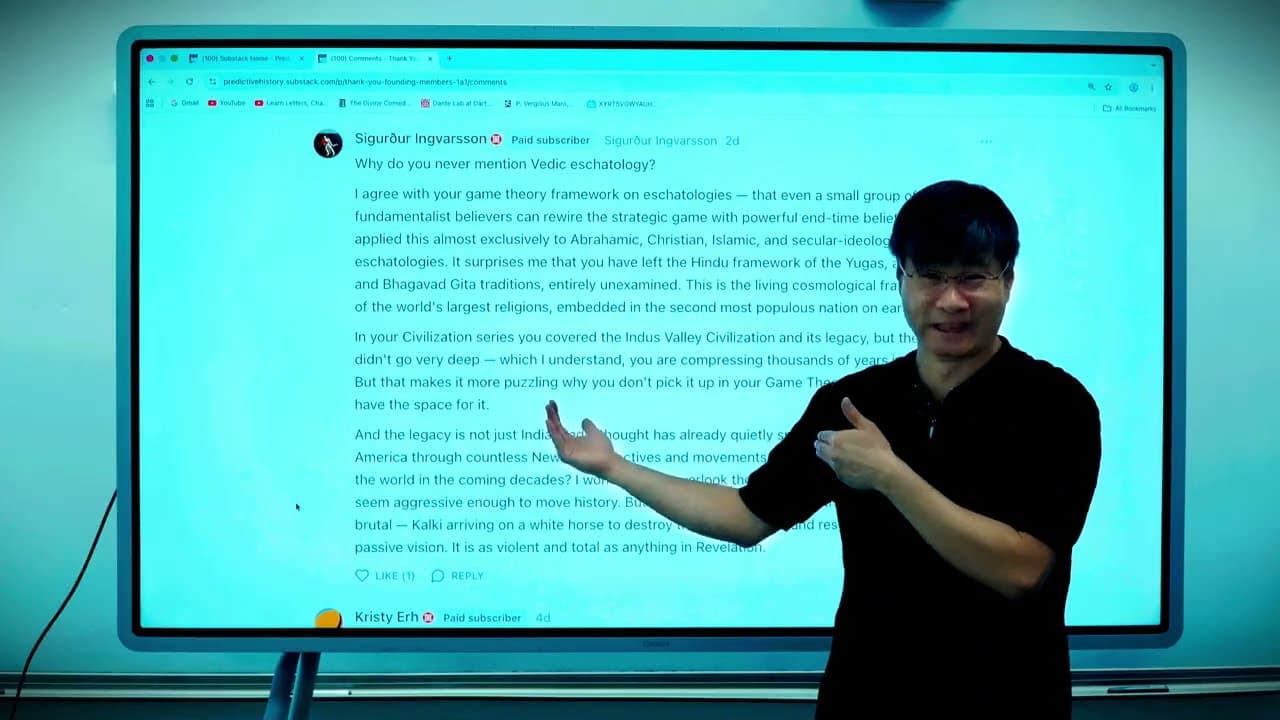
The speaker discusses the impending global shifts in power dynamics, emphasizing the resilience and adaptability of humanity. He highlights the importance of imagination and creativity in overcoming future challenges. The speaker also addresses questions on geopolitics, economic strategies, and societal changes, urging individuals to focus on personal growth and understanding.
Transcript
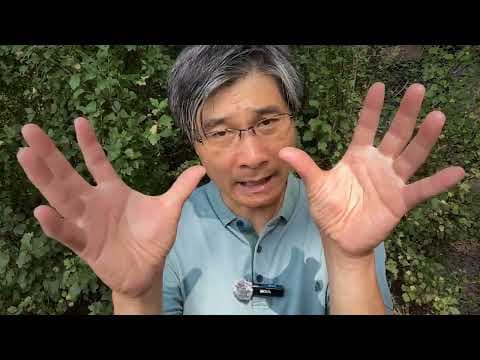
So, welcome to the final examination. Before I start, I want to I want to thank the people. Uh, first of all, I'd like to thank Alan and Vincent for being in this class all year long. Uh, you have been consistent and hardworking uh throughout the year. So, thank you very much. I'm sorry if now and then I lose my temper. Um, but I really appreciate ... Read More
Key Insights
- Human resilience and creativity are crucial in adapting to changing global circumstances.
- The US dollar's fall may lead to a basket of currencies becoming the global reserve.
- Empires decline naturally, and resisting this cycle can lead to greater suffering.
- AI and technological advancements may not necessarily lead to a new era of humanity.
- The US may use force to maintain global dominance, risking internal conflicts.
- White supremacy and structural racism are outgrowths of imperial narratives.
- The strongest civilizations have universal stories that resonate across cultures.
- Personal growth and understanding are vital in navigating future global challenges.
Install to Summarize YouTube Videos and Get Transcripts
Explore YouTube Video Summarizer or Get YouTube Transcript Extractor
Questions & Answers
Q: How can humanity adapt to future global challenges?
Humanity can adapt to future global challenges by harnessing its innate resilience and creativity. This involves fostering imagination, engaging with diverse perspectives, and embracing personal growth. By understanding the natural cycles of rise and fall in empires, individuals can better navigate the complexities of global power shifts and contribute positively to societal change.
Q: What might replace the US dollar as the global reserve currency?
The US dollar may be replaced by a basket of currencies as the global reserve currency. This basket could include the US dollar, gold, British pounds, Swiss francs, and other stable currencies. This transition would likely occur over many years or decades, reflecting changes in global economic dynamics and power structures.
Q: Why do empires naturally decline?
Empires naturally decline as part of historical cycles of rise and fall. This is akin to natural phenomena like seasons or earthquakes. Resisting these cycles can lead to increased suffering and faster decline. Understanding and accepting these patterns allows societies to better prepare for and navigate periods of change and transformation.
Q: Will AI and technology lead to a new era of humanity?
AI and technology may not necessarily lead to a new era of humanity. While they offer potential advancements, they could also diminish human imagination and creativity. The speaker suggests that reliance on technology might reduce our connection to the monad, the source of true creativity and insight, emphasizing the need to balance technological use with personal growth and understanding.
Q: How might the US maintain global dominance?
The US might attempt to maintain global dominance through the use of force, particularly if soft power strategies fail. This could involve military interventions and economic coercion, which may lead to internal conflicts and resistance. Such actions reflect an empire in decline, struggling to uphold its influence in a rapidly changing world.
Q: What is the root of white supremacy and structural racism?
White supremacy and structural racism are rooted in imperial narratives and the stories that bind nations together. These ideologies are outgrowths of empire and civilization, reflecting a desire for cultural dominance and legitimacy. While they exist, the speaker emphasizes that the core issue is the struggle for community and the legitimacy of cultural narratives.
Q: What makes a civilization's narrative strong and resilient?
A civilization's narrative is strong and resilient when it is universal, transcending time and space. Such narratives connect with diverse cultures and endure through historical cycles. Examples include America's emphasis on individual freedom, Russia's focus on community and tradition, Iran's narrative of sacrifice, and Israel's covenantal history. These themes resonate globally, contributing to a civilization's strength.
Q: How can individuals prepare for future global changes?
Individuals can prepare for future global changes by focusing on personal growth, understanding, and resilience. This involves reading books, engaging in critical thinking, and embracing diverse perspectives. By fostering imagination and creativity, individuals can navigate the complexities of global power shifts and contribute positively to societal change, ensuring their adaptability in an uncertain future.
Summary & Key Takeaways
-
The speaker emphasizes the need for imagination and creativity in facing global power shifts. He discusses the potential decline of the US dollar and the rise of a multi-currency reserve system. The importance of understanding natural cycles of empire rise and fall is highlighted.
-
The lecture explores the role of AI and technological advancements, suggesting they may not lead to a transformative era. The speaker warns of the US's potential use of force to maintain dominance, which could result in internal conflicts.
-
The speaker addresses societal issues like white supremacy and structural racism, linking them to imperial narratives. He stresses the importance of personal growth and understanding in adapting to future challenges, highlighting the power of universal stories in civilization resilience.
Read in Other Languages (beta)
Share This Summary 📚
Summarize YouTube Videos and Get Video Transcripts with 1-Click
Try YouTube Summary with ChatGPT & Claude or YouTube Transcript Generator
Explore More Summaries from Predictive History 📚


Summarize YouTube Videos and Get Video Transcripts with 1-Click
Try YouTube Summary with ChatGPT & Claude or YouTube Transcript Generator