Why Really Successful People Say No To Almost Everything
TL;DR
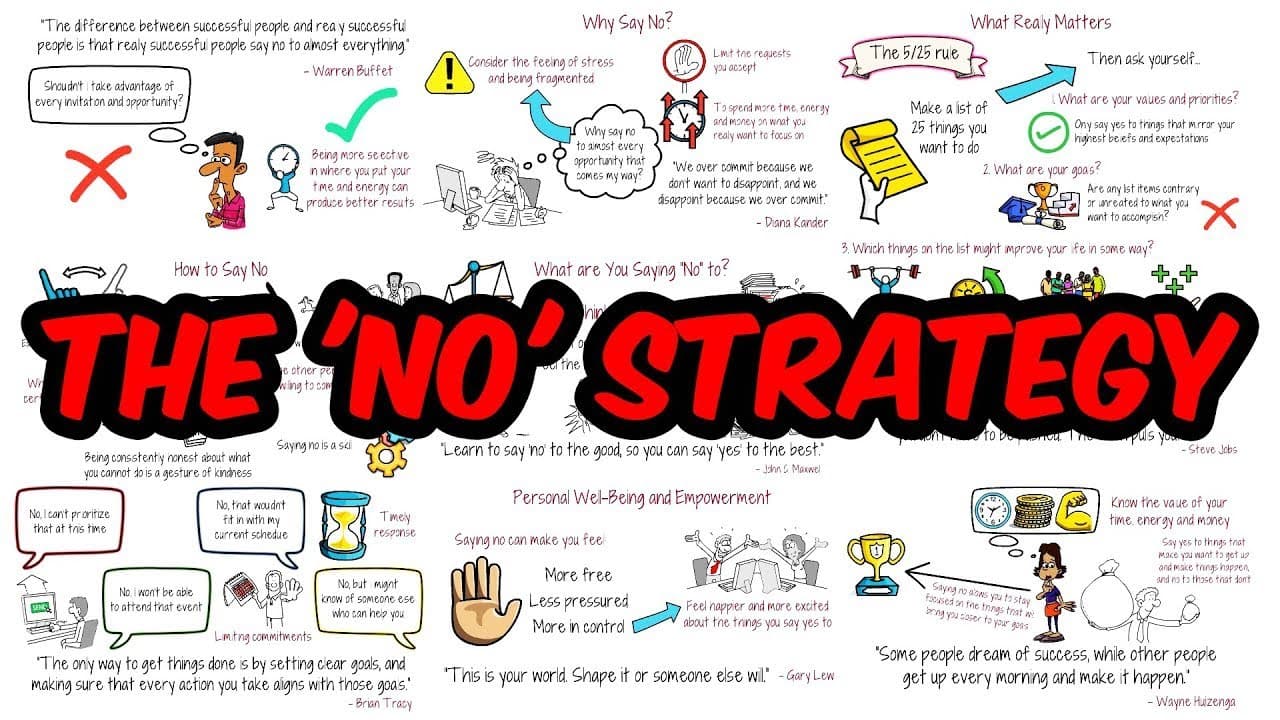
Really successful people say no to almost everything so they can devote their time, energy, and money to the opportunities that best support their priorities. Warren Buffet’s 5/25 rule narrows a list of 25 desired pursuits to the five most aligned with your values, goals, and life. Saying no confidently also prevents overcommitment and makes each yes more meaningful. Read on for the selection criteria and practical refusal scripts.
Transcript
One of the world's wealthiest billionaires, Warren Buffet, is quoted as having said, “The difference between successful people and really successful people is that really successful people say no to almost everything.” This concept may seem confusing to some, wondering how anyone could be really successful if they say no to most things. Wo... Read More
Key Insights
- 🥺 Prioritizing opportunities through saying no can lead to reduced stress and increased success.
- 🥅 Applying the 5/25 rule can help in selecting opportunities that align with values and goals.
- 😫 Saying no can empower individuals by setting boundaries and focusing on personal well-being.
- 🥅 Clear goals and aligning actions with these goals are essential for productivity and success.
- 😀 Taking control of decisions by saying no to distractions can lead to a happier and more fulfilling life.
- 😌 Success lies in choosing opportunities that align with long-term goals and personal growth.
- ❓ By saying no to unnecessary distractions, individuals can focus on pursuits that truly matter.
Install to Summarize YouTube Videos and Get Transcripts
Explore YouTube Video Summarizer or Get YouTube Transcript Extractor
Questions & Answers
Q: Why do really successful people say no to almost everything?
Saying yes to too many opportunities can leave people stressed, fragmented, overbooked, and overwhelmed. By declining options that do not align with their highest goals, they can concentrate their time, energy, and money on the projects that matter most.
Q: What is Warren Buffet’s 5/25 rule?
First, make a list of 25 things you want to do and evaluate each one against your values, priorities, goals, and potential to improve life or make a positive difference. Cross off the poor fits, circle the top five remaining choices, and focus your effort on making those five successful.
Q: What questions should you ask when choosing your top five priorities?
Ask whether each choice reflects your highest values and expectations and brings you closer to a specific goal. Also consider whether it could improve your health, wealth, time with loved ones, your own life, or the wider world.
Q: When should you say no to an opportunity or request?
Say no when you already have too much on your plate or when the request does not match your interests, skills, schedule, or goals. You should also decline conflicts of interest and opportunities that seem too good to be true.
Q: How can saying no make your yes more meaningful?
Selective commitments show collaborators that when you do say yes, you are fully engaged and committed to the project. A clear refusal also lets the other person accept your decision and seek another option.
Q: How can you say no confidently without being rude?
Be straightforward and certain without overexplaining or apologizing. You can say, “No, I can’t prioritize that at this time,” “No, that wouldn’t fit in with my current schedule,” or simply, “No, thank you.”
Q: What should you do if someone keeps pushing after you say no?
State that you are limiting your commitments and have made your decision. Consistent honesty about what you cannot or will not do frees the other person to pursue another solution.
Q: What distractions should you say no to while pursuing important work?
Decline phone calls, interruptions, and drama that pull you away from the work you are trying to complete. The transcript also recommends avoiding substances that dull your senses or negatively influence your decisions and behavior.
Summary & Key Takeaways
-
Saying no to opportunities can reduce stress and allow for better focus on important priorities.
-
Use Warren Buffet's 5/25 rule to choose opportunities that align with your values, goals, and life improvements.
-
Learning how and when to say no can lead to more meaningful yes's and increased personal empowerment.
Read in Other Languages (beta)
Share This Summary 📚
Summarize YouTube Videos and Get Video Transcripts with 1-Click
Try YouTube Summary with ChatGPT & Claude or YouTube Transcript Generator
Explore More Summaries from The Art of Improvement 📚




Summarize YouTube Videos and Get Video Transcripts with 1-Click
Try YouTube Summary with ChatGPT & Claude or YouTube Transcript Generator