Why Are Insurers Avoiding AI Error Coverage?
TL;DR
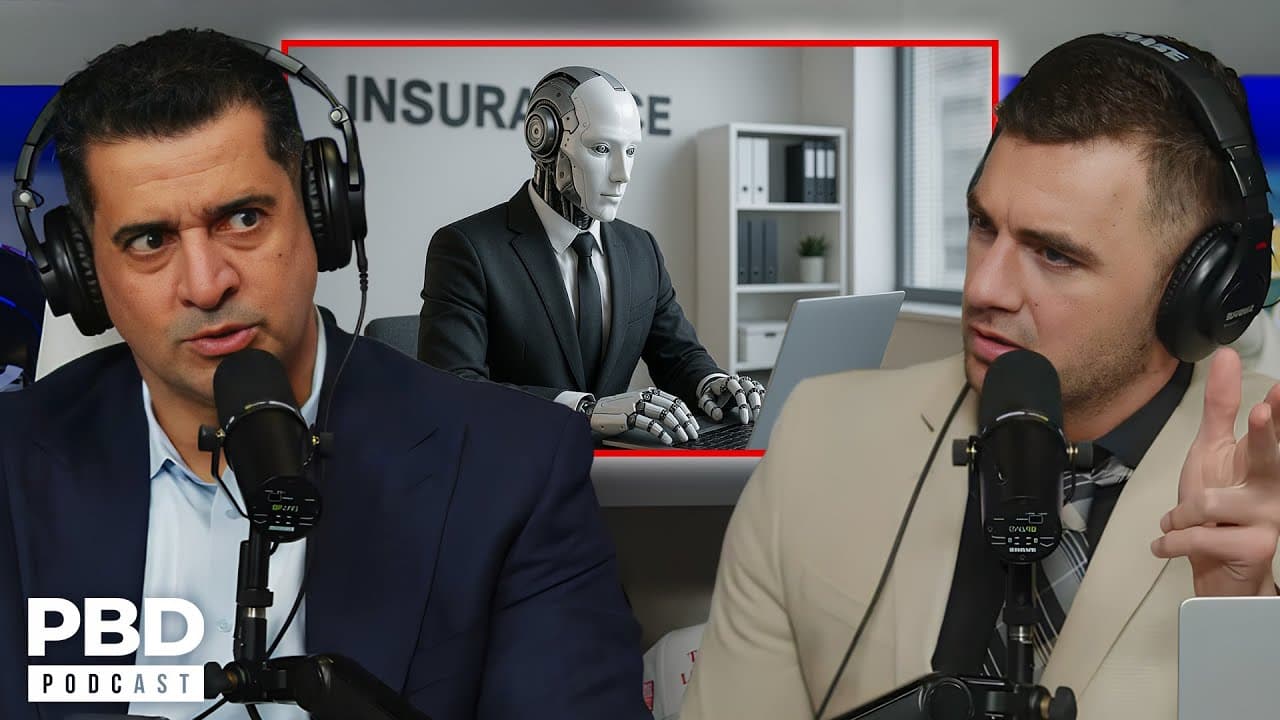
Insurance companies are hesitant to cover AI-related errors due to the unpredictable nature and scale of potential mistakes. As AI technology advances rapidly, insurers struggle to quantify risks and set premiums, leading to a temporary withdrawal from offering coverage. A push for national AI policies aims to address these challenges and streamline regulations.
Transcript
Some insurers, so you're a big insurance company, don't want to cover AI's errors. What do you mean when you read this? So, what do you mean we don't want to cover AI's errors? Who's making the error? AI is making the error. Yeah. AI we don't want to protect. All right. Can you tell me a little bit more? Sure. As businesses hustle to incorporate AI... Read More
Key Insights
- Insurers are currently reluctant to cover AI errors due to the unpredictable nature and scale of potential mistakes.
- AI errors can occur at a scale that is difficult for insurers to quantify, making it challenging to set appropriate premiums.
- Past experiences with cybersecurity insurance show that insurers initially avoided coverage until they could better understand and quantify risks.
- AI errors can lead to significant financial losses, as demonstrated by incidents involving chatbots offering unauthorized discounts.
- The lack of historical data on AI-related mistakes makes it difficult for insurers to underwrite these risks confidently.
- A new AI super PAC is advocating for a uniform national policy to address the patchwork of state laws and streamline regulations.
- The AI industry seeks a single set of federal laws to avoid dealing with different regulations in each state, reducing legal expenses.
- The push for national AI policies is framed as protecting consumers, but it primarily serves the interests of the AI industry.
Install to Summarize YouTube Videos and Get Transcripts
Explore YouTube Video Summarizer or Get YouTube Transcript Extractor
Questions & Answers
Q: Why are insurers hesitant to cover AI errors?
Insurers are hesitant to cover AI errors because the technology's rapid advancement makes it challenging to predict and quantify potential mistakes. AI errors can occur at a scale that is difficult for insurers to manage, making it hard to set appropriate premiums. Without sufficient historical data, insurers find it risky to underwrite AI-related coverage.
Q: How do AI errors differ from human errors in insurance?
AI errors differ from human errors in that they can occur on a much larger scale and at a faster pace. While human errors are somewhat predictable based on historical data, AI errors can quickly escalate due to the technology's self-learning capabilities. This unpredictability makes it difficult for insurers to assess and manage the associated risks.
Q: What is the AI super PAC's goal regarding national policy?
The AI super PAC aims to establish a uniform national policy to address the current patchwork of state laws governing AI. By advocating for a single set of federal regulations, the super PAC seeks to streamline legal requirements, reduce compliance costs for AI companies, and prevent the complexities of dealing with different state laws.
Q: How do insurers currently handle AI-related risks?
Currently, many insurers are opting out of covering AI-related risks due to the difficulty in quantifying potential errors and setting premiums. As AI technology continues to evolve rapidly, insurers lack the necessary historical data to confidently underwrite these risks. This cautious approach mirrors past experiences with emerging technologies like cybersecurity.
Q: What challenges do insurers face with AI errors?
Insurers face challenges with AI errors due to the technology's ability to make large-scale mistakes quickly. The lack of historical data and the unpredictable nature of AI make it difficult to assess risks accurately. Additionally, the potential financial impact of AI errors adds to the complexity, leading insurers to temporarily withdraw from offering coverage.
Q: Why is a national AI policy being proposed?
A national AI policy is being proposed to address the inconsistencies and complexities of state-level regulations. The AI industry advocates for a uniform federal policy to simplify compliance, reduce legal expenses, and create a more predictable regulatory environment. This approach aims to facilitate the responsible development and deployment of AI technologies.
Q: What are the implications of AI errors for companies?
AI errors can have significant financial implications for companies, as they may lead to unauthorized actions like offering incorrect discounts or providing misleading information. These mistakes can result in substantial losses and legal liabilities, prompting companies to seek insurance coverage. However, insurers' reluctance to cover AI errors adds to the challenges companies face.
Q: How might AI regulations impact consumers?
AI regulations could impact consumers by shaping how AI technologies are developed and deployed. While industry-backed regulations may prioritize reducing legal complexities and costs, there is a risk that consumer protection could be sidelined. Effective regulations should balance industry interests with safeguards that ensure AI technologies are used responsibly and ethically.
Summary & Key Takeaways
-
Insurance companies are wary of covering AI errors due to the unpredictable and large-scale nature of potential mistakes. The rapid advancement of AI technology presents challenges in quantifying risks and setting premiums, leading to a temporary withdrawal from offering coverage.
-
Past experiences with cybersecurity insurance demonstrate that insurers initially avoided coverage until they could better understand the risks involved. Similarly, the lack of historical data on AI-related errors makes it difficult for insurers to confidently underwrite these risks.
-
A new AI super PAC is pushing for a uniform national policy to address the patchwork of state laws and streamline regulations. While framed as consumer protection, the initiative primarily serves the interests of the AI industry by reducing legal expenses and regulatory complexities.
Read in Other Languages (beta)
Share This Summary 📚
Summarize YouTube Videos and Get Video Transcripts with 1-Click
Try YouTube Summary with ChatGPT & Claude or YouTube Transcript Generator
Explore More Summaries from Valuetainment 📚





Summarize YouTube Videos and Get Video Transcripts with 1-Click
Try YouTube Summary with ChatGPT & Claude or YouTube Transcript Generator