How to Turn Your Dreams Into Concrete Action
TL;DR
Start doing the work before you feel fully ready, then actively fight for opportunities that move your dream forward. Make the process enjoyable, question limiting rules without breaking the law, measure the possible upside as seriously as the downside, and accept failure as part of pursuing a more rewarding life.
Transcript
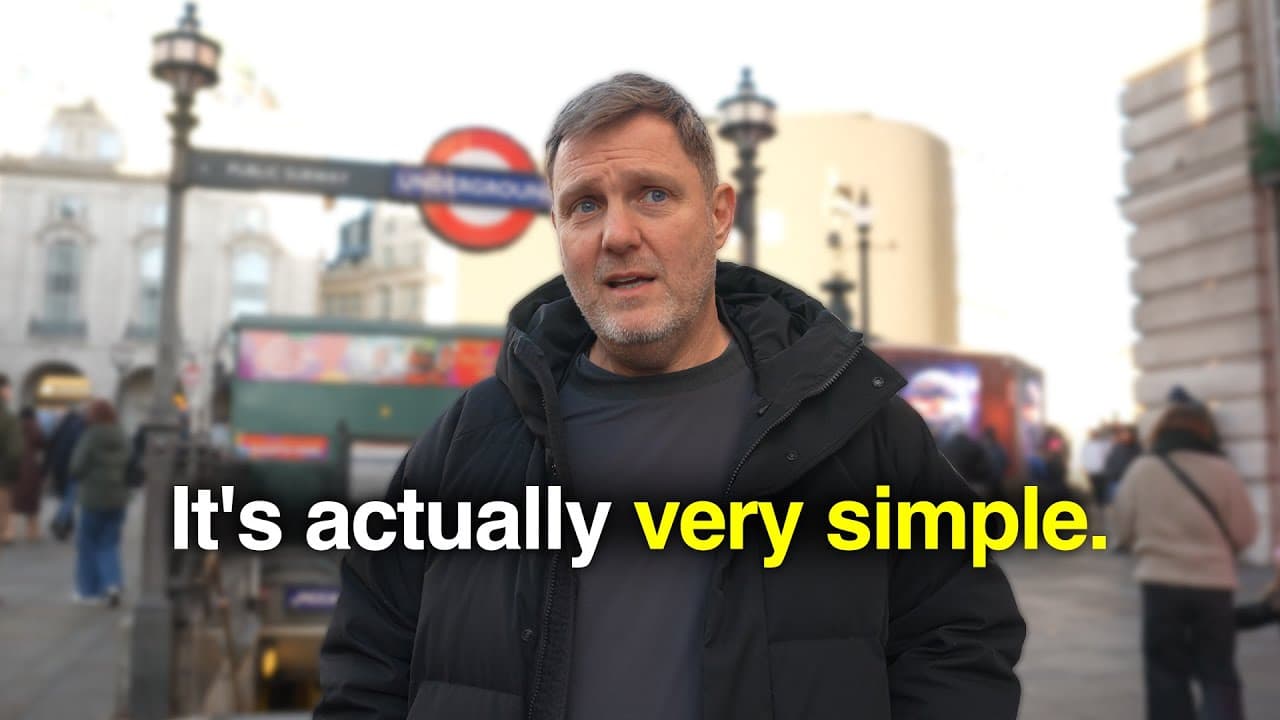
Excuse me. Do you have a dream? Over the last five years, I've asked thousands of people, "What is your dream?" Dream? Yeah. Yes. What is it? Uh, being a boxer. Everyone has a dream, but only a few succeed, while most people fail. There's not enough time, I need to earn money. I'm Simon Squibb, and in my 30 years of business, I've started 19 compan... Read More
Key Insights
- Doing the work is the first requirement for achieving a dream. Squibb rejects giving advice without applying it himself, so he visits stores carrying his book, thanks the people stocking it, and commits to helping five dreamers take practical steps toward their goals.
- Fighting for a dream requires active pursuit rather than passive waiting. When an aspiring artist follows and confronts Squibb, that willingness to run after an opportunity becomes evidence that the artist is prepared to move beyond confusion and state clearly what he wants to create.
- Having fun can make work feel less demanding. Squibb argues that business is often treated too seriously and recommends working with people you like, involving people you love, and building around a shared sense of humor, even though creating that enjoyable environment requires deliberate effort.
- Opportunities create value only when people accept and explore them. Squibb says that instinctively rejecting unusual situations can mean rejecting luck, while successful people take opportunities, follow where they lead, and accept the risk involved in discovering what might happen.
- Limiting beliefs often appear as a lack of confidence or a feeling that good fortune is undeserved. Squibb connects automatic rejection with low self-belief and argues that people must recognize these internal barriers before they can consistently pursue their dreams.
- Breaking rules is different from breaking the law. Squibb encourages questioning who created a rule, why it exists, and how it is enforced, while explicitly warning against illegal behavior. His broader point is that unquestioned conformity can produce the same conventional path followed by everyone else.
- Self-belief is essential for turning professional experience into independent action. Squibb challenges a 33-year-old moving from consulting into FinTech to consider building a business, arguing that someone capable of securing such a role may already possess relevant experience but still lack confidence.
- Risk assessment should include potential upside as well as possible failure. Squibb observes that people carefully measure what could go wrong but often neglect what could work, including benefits beyond money such as valuable life experience, greater fulfillment, and more ownership of their time.
Install to Summarize YouTube Videos and Get Transcripts
Explore YouTube Video Summarizer or Get YouTube Transcript Extractor
Questions & Answers
Q: How can I stop holding myself back from my dreams?
Begin by doing concrete work before you feel completely ready. Identify the excuses, confusion, or limiting beliefs that keep you passive, then take an action that directly serves the dream. Fight for relevant opportunities, make the work enjoyable, question unnecessary rules without breaking the law, and compare the possible upside with the downside instead of focusing only on failure.
Q: Why is doing the work more important than giving advice?
Doing the work demonstrates that the advice can be practiced rather than merely stated. Squibb illustrates this by visiting W.H. Smith, Tesco, and Waterstones to thank the people stocking his book, while also committing to help five dreamers. The example supports his first lesson: aspirations become credible through direct effort, visible action, and follow-through.
Q: What does it mean to fight for your dream?
Fighting for a dream means pursuing it actively instead of waiting for someone else to create the right conditions. The aspiring artist demonstrates this by following Squibb, stating that he wants to make art and build things, and accepting a challenge to create street art. His persistence turns an uncertain encounter into a specific opportunity for action and exposure.
Q: How can having fun help with business or creative work?
Having fun can make sustained work feel less like an exhausting obligation. Squibb recommends including people you love, working with people you genuinely like, and choosing collaborators who share your sense of humor. He also says enjoyment requires effort, suggesting that a lively working environment must be created intentionally rather than expected to appear automatically.
Q: Why should people take unexpected opportunities?
Unexpected opportunities can lead somewhere valuable, but only if they are accepted and explored. Squibb argues that people often say no because they lack confidence or feel undeserving of luck. His advice is to take the opportunity, run with it, observe where it leads, and tolerate the risk of uncertainty instead of rejecting it automatically.
Q: What is the difference between breaking rules and breaking the law?
Breaking rules means questioning conventions or restrictions that may be unnecessary, while breaking the law crosses a boundary Squibb explicitly says to avoid. He asks who creates and enforces particular rules, using an unauthorized underground advertising effort as his example. The lesson is to examine imposed systems critically rather than obey every convention without thought.
Q: How do limiting beliefs prevent people from pursuing dreams?
Limiting beliefs can make people reject opportunities, underestimate their abilities, and treat possible failure as proof that they should not begin. Squibb links these beliefs to low confidence and the feeling that a person does not deserve luck. Recognizing how those reactions arise is presented as a necessary step toward choosing action instead of avoidance.
Q: How should I evaluate the risk of pursuing a dream?
Evaluate what could work as carefully as what could fail. Squibb says people commonly measure the downside while neglecting the upside, which includes more than financial gain. Even when an attempt does not produce the intended result, the life experience may still matter. Pursuing the dream also creates the possibility of a more rewarding life and greater ownership of time.
Summary & Key Takeaways
-
Success begins with doing the work instead of merely discussing a dream. Simon Squibb demonstrates this principle by visiting stores that stock his book, thanking the people involved, and committing to help five people pursue their ambitions. His central message is that progress requires direct action before confidence or perfect conditions arrive.
-
A street artist receives £140, matching what he expected to earn at work that day, and is challenged to create public art by 8:00 PM. The exercise illustrates several lessons: fight for the dream, act on opportunities, have fun while working, and include people with compatible values and humor in the journey.
-
Limiting beliefs, excessive obedience to conventional expectations, and fear of failure can prevent meaningful action. Squibb advises questioning rules without breaking the law, embracing the possibility of failure, and evaluating potential benefits as carefully as risks. Belief grows through action, while a rewarding life depends partly on owning your time.
Read in Other Languages (beta)
Share This Summary 📚
Summarize YouTube Videos and Get Video Transcripts with 1-Click
Try YouTube Summary with ChatGPT & Claude or YouTube Transcript Generator
Explore More Summaries from Simon Squibb 📚

Summarize YouTube Videos and Get Video Transcripts with 1-Click
Try YouTube Summary with ChatGPT & Claude or YouTube Transcript Generator