How to Clean Old Potassium Metal Safely
TL;DR
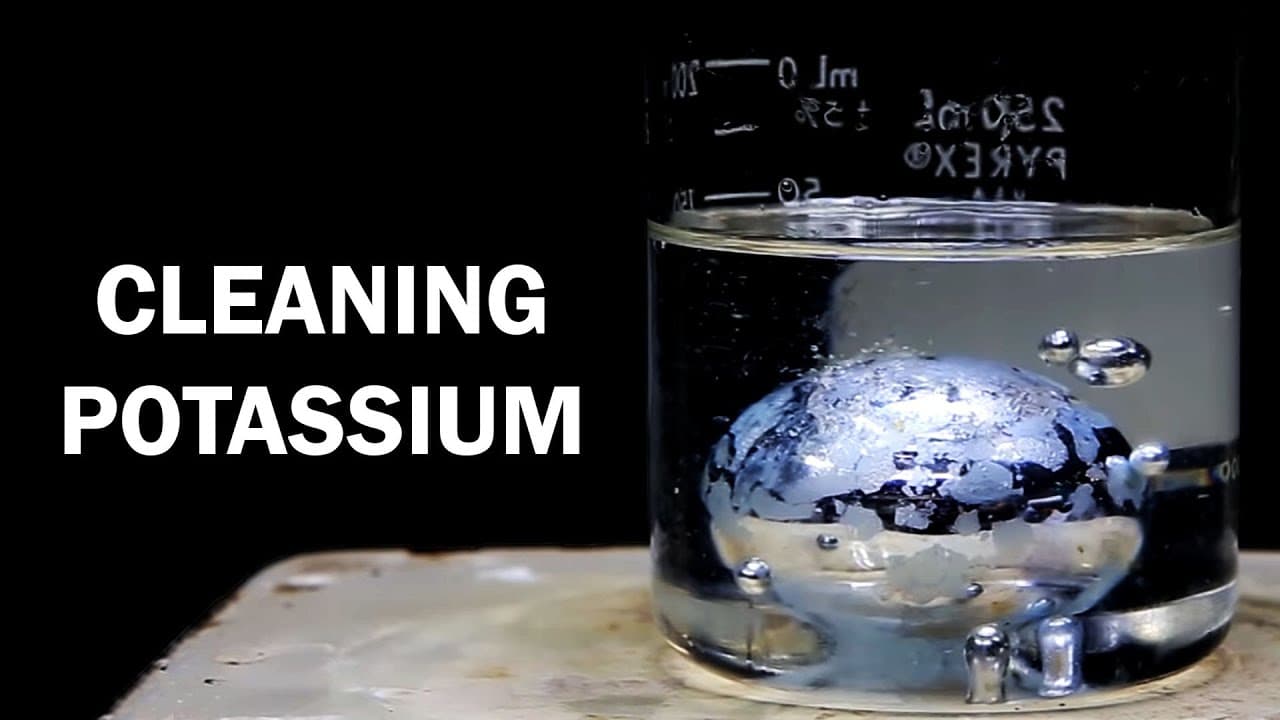
To clean old potassium metal, first neutralize oxides by submerging it in toluene and slowly adding isopropyl alcohol, which reacts with impurities. After cleaning, melt the potassium in mineral oil to remove remaining residues, ensuring proper safety measures to prevent violent reactions. Always handle potassium with care due to its high reactivity.
Transcript
okay so in this video I'm going to be cleaning some potassium metal in a very similar way that I cleaned sodium in a previous video like sodium potassium is an alkali metal and it's quite reactive and it reacts with water and oxygen and other things to get this coating on the outside this layer on the outside of the potassium is a mixture of variou... Read More
Key Insights
- 🤘 Potassium metal forms a mixture of oxides and hydroxide on its surface, which needs to be removed for clean and reactive potassium.
- ❓ Cleaning can be done by using toluene and isopropyl alcohol to dissolve and react with the impurities.
- 🥺 The major danger during cleaning is the reactivity of potassium superoxide, which can lead to explosions or fires.
- 💦 Proper safety precautions, such as slow addition of isopropyl alcohol and avoiding water, should be taken to prevent accidents.
- ❤️🔥 Mineral oil is commonly used to store potassium, but it can also react with impurities and cause ignition or fires.
- ❓ The cleaning process involves multiple steps, including washing with toluene, reacting with isopropyl alcohol, and remelting the potassium to remove stubborn impurities.
- ❓ The final step of cleaning involves scraping off any remaining impurities after solidifying the melted potassium.
Install to Summarize YouTube Videos and Get Transcripts
Explore YouTube Video Summarizer or Get YouTube Transcript Extractor
Questions & Answers
Q: Is potassium more reactive than sodium?
Yes, potassium is more reactive than sodium, so it requires more careful handling to avoid dangerous reactions.
Q: Why is potassium superoxide the most dangerous oxide?
Potassium superoxide is a strong oxidizer and can react violently when in contact with fresh potassium metal, leading to an explosion or potassium fire.
Q: Can potassium metal react with mineral oil or other organics?
Yes, if potassium still has mineral oil or other organics on its surface, it can react with oxides or superoxides and cause ignition or fire.
Q: What is the purpose of using toluene and isopropyl alcohol in the cleaning process?
Toluene is used as a solvent for cleaning, while isopropyl alcohol reacts with water and oxides to neutralize them and remove impurities from the potassium surface.
Summary & Key Takeaways
-
Potassium metal forms a coating of oxides and other impurities that need to be removed for it to be used in reactions.
-
The cleaning process involves using toluene and isopropanol to dissolve the oxides and react with water to create potassium hydroxide and oxygen.
-
The cleaned potassium metal is then melted and solidified to remove any remaining impurities.
Read in Other Languages (beta)
Share This Summary 📚
Summarize YouTube Videos and Get Video Transcripts with 1-Click
Try YouTube Summary with ChatGPT & Claude or YouTube Transcript Generator
Explore More Summaries from NileRed 📚

Summarize YouTube Videos and Get Video Transcripts with 1-Click
Try YouTube Summary with ChatGPT & Claude or YouTube Transcript Generator