What Are Quasicrystals and Their Importance in Chemistry?
TL;DR
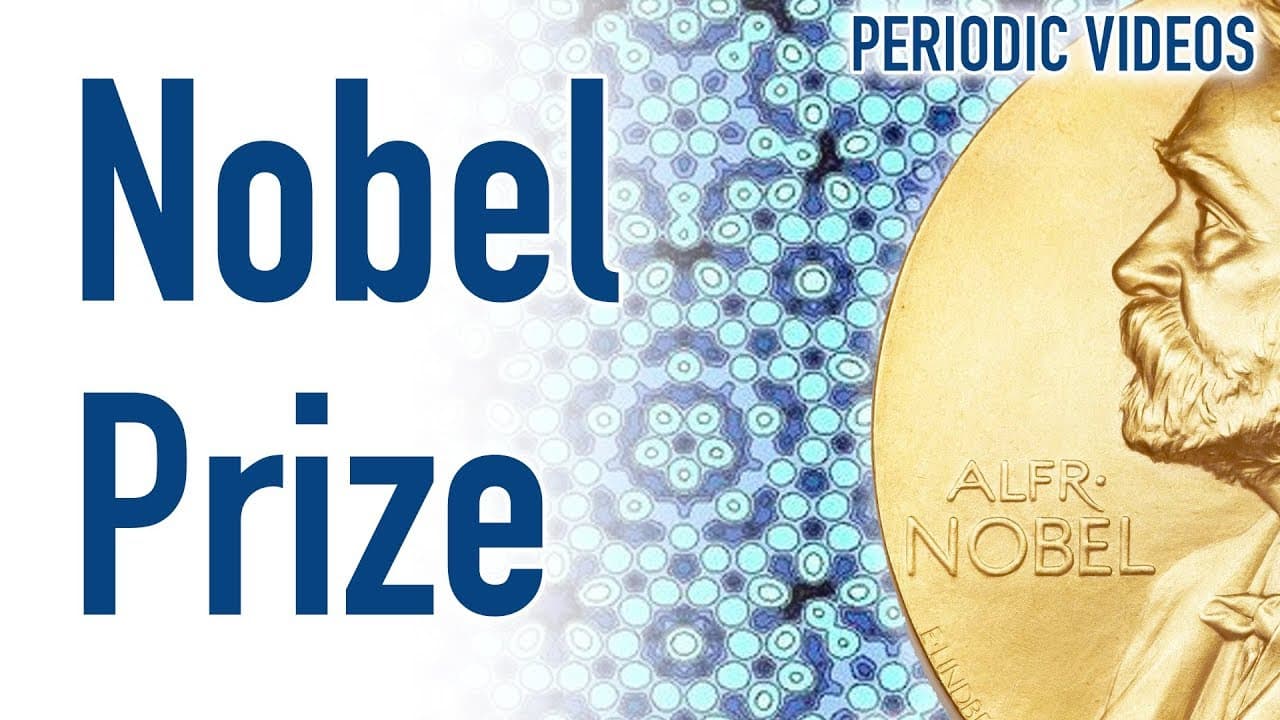
Quasicrystals are structures that exhibit long-range order without repeating patterns, characterized by fivefold symmetry, which challenges traditional definitions of crystals. Discovered by Daniel Schechtman in 1982, this groundbreaking finding reshaped our understanding of matter and crystallography, earning him the Nobel Prize in Physics.
Transcript
I'm waiting for the 2011 Nobel Prize in Chemistry I have no idea who's won by well-prepared I've got my tie of Nobel Prize winners of chemistry and I've got my Nobel Prize medal chocolates I'm not sure what's happening The Times hit zero and we're waiting and you can see the journalist on the video trying to make up something to say because nothing... Read More
Key Insights
- 🚱 Quasicrystals, discovered by Daniel Schechtman, exhibit non-repeating patterns and fivefold symmetry, challenging traditional crystallography.
- 🔮 The discovery of quasicrystals in 1982 revolutionized our understanding of matter and crystal structures, earning Schechtman the Nobel Prize in Physics.
- 👻 Quasicrystals have long-range order without translation periodicity, allowing for unique structures not possible with traditional crystallography.
- 🔬 The implications of quasicrystals extend beyond crystallography, impacting material science and our understanding of the properties of solids.
- 🫷 Schechtman's discovery highlights the importance of challenging established beliefs and pushing the boundaries of scientific knowledge.
- 🥺 The concept of quasicrystals has led to new insights into crystal structures and their applications in various fields.
- 😉 The Nobel Prize-winning discovery of quasicrystals showcases the interdisciplinary nature of scientific breakthroughs.
Install to Summarize YouTube Videos and Get Transcripts
Explore YouTube Video Summarizer or Get YouTube Transcript Extractor
Questions & Answers
Q: What did Daniel Schechtman win the Nobel Prize for?
Daniel Schechtman won the Nobel Prize in Physics for his discovery of quasicrystals, challenging the traditional definition of crystal structures with non-repeating patterns and fivefold symmetry.
Q: What is the significance of quasicrystals in the field of material science?
Quasicrystals have revolutionized our understanding of matter by showcasing long-range order without translation periodicity, fundamentally changing how we perceive crystal structures and their properties.
Q: How did Schechtman's discovery of quasicrystals impact the scientific community?
Schechtman's discovery of quasicrystals brought about a paradigm shift in crystallography, challenging established beliefs and expanding our knowledge of material behavior on an atomic level.
Q: Why was the discovery of quasicrystals so groundbreaking?
The discovery of quasicrystals was groundbreaking because it defied conventional wisdom on crystal structures, introducing a new perspective on the organization of matter and its properties.
Summary & Key Takeaways
-
Israeli scientist Daniel Schechtman wins the Nobel Prize in Physics for discovering quasicrystals, challenging the definition of crystals.
-
Quasicrystals have non-repeating patterns and fivefold symmetry, revolutionizing our understanding of matter.
-
The discovery was made in 1982 and has significant implications for crystallography and material science.
Read in Other Languages (beta)
Share This Summary 📚
Summarize YouTube Videos and Get Video Transcripts with 1-Click
Try YouTube Summary with ChatGPT & Claude or YouTube Transcript Generator
Explore More Summaries from Periodic Videos 📚






Summarize YouTube Videos and Get Video Transcripts with 1-Click
Try YouTube Summary with ChatGPT & Claude or YouTube Transcript Generator