How Does Dr. Andy Galpin Improve a Longevity Workout Warm-Up?
TL;DR
Dr. Andy Galpin improves a longevity warm-up by combining mobility with balance, coordination, multiplanar movement, deceleration, and tissue tolerance. His expanded routine includes dynamic lunges, inchworms, the M drill, reach-and-roll movements, and controlled lateral drops or shuffles. The exercises should be scaled to current ability, with precision reserved for movements designed to produce a specific effect. Read on for each drill’s purpose and execution cues.
Transcript
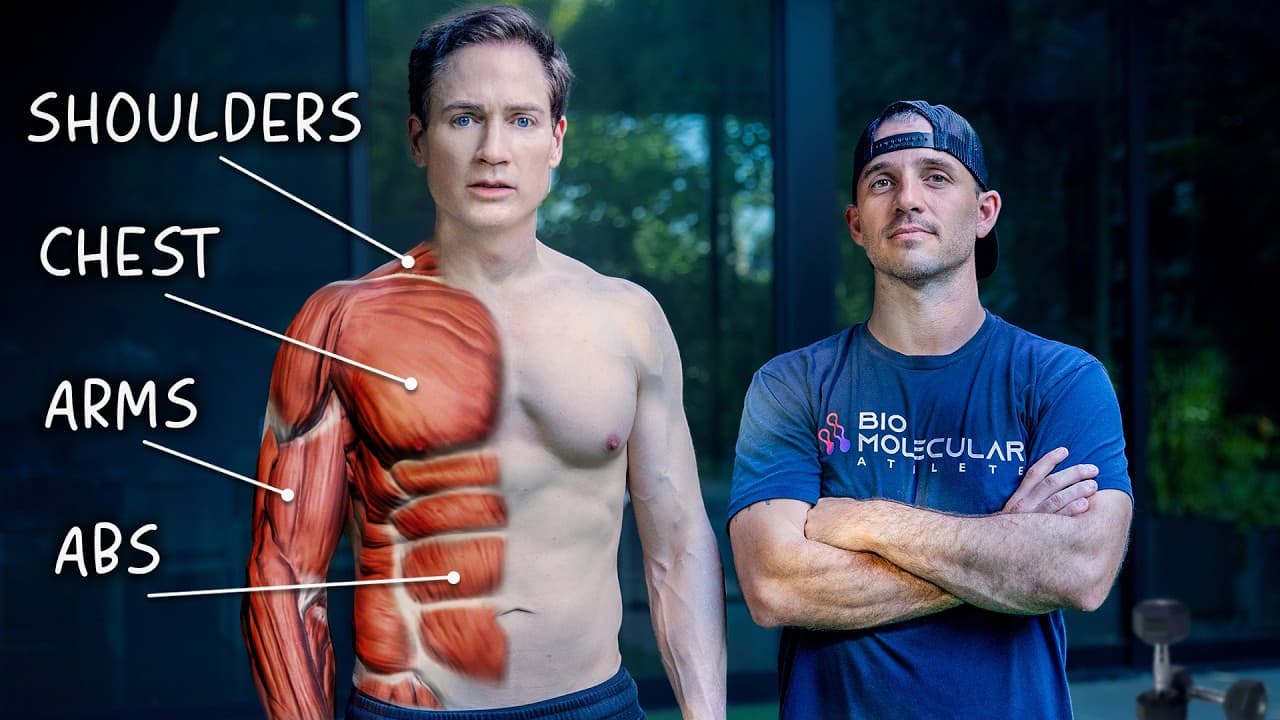
I'm here with my friend Dr Andy Galpin I've asked him to coach me on how I can improve my exercise protocol Andy how are we starting well overall obviously you have a fantastic General routine but suffice to say you have a lot of opportunity for improvement I noticed a lot of things both in your metrics your daily program what you're even paying at... Read More
Key Insights
- A warm-up is an opportunity to prepare for the day’s activities while completing movement work that may not fit comfortably into the main workout. Galpin expands the routine to include balance, hand-eye coordination, complex patterns, and movement across multiple planes.
- The dynamic lunge sequence is a flexible mobility drill for opening the hips and improving ankle movement. Most positions can be explored without demanding perfect technique, allowing each repetition to become more comfortable while the participant follows a multistep sequence and raises the heart rate.
- Targeted precision is useful when a movement has a specific purpose. Squeezing the glute during the lunge stretch helps open the opposite hip-flexor area, while breathing into the lower belly changes the sensation and encourages a more focused stretch through the connected region.
- Inchworms combine shoulder-girdle work with demands on the triceps and core. They also stretch the ankles, calves, hamstrings, and lower back, and a push-up can be added while the participant walks the hands farther out and then returns toward the feet.
- The M drill develops coordination, speed, power, and tissue tolerance through backpedaling, planting, and changing direction. Galpin emphasizes strong deceleration posture and a faster transition after the plant, using the drill to build ankle resilience and restore an athletic quality missing from the routine.
- The reach-and-roll drill opens the hips and back while involving the obliques, feet, and movement sequencing. Keeping the feet pointed forward and maintaining contact with the ground increases the demand on the adductors while continuing to stretch the hips, lats, and obliques.
- The lateral drop or shuffle builds eccentric tissue tolerance, elasticity, rhythm, and coordination through controlled landing movements. Galpin presents it as a safe progression for the knees, ankles, lower back, and grip, provided the movement remains slow, smooth, relaxed, and appropriately scaled.
- Warm-up difficulty should increase through controlled variation rather than forced effort. Galpin recommends different exercises across training days while preserving the same concepts, and he prioritizes smooth movement, relaxed breathing, adaptable range, stable posture, and transitions that match the participant’s current ability.
Install to Summarize YouTube Videos and Get Transcripts
Explore YouTube Video Summarizer or Get YouTube Transcript Extractor
Questions & Answers
Q: How does Dr. Andy Galpin structure a longevity workout warm-up?
Galpin uses the warm-up to prepare the body for the day’s activities and complete movement work that might otherwise be neglected. He combines dynamic lunges, inchworms, the M drill, reach-and-roll movements, and lateral drops or shuffles to address mobility, balance, coordination, deceleration, and tissue tolerance.
Q: Why should balance and coordination be included in a warm-up?
Balance and coordination help expose movement limitations while training physical control before the main workout. Galpin uses multistep instructions, changing postures, foot positioning, and movement across multiple planes to challenge these qualities while the body warms up.
Q: How do you perform Dr. Andy Galpin’s dynamic lunge warm-up?
Step into a lunge, bring the elbow toward the inside of the lead foot, place a hand outside the foot, and extend the front knee for a hamstring stretch. Return to the lunge, rise into a vertical posture, and add a controlled twist when appropriate. Galpin encourages exploring different positions rather than demanding perfect technique throughout this general movement drill.
Q: Why does Dr. Andy Galpin recommend squeezing the glute during a hip-flexor stretch?
Galpin says squeezing one glute tells the opposite hip flexor to relax, allowing more range of motion. He pairs the squeeze with driving forward and breathing into the lower belly to create a more focused stretch through the connected area.
Q: What do inchworms train during the warm-up?
Inchworms engage the shoulder girdle, triceps, and core while stretching the ankles, calves, hamstrings, and lower back. Walk the hands outward only as far as current ability allows, then return toward the feet. A push-up and two deep breaths can be added.
Q: How does the M drill improve athletic movement?
The M drill uses backpedaling, planting, and changes of direction to develop coordination, speed, power, deceleration, and tissue tolerance. Galpin emphasizes strong stopping posture, a firm plant, and a quick return after changing direction. It also challenges the feet, quadriceps, heart rate, and ankle resilience.
Q: What is the purpose of the reach-and-roll drill?
The reach-and-roll drill uses reaching, rotation, and foot control to open the hips and back while involving the obliques and lats. Keeping the feet pointed forward and in contact with the ground increases the demand on the adductors while preserving the rotational movement.
Q: How can lateral drops or shuffles build tissue tolerance safely?
Galpin uses a controlled lateral drop or shuffle to develop eccentric tissue tolerance, elasticity, rhythm, and coordination. The landing and transition should remain slow, smooth, relaxed, and scaled to the participant’s ability. The movement can be made smaller while still challenging the knees, ankles, lower back, and grip.
Summary & Key Takeaways
-
Dr. Andy Galpin expands a basic warm-up into a broader movement practice that addresses mobility, balance, coordination, power, and tissue tolerance. Rather than treating warm-ups only as a way to increase body temperature, he uses them to complete useful training that might otherwise distract from the main workout or remain neglected.
-
The first warm-up combines a dynamic lunge stretch, inchworms, an M drill, reach-and-roll movements, and lateral drop or shuffle work. Together, these drills involve the hips, ankles, shoulders, trunk, feet, and cardiovascular system while introducing complex instructions, multiple movement planes, deceleration, rhythm, and controlled eccentric landings.
-
Galpin distinguishes exploratory movement from moments that require precision. Athletes can vary positions during general mobility drills, but targeted actions, such as squeezing the glute and breathing into the lower belly during a hip-flexor stretch, deserve careful execution. Difficulty should rise gradually without sacrificing smoothness, relaxation, posture, or controlled transitions.
Read in Other Languages (beta)
Share This Summary 📚
Summarize YouTube Videos and Get Video Transcripts with 1-Click
Try YouTube Summary with ChatGPT & Claude or YouTube Transcript Generator
Explore More Summaries from Bryan Johnson 📚

Summarize YouTube Videos and Get Video Transcripts with 1-Click
Try YouTube Summary with ChatGPT & Claude or YouTube Transcript Generator